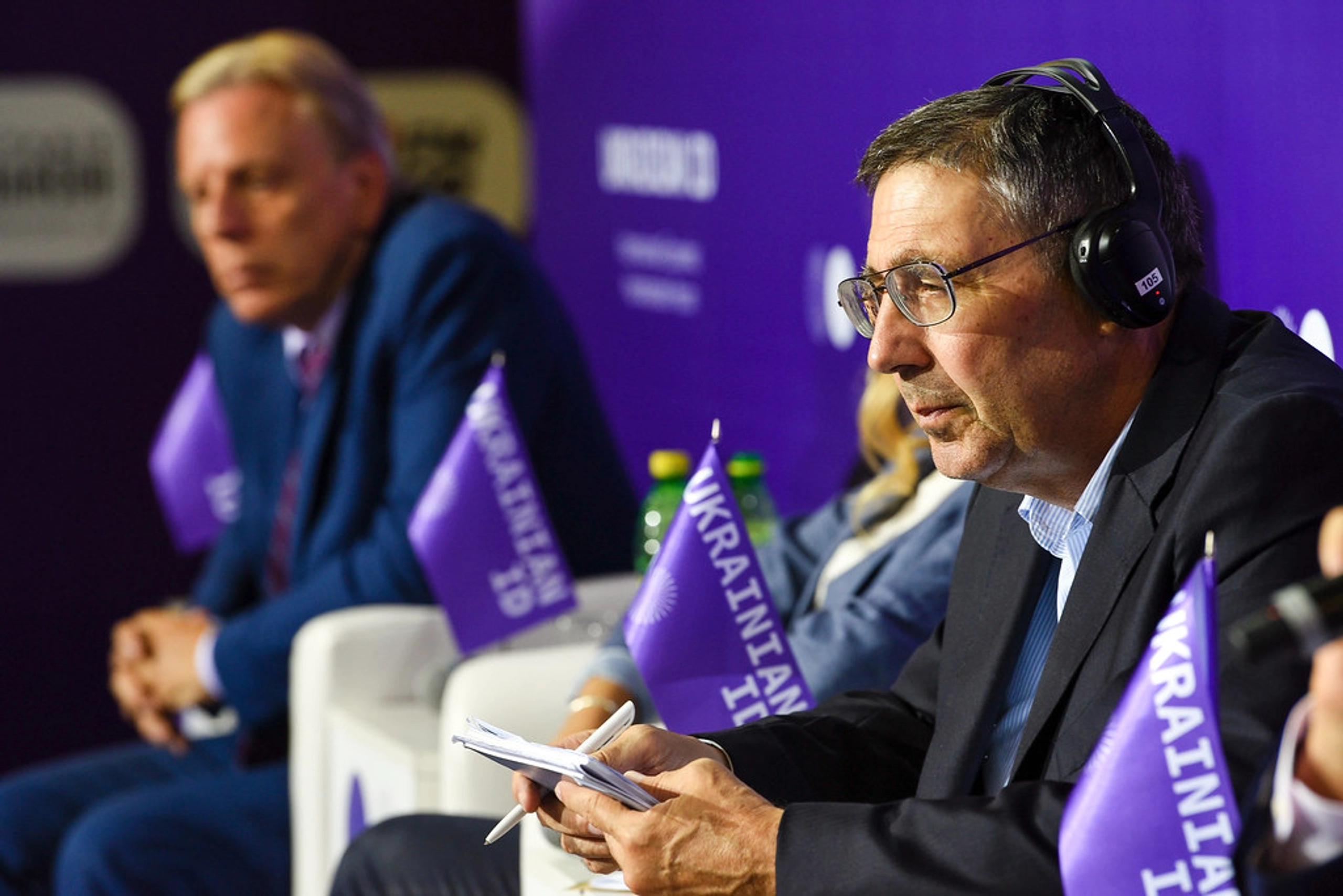
WASHINGTON, DC – US President Donald Trump’s suggestion that Ukraine will have to cede territory to end the war is a symptom of a diplomatic misstep, according to John Herbst, a former US ambassador to Ukraine.
In an interview with Kyiv Post Monday afternoon, Herbst, currently senior director of the Atlantic Council’s Eurasia Center, argued that the administration has found itself in a “not particularly comfortable situation” after rushing to schedule a summit with Vladimir Putin, and that Trump’s seemingly contradictory statements are a way to manage that predicament.
JOIN US ON TELEGRAM
Follow our coverage of the war on the @Kyivpost_official.
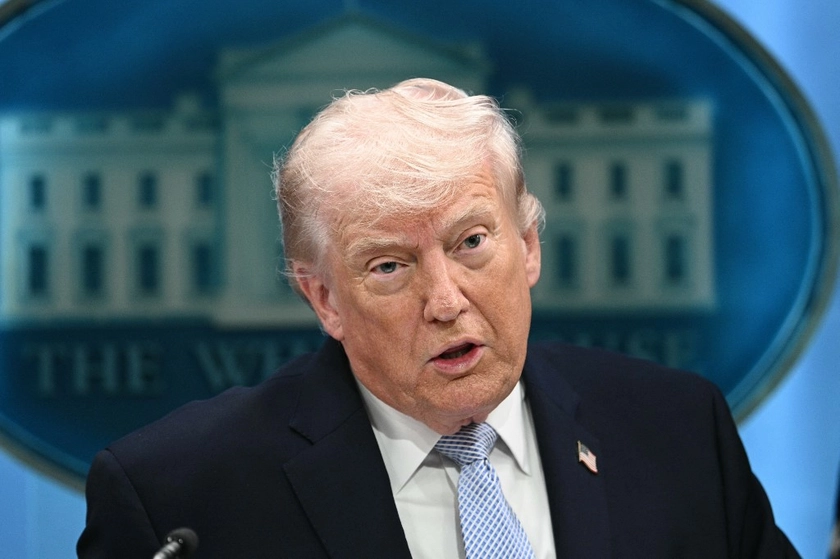
Speaking at the White House earlier in the day, Trump had stated that he would try to get some territory back for Ukraine during his meeting with Putin in Alaska.
“Russia’s occupied a big portion of Ukraine. They occupied prime territory. We’re going to try to get some of that territory back for Ukraine,” he said.
While saying he could know within two minutes if progress was possible, he also described the meeting as a “feel-out meeting” and again warned of “some swapping, changes in land” between the two nations.
A summit rushed
Herbst, who was the US ambassador to Kyiv during the George W. Bush administration, said he sees Trump “pushing in two different directions.”
On the one hand, the US president is “doubling down on we’ve got something going with Putin. We’ve got to be able to work it.”
Baltic Leaders Say Ukraine War Is Transforming EU into ‘Project of Peace With Arms’
On the other, Trump is now trying to lower expectations by describing the Friday meeting as a “feel-out summit,” which, Herbst said, signals that “maybe there’s nothing there, which, of course, we now know there is nothing there.”
The former ambassador believes this approach is not a shrewd negotiation tactic but a reactive strategy.
“I would say it’s a tactic for dealing with a not particularly comfortable situation which they found themselves in because of jumping the gun with the Russians,” Herbst explained.
He added that Russia appears to be successfully using a “delay tactic” and that Trump has fallen into it.
The administration’s predicament
Herbst identified two clear signs that the administration understands its mistake. First, Trump’s own shift in language about the summit. Second, the recent travels of a key adviser, Vice President JD Vance, to the UK, where he has been speaking to Ukrainians and other Europeans in an attempt to “take into account the very steep reservations coming not just from Kyiv, but from London, from Berlin, from Paris.”
Herbst concluded, “I think they understand that maybe they rushed things beyond where Russia was really willing to go.”
While Herbst believes it is “not too late to turn around,” he added a note of caution: “We know that President Trump does not like to pay attention to… he likes to ignore missteps made by his team. I think that that’s what we’re dealing with here.”
A flawed peace formula
Herbst was highly critical of the administration’s proposed peace framework, particularly the idea of front-loaded concessions from Ukraine.
“The concessions from Ukraine are front-loaded just to get a not quite complete, not an incomplete, ceasefire, and what Ukraine requires is being left for further negotiations,” he said.
He called this a mistake because it fails to put sufficient pressure on the Kremlin.
“We know that Putin is reluctant to make any concessions,” he said. “So since Trump’s goal is a durable peace, a stable peace, he needs to persuade Putin to make real concessions.”
To regain leverage before the summit, Herbst advised Trump to take immediate action, including announcing a new weapons shipment to Ukraine and privately warning Putin that any continued attacks on Ukrainian cities after the talks would be met with “immediate sanctions,” not only on Russia but also on its trading partners.
Herbst also suggested extending an invitation to President Zelensky to join the Alaska summit. Trump himself said he would speak to European leaders and Zelensky after his talks with Putin.
“I’ll call him first... I’ll call him after, and I may say, ‘lots of luck, keep fighting,’ or I may say, ‘we can make a deal,’” he said.
He also noted that while he and Zelensky “get along,” he “very severely disagrees with what [the Ukrainian president] has done.”Herbst underscored the importance of involving Europe, noting that its leaders “obviously have a role, because their security is very much at stake if Putin wins his war in Ukraine.”
Herbst concluded that the summit could be worthwhile only if Trump “pushes for Russia to actually agree to a cease fire” and forces Putin to outline “what real concessions Russians are willing to give.”
Yet he also noted that so far there has been “no indication that they came up.”
You can also highlight the text and press Ctrl + Enter
Attack on Moscow Oil Refinery: Putin Under Pressure?