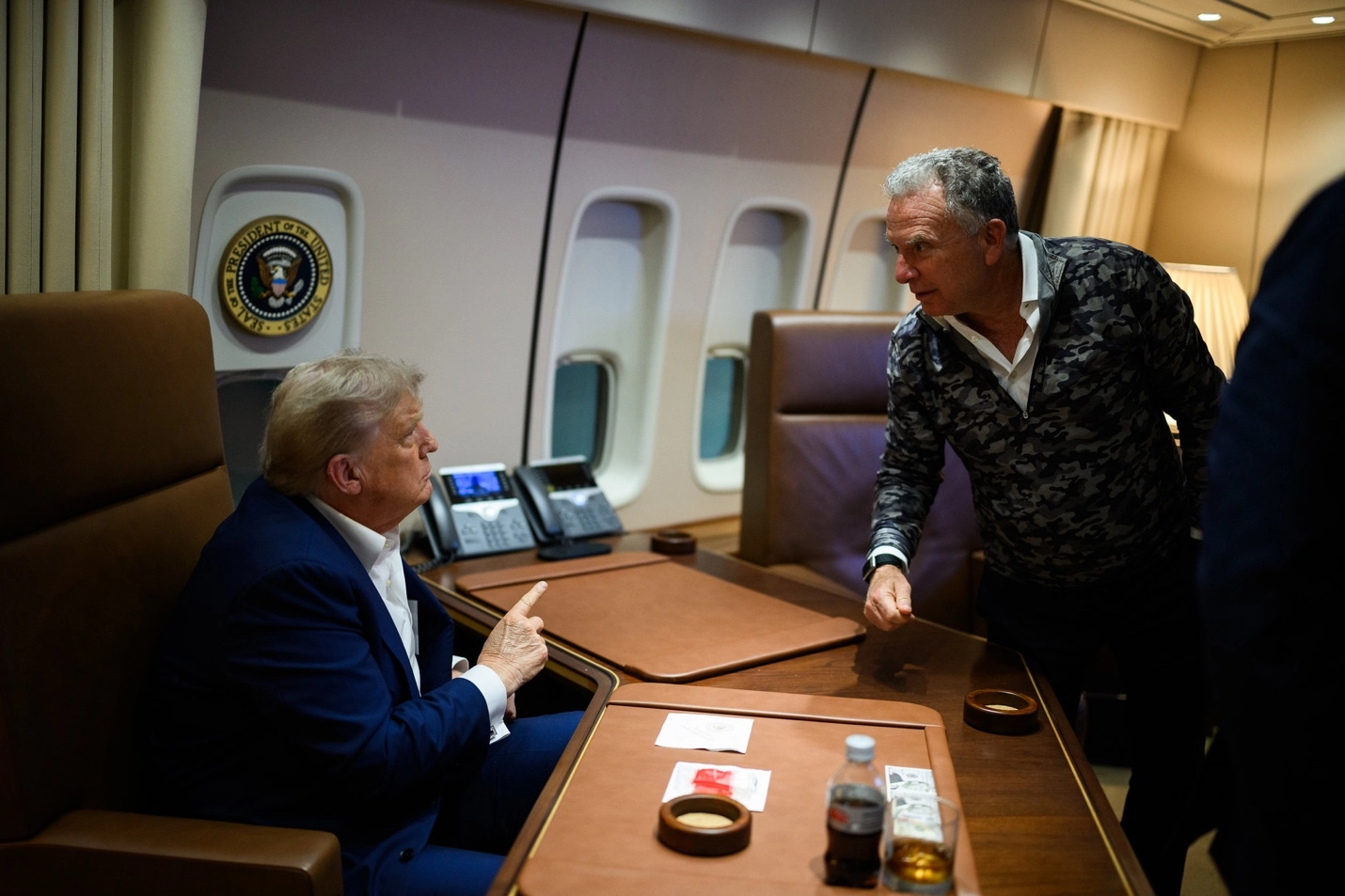
WASHINGTON DC – In a high-stakes diplomatic push that began in Alaska and ended at the White House, US President Donald Trump has forged a new, if fragile, path toward a potential peace settlement for Russia’s war in Ukraine.
As the dust settles on a week of intense negotiations, top foreign policy experts at the Atlantic Council, a Washington-based think-tank, are offering a nuanced assessment, pointing to both tactical missteps and the potential for a workable, if difficult, resolution.
JOIN US ON TELEGRAM
Follow our coverage of the war on the @Kyivpost_official.
New diplomatic landscape
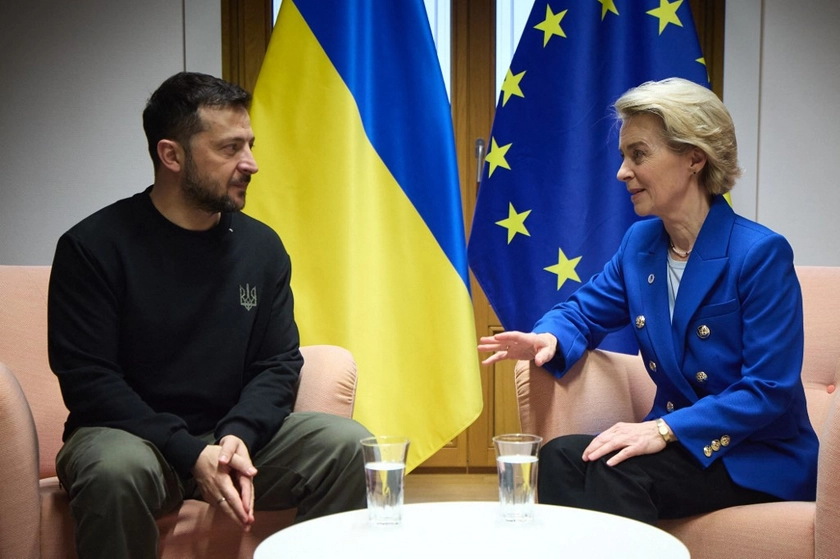
According to the experts, the diplomatic timeline truly began two months ago when Trump initiated a new strategy to apply “leverage on the Kremlin.” This culminated in an unprecedented summit at the White House with Ukrainian and European leaders, a meeting that John Herbst, former US Ambassador to Ukraine, calls a smart pivot.
“I don’t think you’ve ever seen that number of major international figures descend on the Oval Office with 36 hours’ notice,” Herbst, who currently chairs the Atlantic Council’s Eurasia Center, said during a panel on Wednesday, adding that it speaks to “the sway that President Trump has.”
Ambassador Daniel Fried, a distinguished fellow at the Atlantic Council, who served as assistant secretary of State for European and Eurasian affairs in the Bush and Obama administrations, characterized the outcome succinctly: “it opens up a steep and narrow path to a decent settlement.”
Ukraine Says Strikes on Russia’s Shadow Fleet Are Legal
Anna Wieslander, director of the Atlantic Council’s Northern Europe Office, noted that the meetings proved that “Europe increased its leverage.”
Devil in the details
While the focus on providing “Article 5-like” security guarantees to Ukraine is a significant step forward, experts are deeply concerned about the specifics.
Atlantic Council’s senior advisor Debra Cagan was blunt, stating that the “devil’s in the details.” She warned of a potential “de minimis approach to security guarantees,” where those around the President might seek to “do as little as possible to carry that out.”
Cagan, a retired career senior US State Department and Defense Department official working from the Reagan to Trump administrations, insisted that any viable security guarantee must be comprehensive. “It has to be land, sea, and air,” she said, specifying the need for a naval component to ensure the Black Sea remains open and a clear plan for air support.
Cagan also raised a crucial point about the process itself, suggesting a “Coalition of the willing” would be more effective than a full NATO meeting, as she fears some NATO nations may “pick up the phone and call Vladimir Putin and give him a readout.”
Sanctions dilemma and Europe’s growing clout
The most significant point of contention for analysts was the decision to let the August 8 sanctions deadline pass without consequence.
Ambassador Herbst described the failure to impose sanctions as a “serious tactical error,” noting that a false report from an envoy had suggested a Russian willingness to compromise.
“The Russians offered nothing in Anchorage that is publicly known,” he said, observing that Moscow “showed no flexibility since the deadline for stopping the shooting lapsed.”
Fried argued forcefully against the administration’s rationale for holding back on economic pressure.
“The worst thing the administration has said since Friday has been its giving up on economic sanctions on the fatuous grounds that economic pressure on Russia would hinder diplomacy,” he stated.
Fried’s stance is clear: “pressure is what’s going to drive Putin to deal seriously, not efforts to appeal to his goodwill.”
In this void, Europe has stepped up. Wieslander noted that Europe now provides more military and economic support than the US, and that the Monday meeting “woke Europe up.”
Europe is now discussing liquidating the over $200 billion in frozen Russian assets to fund Ukraine’s reconstruction and is preparing new sanctions packages.
As Debra Cagan pointed out, this is the “strongest I have seen the European since the end of WW II,” a powerful wake-up call for Putin that “he can’t just talk to one guy and hope everything goes away.”
Path forward: Leverage and integration
The consensus among the experts is that a sustainable peace can only be achieved through a unified Western front that applies maximum pressure on Russia.
Fried’s analysis points to a fundamental flaw in the administration’s approach: The idea that diplomacy can succeed without a credible threat of economic coercion.
His quote that, “Pressure is what’s going to drive Putin to deal seriously, not efforts to appeal to his goodwill” encapsulates a long-held view in diplomatic circles about the nature of engaging with the Kremlin.
Fried’s analysis also extends to the broader question of European security and Ukraine’s integration with the West. The notion of asking for Russia’s permission to secure a lasting peace for Ukraine is, to Fried, a non-starter.
“We don’t need Putin’s damn permission for security in Europe,” he stated. “He forfeited that right when he invaded Ukraine.”
This assertion highlights a core principle guiding the Western response: the goal is not to placate Moscow but to ensure Ukraine’s sovereignty and stability by integrating it with Western defense structures.
The security guarantees being discussed, therefore, are a critical step toward what Ukraine has long sought: a formal defense commitment.
While some in the Trump administration have ruled out full NATO membership for Kyiv, the focus on “Article 5-like” guarantees and the creation of a “coalition of the willing” to enforce peace and provide security marks a significant pivot from past policies.
These discussions, led by NATO’s military committee, suggest a growing understanding in Washington and European capitals that Ukraine’s security is inextricably linked to that of the broader continent.
Ultimately, while the meetings in Alaska and Washington have created a new diplomatic framework, their success hinges on a willingness to follow through with the very pressure that was, according to both Herbst and Fried, a “serious tactical error” to abandon in the first place.
You can also highlight the text and press Ctrl + Enter
EU Investigates von der Leyen Over Zelensky Chat