WASHINGTON DC – A new report from the US Government Accountability Office (GAO), a legislative branch entity that helps audit government spending and suggest ways to make it more efficient, has exposed a significant weakness at the core of the American government’s strategy against Russia.
The congressional watchdog’s findings point to a systemic failure by key government agencies to establish measurable targets to gauge the effectiveness of their sanctions and export controls.
JOIN US ON TELEGRAM
Follow our coverage of the war on the @Kyivpost_official.
The conclusions are stark: while these measures have had some initial impact, the absence of clear objectives leaves the US unable to fully understand the results of its own policy.
A fading impact
The report highlights a central paradox in the American response to the 2022 invasion of Ukraine.
In its first year, sanctions hit Russia hard, lowering its economic growth by an estimated 6 percentage points. The financial and technological shock was palpable, a testament to the swift, coordinated action of the US and its allies.
Yet, this effect has proven to be short-lived. The GAO’s analysis reveals that this initial downturn has largely dissipated.
According to its findings, Russian economic growth in 2023 and 2024 was not statistically different from what would have been expected had the sanctions never been imposed. Moscow, it seems, has adapted.
The gaps in sanctions and circumventing the oil cap
The report meticulously details the key gaps in the implementation of the sanctions. The first is a cornerstone policy that has been consistently undermined by Russian ingenuity: the oil price cap.
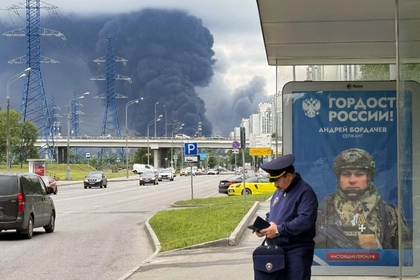
Drone Attack on Moscow Triggered Sharp Rise in Anti-War Views Across Russia
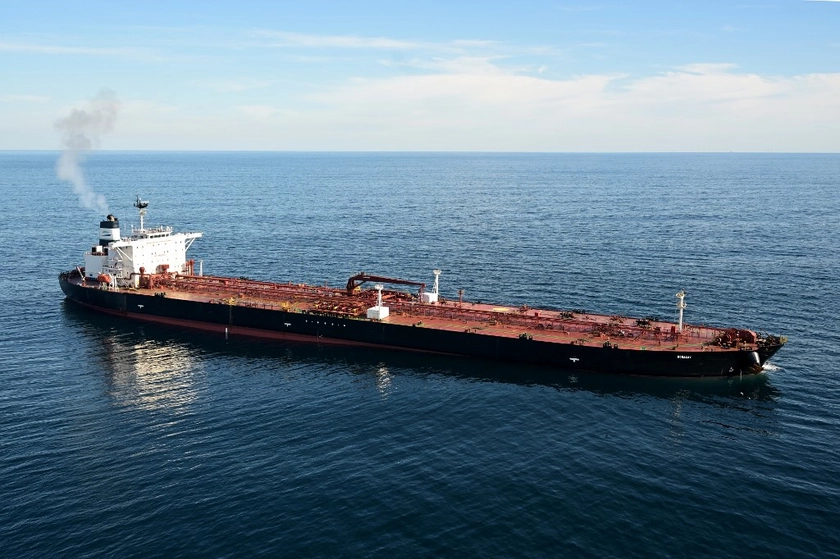
Despite a cap designed to limit Russia’s crucial oil revenues, the country has successfully utilized a “shadow fleet” of tankers to bypass the restrictions. This armada of aging vessels, often operating without Western insurance, has enabled Russia to continue shipping its oil to global markets outside the cap’s purview.
The GAO noted that the existence and operational success of this “shadow fleet” has helped Russia maintain relatively stable oil production and exports, severely limiting the cap’s intended efficacy.
The policy, while a bold concept, appears to have been blunted by Moscow’s adaptive measures.
A cycle of circumvention
Another area of concern is Russia’s continued access to military-grade technology. US export controls, designed to starve Russia’s defense industry of critical components, have hindered but not completely halted the flow of goods.
The report found that Russia continues to obtain “high priority” items, particularly those needed for its military and defense industrial complex.
These components are not arriving through direct channels but through complex and sprawling procurement networks established in third-party countries.
The GAO’s analysis confirmed that once one of these third-party companies is identified and sanctioned for its role in the illicit trade, another quickly takes its place. This continuous cycle of cat-and-mouse makes enforcement a constant and exhausting battle.
Furthermore, the report highlighted a significant limitation in the controls on lower-level technologies.
These items, more widely available from foreign sources, are far more challenging for US agencies to track and prevent from reaching Russia, as compared to highly specialized components with a more limited global supply.
Financial measures under scrutiny
Beyond the movement of goods, the report cast a critical eye on the financial measures in place. While US agencies have taken various actions to hold “malign Russian actors accountable,” including freezing billions of dollars in assets, they have faced substantial challenges in assessing the effectiveness of these efforts.
The GAO found that agencies have not established clear metrics to determine if asset freezes are successfully deterring illicit activities.
Without these benchmarks, it is “impossible to know if the sheer scale of the asset freezes is translating into a meaningful and lasting strategic impact,” - a congressional aide familiar with GAO findings explained to Kyiv Post on Friday.
A call for measurable coals
The most critical finding, however, is the foundational absence of a framework to measure success. Agencies responsible for the policies – the Departments of State, Treasury, and Commerce – ave broad, high-level goals but have not defined clear objectives with quantifiable outcomes.
This gap is a central flaw. It makes it difficult, if not impossible, to justify the effectiveness of the sanctions and to inform future policy decisions with empirical evidence.
The GAO stressed that this information is “crucial for improving current efforts and informing the future use of sanctions and export controls.”
The report also raised concerns about the long-term sustainability of sanctions programs. It noted that two State Department bureaus, which have used over $164 million in Ukraine supplemental funding for these activities, have not assessed the risks their programs face when this funding expires in late 2025.
This lack of a risk assessment leaves the US vulnerable to a potential lapse in critical sanctions enforcement activities.
The GAO warned that without a plan for a future without this supplemental funding, the agencies’ ability to continue their current level of operations is in jeopardy.
The GAO’s recommendations are direct and urgent. It has called on US agencies to immediately define clear, measurable objectives for their sanctions and export controls.
The report also specifically urged the State Department bureaus to assess the risks associated with the depletion of supplemental funds.
The GAO’s audit, which was mandated by Congress, serves a vital oversight function. It provides lawmakers with an independent, fact-based assessment of the US government’s efforts, allowing them to make more informed decisions about future policy and funding.
In their formal response, the Departments of Commerce and Treasury have concurred with the recommendations, indicating a willingness to implement the necessary changes.
However, the State Department has only partially agreed, signaling a potential bureaucratic roadblock to full implementation of the GAO’s guidance, a source to Kyiv Post.
The State Department’s hesitation was rooted in a concern that overly narrow or rigid targets could limit the flexibility of their diplomatic and policy tools. While understandable, this stance highlights the fundamental tension between the need for adaptable policy and the demand for measurable accountability.
The report is an unsparing wake-up call. It emphasizes that a robust foreign policy requires not just bold and decisive action, but also the analytical tools to measure its impact and adapt its course.
Without these metrics, the US risks engaging in a sanctions-driven response that is both costly and, in the long run, ineffective. It is a call for a more strategic, data-driven approach to economic statecraft.
Ultimately, the GAO’s findings paint a picture of a US sanctions regime that is strong in its initial imposition but weak in its ability to adapt and sustain its pressure.
The report leaves little doubt that without a shift in approach, the efficacy of this critical foreign policy tool will continue to be called into question.
You can also highlight the text and press Ctrl + Enter