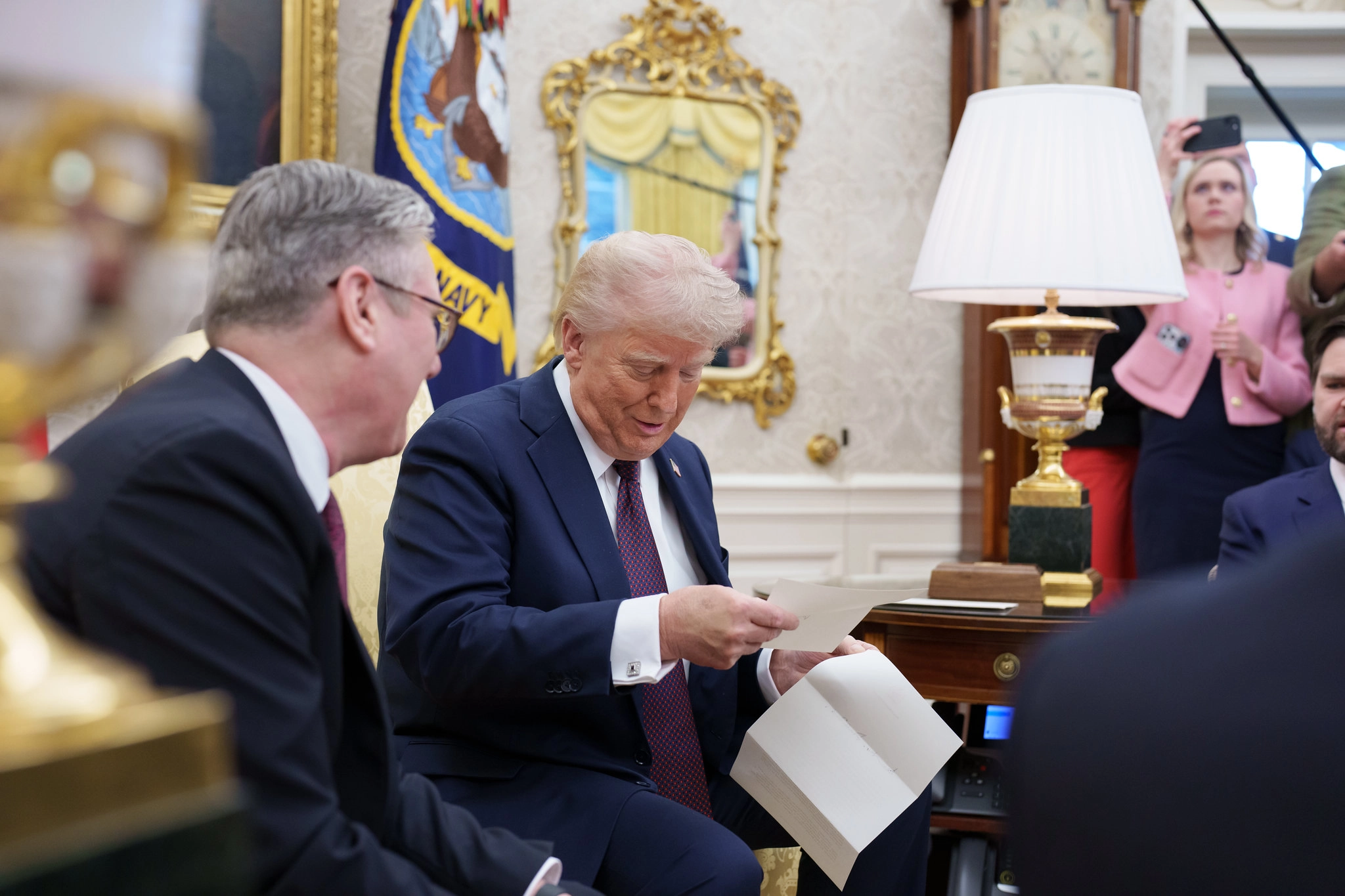
WASHINGTON DC – US President Donald Trump’s second state visit to the UK, beginning today, is a high-stakes affair marked by royal pomp, ambitious economic deals, and a deep-seated diplomatic divide over the most pressing security issue facing Europe: Russia.
While the Trump administration is keen to highlight a burgeoning partnership with the UK on everything from technology to defense, the core disagreement over how to handle Moscow’s aggression hangs heavy over the carefully choreographed events.
JOIN US ON TELEGRAM
Follow our coverage of the war on the @Kyivpost_official.
Diplomatic faultline
Trump himself has set a clear, and some might say controversial, condition for future US sanctions on Russia. “I am ready to do [sic] major sanctions on Russia and China,” he stated over the weekend on his Truth Social platform, “when all NATO nations have agreed, and started, to do the same thing, and when all NATO Nations STOP BUYING OIL FROM RUSSIA.”
This “you-first” approach is a direct challenge to the British Prime Minister Keir Starmer, who has positioned his government as a leader in applying pressure on the Kremlin.
The UK has been one of Kyiv’s staunchest allies, pushing for a unified front, but Trump’s demand for a collective oil embargo and tariffs on countries like China is seen by some as a hurdle to progress.
Nuclear energy renaissance, a geopolitical chessboard
Beyond the diplomatic friction, the visit’s goal is to produce tangible agreements, none more significant than a landmark nuclear energy partnership, as senior Trump administration officials explained during a conference call with reporters Monday morning.
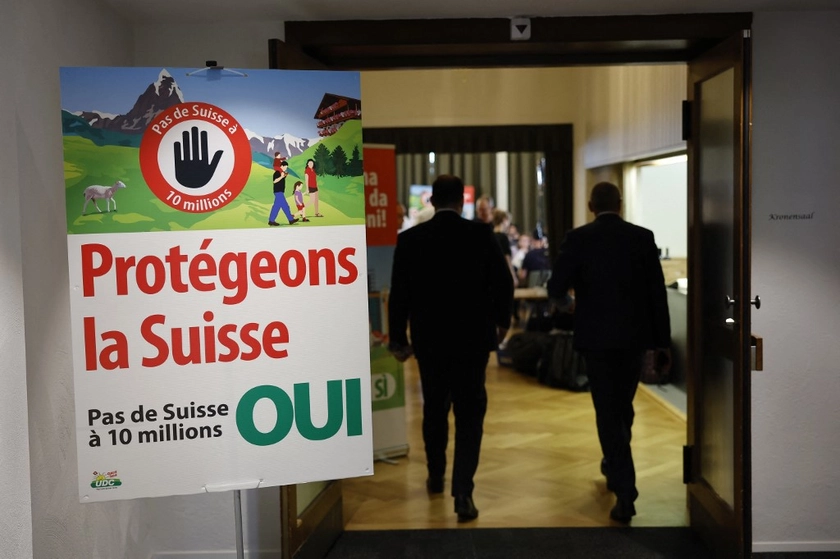
Switzerland Rejects Divisive Hard-Right Population Cap, Early Projections Show
The US officials revealed that the two countries have agreed to “significantly streamline and accelerate” the regulatory process for new reactor designs, with the goal of “cutting it down by a factor of two or more.”
This is more than just an energy deal; it is a strategic effort to diminish Russia’s influence. “This partnership is aimed at helping us achieve full independence from Russian nuclear fuel by 2028,” one senior US official explained.
“The agreement will pave the way for US and UK companies to partner on deploying advanced nuclear reactors, with specific projects already in the works.“
“This is really focused on cooperation between the US and the UK,” another official noted, “but there really are implications more broadly, because as we develop these technologies... that makes them available to contribute to broader European energy resilience.”
Pomp, pageantry, and pointed questions
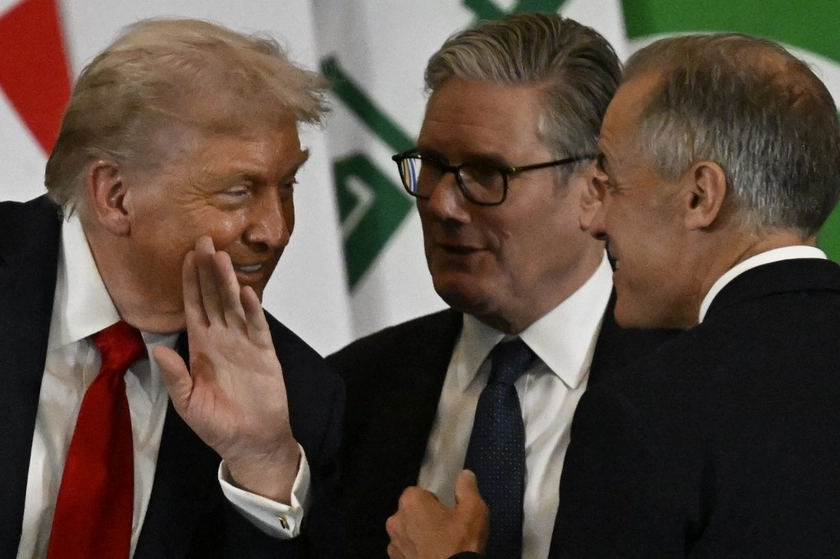
Beyond the gilded ceremonies and grand banquets, a palpable tension is expected to mark the interactions between Trump and PM Keir Starmer.
Both leaders, while publicly mentioning the “special relationship,” are operating from fundamentally different playbooks on the most pressing global security issues.
For the UK, the visit is an opportunity to strengthen the transatlantic alliance and secure a unified front against Russian aggression.
Starmer said during a White House trip early this year that “history must be on the side of the peacemaker, not the invader.” He has also stated that the UK is “ready to put boots on the ground and planes in the air to support a deal.”
This posture stands in stark contrast to Trump’s insistence that Europe must take on a greater share of the burden for its own defense.
On the other side of the table, Trump holds a distinct and often transactional view of international relations.
A senior US official, speaking on background on Monday, said that Trump’s approach is based on “common sense” and that “if you want peace, you have to talk – both sides.”
This perspective stands in contrast to the UK’s insistence that no lasting peace can be achieved without Ukrainian consent and without a clear message of deterrence against further Russian aggression.
Freedom of speech clash
A senior White House official also confirmed that during the bilateral meeting, Trump is expected to raise his concerns about the UK’s approach to freedom of speech.
“It is definitely an issue that we are thinking about,” the Trump official said, “not just free speech in the UK, but free speech elsewhere, is something that we in this administration are very much focused on.”
The dynamics of the meeting are likely to be on full display. As one senior official noted, Trump is confident in his ability to negotiate a peace deal, but warned, “if it doesn’t happen quickly, it may not happen at all.”
This sense of urgency, combined with Trump’s public praise for Starmer as a “very tough negotiator,” suggests a robust and, at times, difficult conversation ahead.
A Trump official added that the freedom of speech issue “may well arise, but it may not,” during the bilateral discussion.
The pomp and circumstance may provide a temporary gloss. But it can’t hide the fundamental disagreements that will shape the future of the transatlantic alliance and the global security landscape for years to come.
You can also highlight the text and press Ctrl + Enter
Putin’s Worst Nightmare