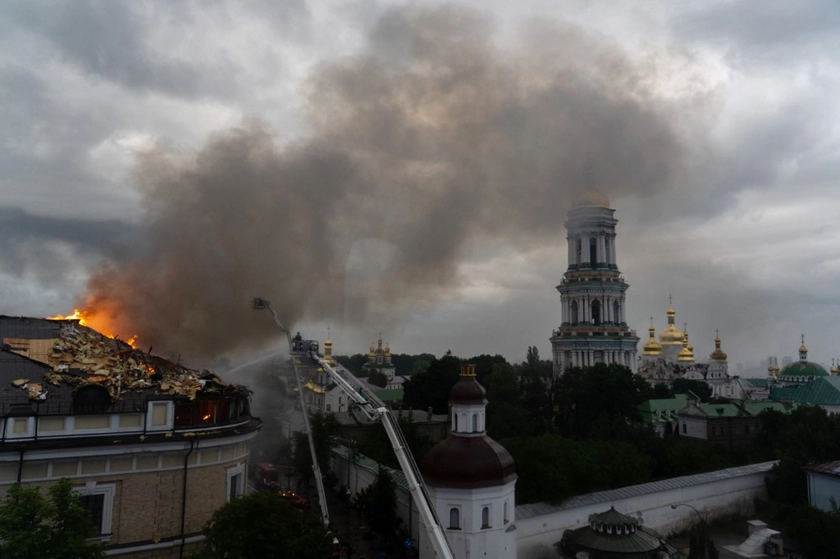
For the first time since the start of its full-scale invasion, Russia has struck Ukraine’s Poltava region with a “KAB” guided aerial bomb – a major escalation that shows Moscow has extended the range of its glide weapons, putting previously safe areas deep inside Ukraine within reach.
According to Ukraine’s Air Force and the monitoring group monitorwar, a “rocket-propelled aerial bomb” was spotted heading toward Poltava at around 11:48 am on Monday, followed minutes later by an explosion in Poltava district.
JOIN US ON TELEGRAM
Follow our coverage of the war on the @Kyivpost_official.
The bomb fell about 20 kilometers (12 miles) short of the city, a distance from the front line near Kharkiv is at least 150 kilometers (94 miles). Monitors say the KAB had traveled more than 100 kilometers (60 miles), indicating the standard glide bomb had been modified.
Only two days earlier, on Oct. 18, a rocket-assisted KAB struck Lozova in the Kharkiv region after flying about 130 kilometers (80 miles).
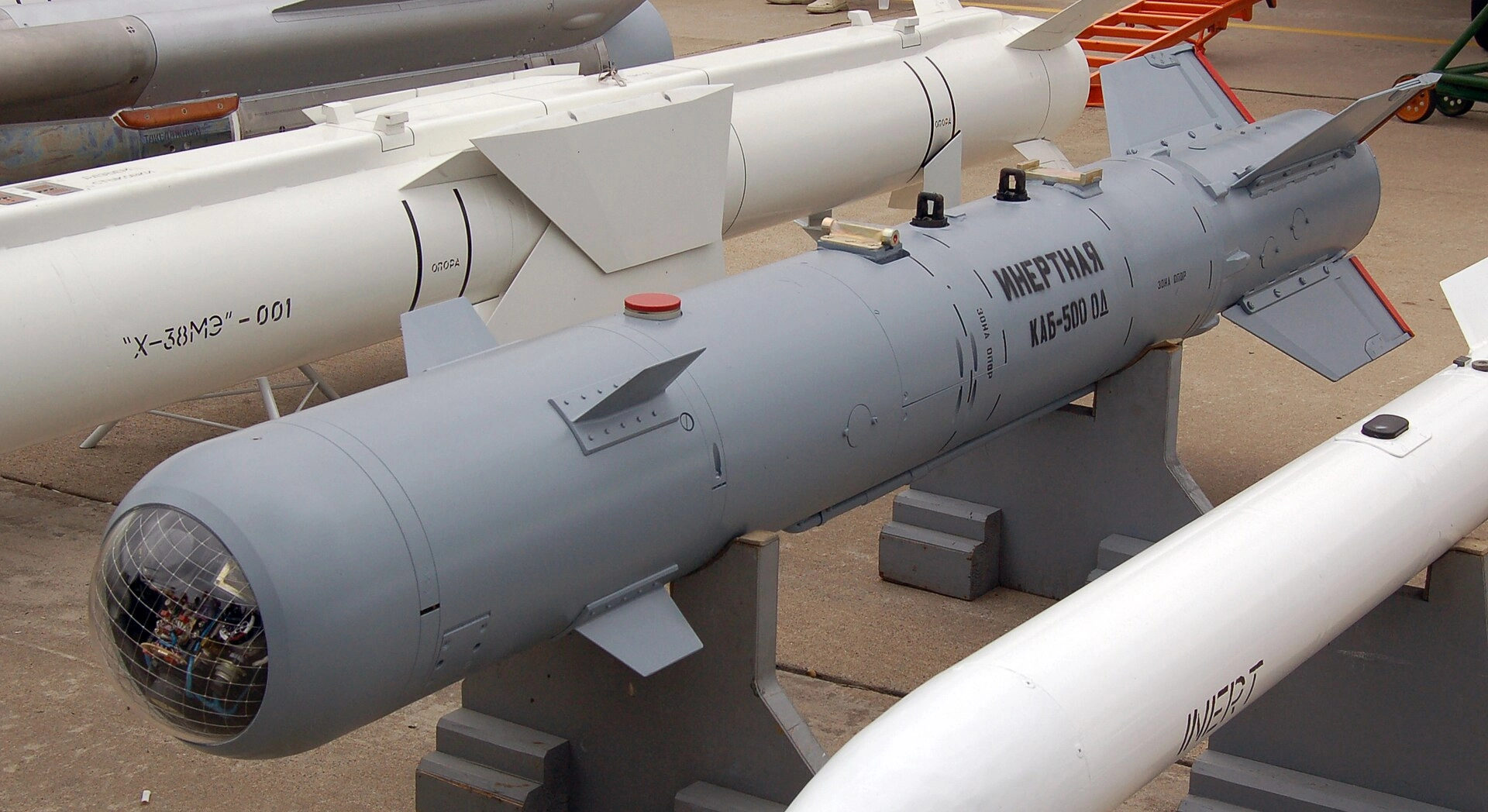
KABs are guided aerial bombs, equipped with wings and either laser, satellite (GLONASS/GPS), or inertial guidance. This makes them far more accurate than standard free-fall bombs.
Larger KABs can carry up to 1,500 kilograms (3,300 pounds) of explosives – enough to destroy large buildings or fortified military sites. They are typically launched from Su-35 fighters and Su-34 bombers beyond the reach of Ukrainian air defenses.

Flamingos Make Progress, Crimea Choked, German High Tech
Russia also uses older glide bombs such as the UPAB-1500В, first shown publicly in 2019 at the airshow. Weighing 1.5 tons containg nearly a ton of explosives, a UPAB-1500В can glide about 50 kilometers (32 miles) when dropped from a height of 15 kilometers (50,000 feet).
Another common type is the FAB-500, a 500-kilogram (1,100-pound) general-purpose bomb with wings and GPS guidance, capable of ranges of 50 kilometers (32 miles) or more.
Newer versions of KABs and other glide bombs appear to have been modified with improved guidance, aerodynamics, and sometimes rocket boosters to extend their range.
“The enemy keeps upgrading its air weapons to increase range and reduce the risks for its pilots,” monitorwar said.
The Poltava attack shows that regions once considered safe – including command centers, supply depots, and logistics hubs – now fall within Russia’s reach.
Analysts warn that long-range glide bombs could become one of the main threats to Ukraine’s military infrastructure and civilian areas near the front line as winter approaches.
You can also highlight the text and press Ctrl + Enter

Russia Unleashes 681 Aerial Weapons on Ukraine, Killing 10, Including Rescuers