On Nov 3, Defense Minister Denys Shmyhal announced new types of contract for Armed Forces of Ukraine (AFU) personnel intended to tackle two key challenges – desertion and de-motivation.
A key change in the new contracts is one year of leave after 2-3 years of service before returning to combat.
JOIN US ON TELEGRAM
Follow our coverage of the war on the @Kyivpost_official.
Ukraine’s parliament, the Verkhovna Rada, is preparing this month to approve bill no. 13574 in its second reading. The bill introduces clear terms of service for those aged between 18 and 24 who sign a contract with the AFU. Several MPs are seeking to amend the draft bill before the second reading so that the terms apply to individuals of any age who wish to sign up.
Shmyhal announced that the new contracts would be available to all service personnel, allowing for a long vacation after a certain period of service and combat duty. However, the minister’s proposal has received mixed reactions among members of the military.
What problems do the new contracts aim to solve?
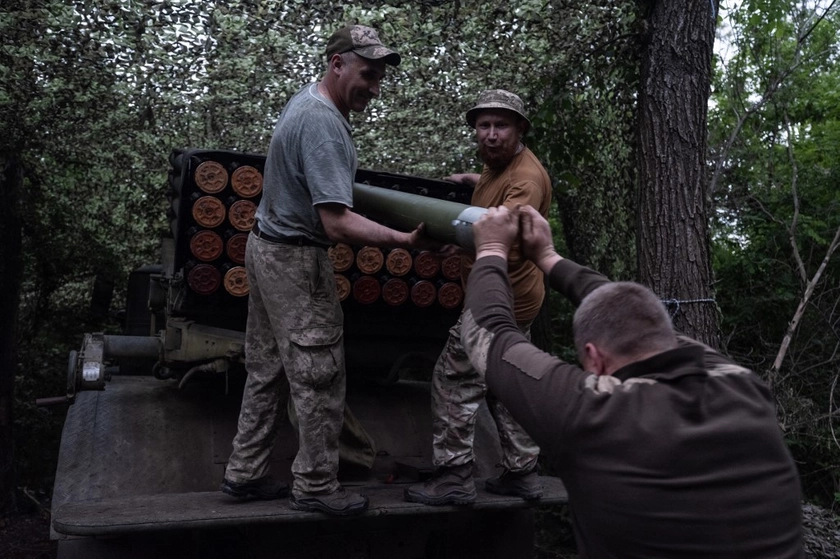
Many soldiers complain of chronic exhaustion, with some fighting since 2022 when Russia launched its full-scale invasions and others from even earlier such as 2014 when Russia previously attacked parts Ukraine. During this time, individuals have received only short 12-day periods of annual leave.
Fatigue is understood to have reached extreme levels and is considered one of the primary causes of absence without leave (AWOL).
Zelensky Unveils Defense Overhaul: Higher Pay, Fixed Service Terms, New Contracts for Troops
“I have two fighters who went AWOL – they don’t hide it, they’re just exhausted. One said they’ll rest for a couple of months and come back,” a junior AFU officer told Kyiv Post.
Many soldiers expected the mobilization law adopted in 2024 to set maximum service terms – meaning those who had served the longest would be demobilized and replaced by civilians. That did not happen and no fixed service terms were introduced.
“The issue of service duration was actively discussed back in 2024, when Ukraine introduced voluntary recruitment laws and amended the mobilization law. The military’s main criticism of the new law was the lack of provision for demobilization and rotation… Among Ukrainian lawmakers, there’s a prevailing view that the term ‘demobilization’ is inappropriate during an ongoing war,” says military analyst Serhii Kuzan.
At the same time, there is a perceived problem of draft evasion among civilians, with a lack of public discussion about mobilization among authorities, while existing bureaucratic loopholes allow those avoiding service to remain unpunished. The effect is an undermining of mobilization efforts.
Given that many Ukrainian units are facing a shortage of soldiers at the front, the current situation makes it very difficult to replace long-serving soldiers, creating among them a sense of injustice.
“Is it fair that some of us fight and give everything – time, health, life – while others don’t even think about the war? They have lives to live, families to spend time with, and they see no reason to waste their lives since there’s a ‘professional’ army born to fight. You can thank them – or not – and live a better life. Let the fools fight, those who need it more, or those caught by mobilization teams,” writes soldier Oleksandr Osypenko.
Paradoxically, under current law, soldiers can formally resign even in wartime if their contract expires. But there’s a catch, says military lawyer Daria Tarasenko.
“The essence is that after leaving the [AFU], a person becomes an ordinary military-eligible civilian and must register at the recruitment office within five days. That’s where they’ll be handed a new summons and legally remobilized. And there’s no guarantee they’ll return to the same unit,” Tarasenko explains.
This makes resignation de facto meaningless, making the only real solution replenishing units with newly mobilized personnel, allowing some of those who have fought for years to take long-term leave.
However, civilians are in no hurry to join the AFU because they know there’s no guaranteed return date.
Uncertainty about the future, heavy losses, and the prospect of spending years in the trenches – as those who joined in 2022 already have – deter potential recruits.
With such a vicious circle at play, can the new law fix it?
The new proposal
According to the defense minister, the new type of contracts will provide what everyone has been waiting for – fixed service terms and the opportunity for one year of leave after two years of service.
“The main innovation is guaranteed fixed service terms. Contracts will last from one to five years. For contracts of two to five years, there will be a one-year deferral from mobilization after completion. We also plan to include increased monthly payments, signing bonuses, and an expanded social package,” Shmyhal wrote.
The base salary for soldiers in the rear would rise from Hr. 22,000 ($500) to Hr. 60,000 ($1,500). This is considered an important incentive, since additional combat pay of Hr. 100,000 ($2,500 per month) is only given for participation in active combat. Once a unit is withdrawn to the rear or second line, soldiers lose these bonuses, reverting back to what would otherwise be a very low salary of $500, comparable to that of a warehouse worker or cashier. This is understood to have been one such factor deterring civilians from enlisting.
The new contracts still require parliamentary approval, meaning many weeks could pass before implementation.
“The initiative from the Cabinet of Ministers and the Ministry of Defense requires a law – only parliament can set mobilization and deferral norms,” Tarasenko noted.
There is also discussion about increasing signing bonuses. Sums of 500,000 UAH ($13,000) have been mentioned, though no official decision has yet been made.
Who stands to benefit most?
The new contract terms could be favorable to newly mobilized troops. Those who have not served before can start their two- or three-year countdown to a long-awaited one-year leave – especially young people. There are many of them, as Kyiv Post has previously written about, and they crave certainty.
Another group that stands to benefit is those who deserted due to endless service fatigue.
“The new contracts and their incentives could help bring back those who left their units. Some did so out of exhaustion or because they didn’t know how long they’d serve; in some cases, they hoped it would help them transfer to other units,” Kuzan notes.
Some of those willing to sign might also be soldiers ready to stay in the AFU after the war ends, for example those who have nowhere to return where their hometowns are occupied or destroyed, or if there is no other work left.
“I’m sure many servicemen, especially mobilized ones who’ve been at war for nearly five years, would want to sign a contract with a fixed term – say, one or two years – just to have at least an illusion of control over their own destiny,” says officer Myroslav Hai.
Another potential group that could be motivated by the new contracts includes men over 40 who have already been legally discharged after three exhausting years of service since 2022. Legal demobilization could occur due to injury, caring for a disabled relative, or loss of a family member in combat or captivity.
Kyiv Post spoke with three men aged 44, 47, and 50 who are considering returning to service. All of them are from small northern Ukrainian towns with populations of around 10,000. Work in these towns was scarce even before the war, and now even more so, especially for older people.
“If I can take a rear position as a specialist, why not? I’ll be useful to the army again and have clear limits to my renewed service. If there are financial bonuses, that would improve my situation,” says Oleh, who fought from day one as part of one of Ukraine’s tank brigades.
Why are some members of the military concerned about the new contracts?
The reaction of some service personnel and their families has been mixed to negative.
The reason? The law will not apply to those already fighting. Or rather, it will, but their previous years of service will not count. To receive a one-year deferral, soldiers must sign a new contract and serve at least two more years, even if they have been on the front since 2022. Many feel once again overlooked.
“It’s clear that the state can’t immediately grant one-year leave to servicemen who have been fighting since 2022. First and foremost, it is a matter of national security and personnel management. Realistically, under such conditions, the [AFU] would lose many trained and experienced fighters for a year. At the same time, the new contracts and the incentives within them could help attract more recruits. The increased manpower would then allow internal rotations, more leave and rest for long-serving soldiers,” explains Kuzan.
Another concern is that many mobilized soldiers fear signing contracts in case the war ends or at least stalls and a freeze is reached, meaning that they won’t be able to demobilize and will have to continue serving.
“From what we know, sorry, it looks like another trap. Personally, I expect that next year we’ll see either the end of the war or its freeze for a while. In that case, mobilized soldiers will have a chance to go home, while new contract soldiers will keep serving according to their signed terms – but without today’s bonuses, only with base pay, likely around UAH 5,000 – 30,000 ($ 600-700). Maybe it’s the right step for attracting new people, but I’ll pass. I’ll stay mobilized and don’t plan to sign a contract,” says Sergeant Illia Krotenko of the 54th Brigade.
Time will tell what form the new contracts take, if and when they will be introduced, and whether such additional incentives will lead to net gains in morale and military combat strength.
You can also highlight the text and press Ctrl + Enter