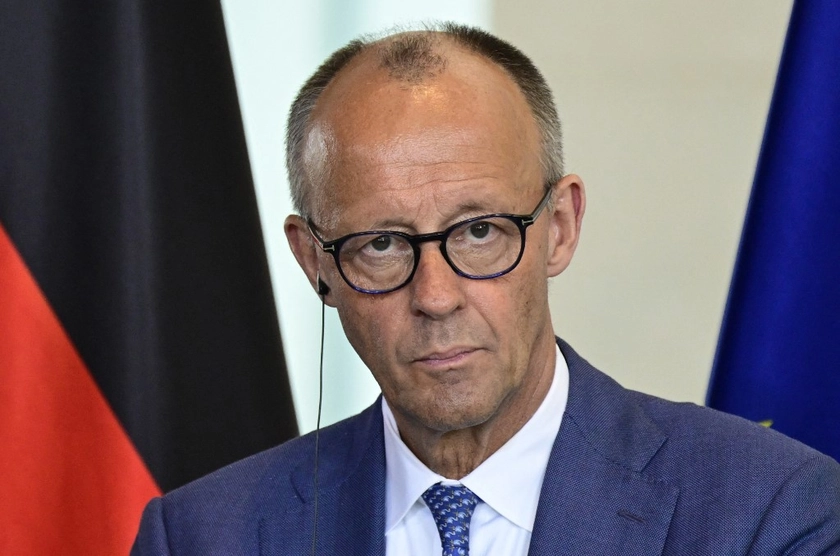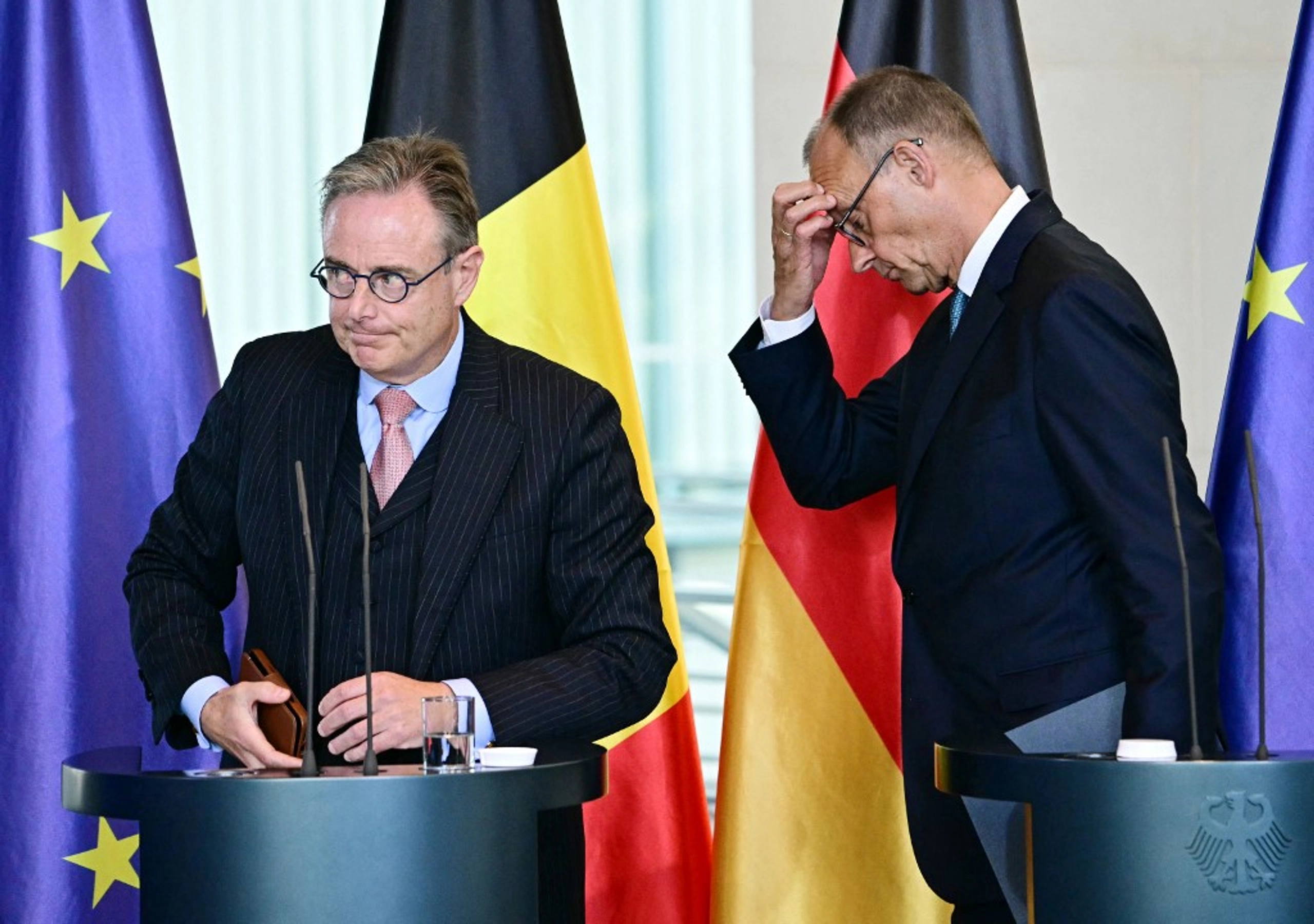
German Chancellor Friedrich Merz is to meet Belgian Prime Minister Bart de Wever in Brussels on Friday to discuss Belgium’s opposition to an EU reparations loan backed by Russian assets immobilized in Europe to fund Ukraine’s war effort.
The reparations loan, so-named because Ukraine would not have to repay it unless Russia pays it reparations after the war ends, could be worth more than €140 billion ($162 billion) to Ukraine.
JOIN US ON TELEGRAM
Follow our coverage of the war on the @Kyivpost_official.
However, the future of the plan, first proposed by European Commission President Ursula von der Leyen in September, has been uncertain for weeks. Belgium, which holds the majority of Russia’s immobilized European assets in its Euroclear bank, has opposed the reparations loan on the grounds that Belgium would bear most of the risk.
As per Reuters, de Wever told local media that he hoped his discussion with Merz would be “fruitful” and that they would find a solution to present to Europe over the next two weeks.
It is clear, however, that the Belgian leader’s stance on the issue has not fundamentally changed.
“I can still determine my own position, even if there are large, strong neighbours whom I like very much and greatly respect politically, who might ask me something differently. I have only one responsibility: that is the interests of the Belgian taxpayers,” he said.
On Monday, de Wever raised eyebrows in Europe by questioning whether Russia would – or should – lose the war.
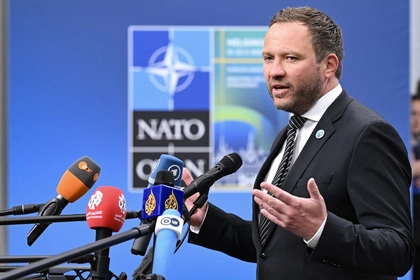
Estonia Urges EU Alumina Ban and Total Russian Energy Maritime Service Blockade
“Who seriously believes Russia is going to lose in Ukraine? It’s a fable – a total illusion. And it is not even desirable for Russia to lose if it means instability in a country with nuclear weapons,” he told a Belgian newspaper.
He also said that “Moscow has informed us that if seizures happen, Belgium and I personally would ‘feel it for eternity.’ That seems like quite a long time.”
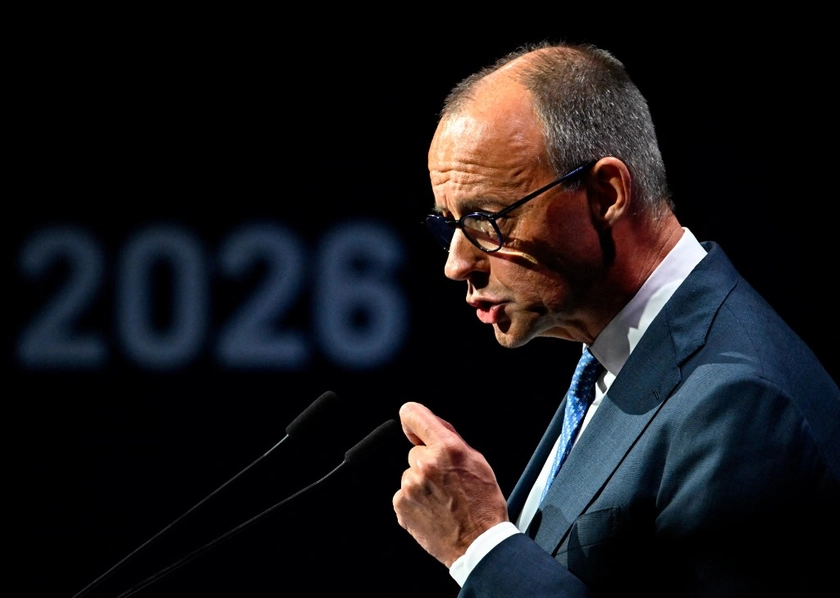
Merz, on the other hand, supports the reparations loan proposal – but, like many European leaders, agrees with Belgium that its risks (namely, the risk of legal action and other retaliatory measures taken by Russia) should be distributed more equally.
“It would be unacceptable for a single country to bear an excessive burden in this regard,” Merz said earlier this week, as per Reuters.
You can also highlight the text and press Ctrl + Enter

CARTOON: Who Has the Cards Now?
FACT-CHECK: Is Donald J. Trump Truthful About Ukraine?
OPINION: Crimea Cuts, St. Pete Double Tap, Boats Bashed