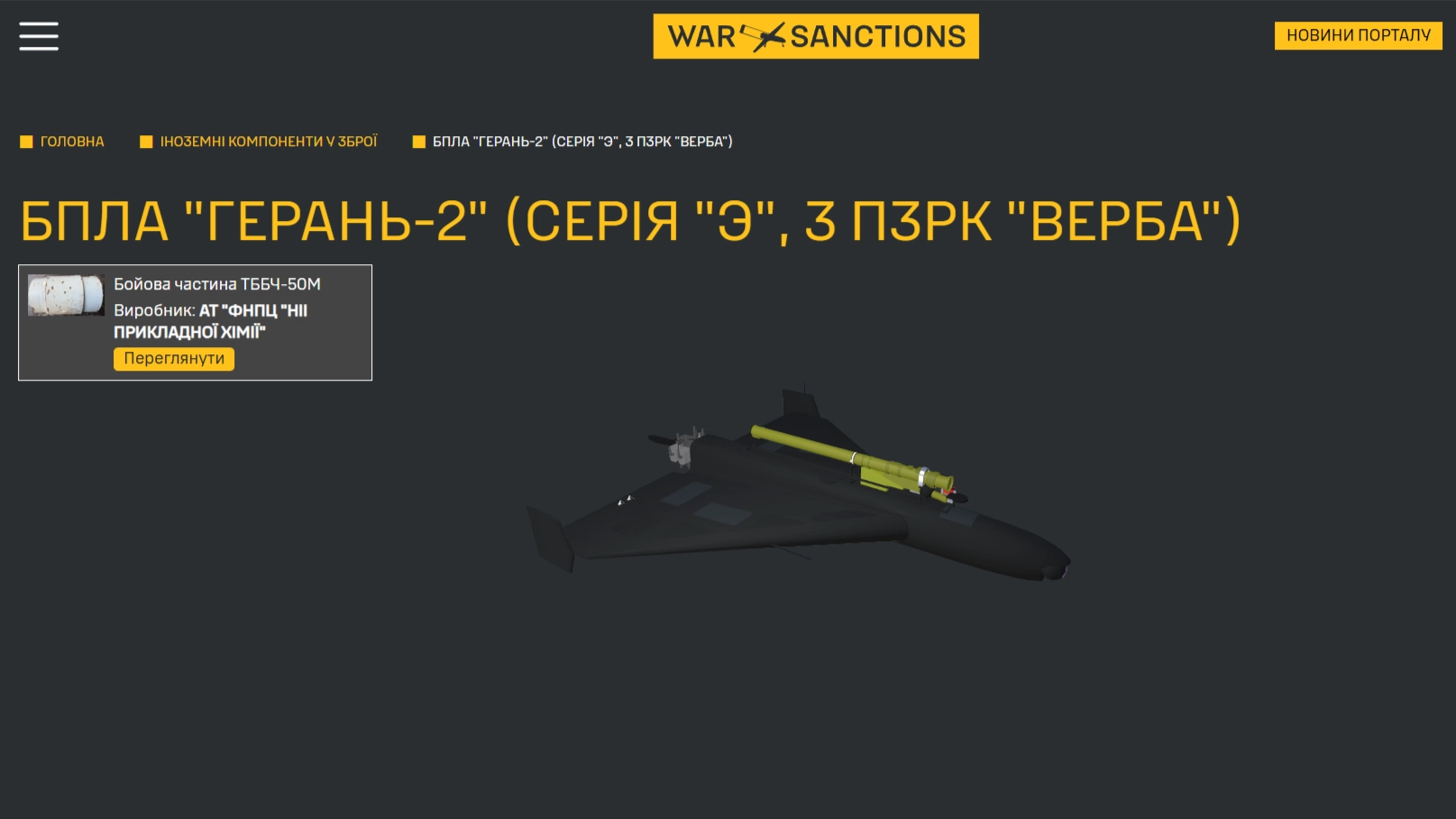
Ukraine’s Military Intelligence (HUR) said Russia has developed a new modification of the Shahed-type “Geran-2” drone capable of carrying both a man-portable air defense system (MANPADS) and a conventional warhead at the same time.
In a statement published Monday on the War&Sanctions portal, HUR disclosed an interactive breakdown of the Geran-2 “E” series, showing it equipped with a Russian Verba MANPADS alongside a primary explosive payload.
JOIN US ON TELEGRAM
Follow our coverage of the war on the @Kyivpost_official.
According to HUR, the modification reflects Russia’s efforts to adapt its drones in response to the effective work of Ukraine’s Air Force and army aviation in intercepting unmanned aerial vehicles. Ukrainian intelligence previously reported the use of Geran-2 drones armed with Soviet-era R-60 air-to-air missiles. The newly disclosed version replaces that missile with a Verba MANPADS.
HUR said the drone is manually operated in real time. It uses a Chinese Honpho TS130C-01 optical camera mounted in the nose cone and a mesh modem produced by Xingkay Tech.
When an aerial target is detected, the operator sequentially activates two servomechanisms: the first starts a chemical battery and nitrogen cooling system for the missile’s seeker head, while the second opens a specially designed protective cover once the seeker reaches operating temperature. The missile’s trigger is fixed in a permanently pressed position, allowing automatic launch immediately after target lock.
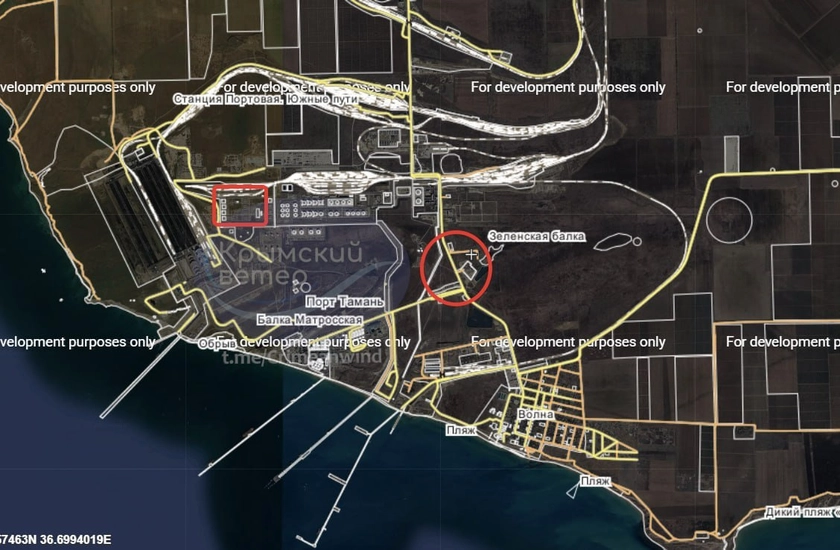
SBU, HUR, and SSO Joint Drone Strike Cripples Tamanneftegas Terminal
Unlike the earlier R-60 configuration, this version retains a full main warhead on the drone itself. The examined sample was fitted with a TBBCh-50M thermobaric warhead, allowing the UAV to continue its strike mission after firing the missile. Targeting can also be conducted manually by the operator, HUR said.
The rest of the drone’s components remain standard for Geran systems and include a flight controller, inertial navigation system, a 12-channel “Kometa,” a tracker based on a Raspberry microcomputer, and 3G/4G modems.
HUR said it recorded, for the first time, the use of a new six-axis inertial module, SCH1633-D0I, manufactured by Murata, a component introduced in late 2024 for civilian automotive applications such as autonomous driving and driver-assistance systems.
According to Ukrainian intelligence, the remaining electronic components originate from multiple countries, including the United States, China, Switzerland, Taiwan, Japan, Germany and the United Kingdom.
HUR said publishing these details is intended to expose technological supply chains behind Russia’s military aggression and support stronger international sanctions pressure.
Russia’s sanction-evasion efforts
In recent months, Ukrainian intelligence has released technical profiles and supplier lists for missiles, cruise systems and drone families – steps Kyiv says are crucial for helping partners close loopholes and stop the flow of dual-use goods.
The War&Sanctions platform, created and maintained by HUR, documents supply chains, tracks sanctioned entities, and lists foreign components found on Russian weapons.
The War & Sanctions portal currently contains:
- more than 5,200 foreign-made components identified in 181 types of Russian weapons;
- 12 interactive diagrams of Russian and Iranian weapon systems;
- over 280 companies involved in their production.
HUR said coordinated pressure by Western allies remains essential. “Weapons Russia is using against Ukraine today may be used tomorrow against other states,” the agency warned, calling for “synchronized action, stronger sanctions, and sustained support for Ukraine to stop the aggressor.”
On Dec. 15, HUR said Russia has equipped a modified Geran-2 drone with an R-60 air-to-air missile, originally designed for use by combat aircraft.
The statement confirmed earlier reports that downed Russian drones were fitted with R-60 missiles.
According to HUR, the missile is mounted on a dedicated launch rail installed on a special bracket located on the upper forward section of the drone’s fuselage.
The adaptation is intended to threaten Ukrainian military aviation and tactical aircraft involved in intercepting Russian unmanned aerial vehicles, HUR said.
You can also highlight the text and press Ctrl + Enter

ANALYSIS: Russia’s Air Defense Problems Are Growing