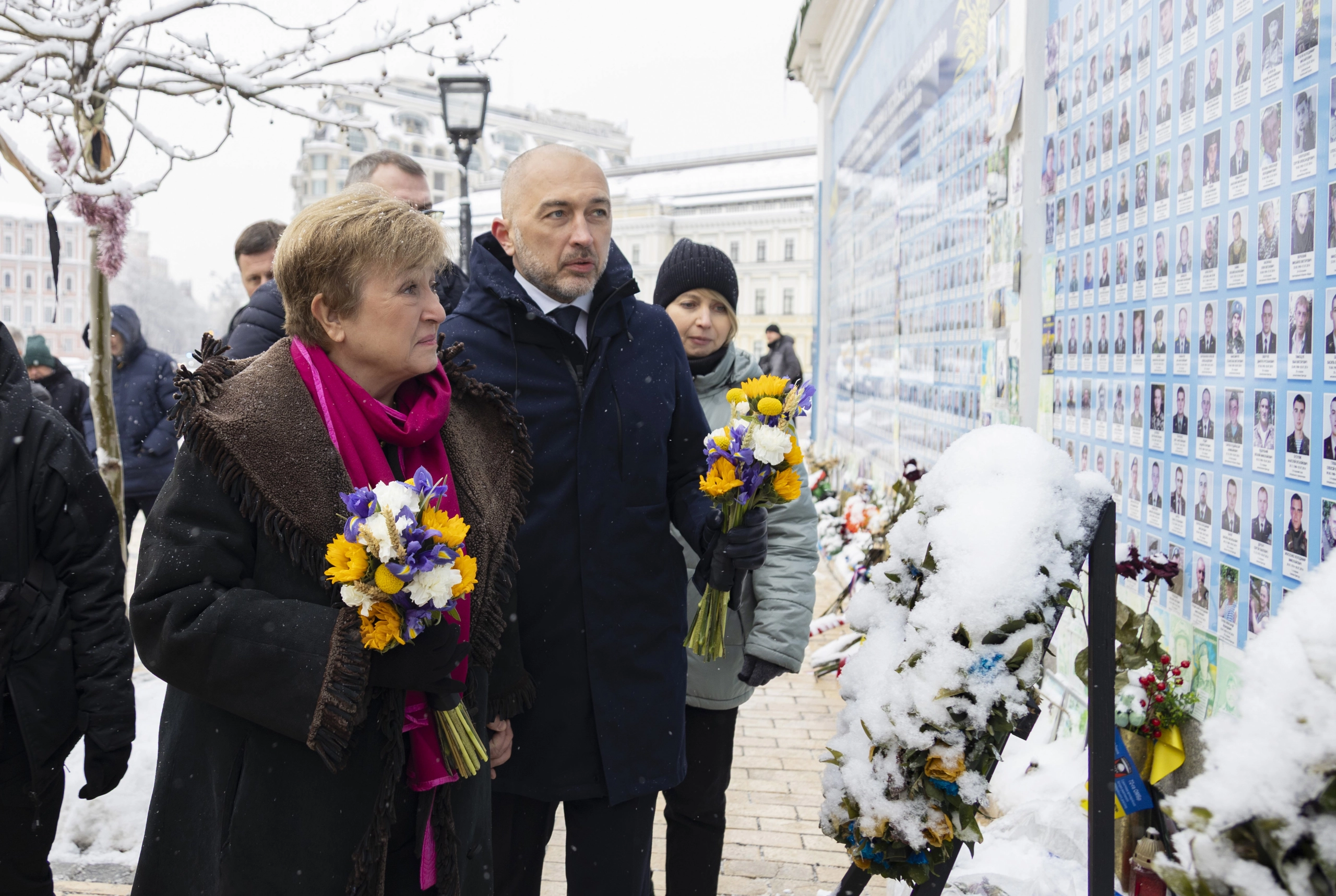
The delegation of the International Monetary Fund (IMF) pulled into Kyiv’s central railway station on a freezing early morning. Temperatures were down to -13 C (8.6 F) as Ukraine reeled from devastating Russian strikes and major power outages. Blackouts followed two consecutive waves of Russian strikes on Ukraine’s energy system – a massive missile and drone attack overnight on Jan. 8-9, and another barrage days later involving 18 ballistic missiles.
Energy companies became forced to leave Ukrainians and businesses without power for 8-14 hours on average amid one of the coldest Ukrainian winters in years. This year, it suddenly felt as cold as decades ago – but back then, Ukraine coped with freezing temperatures without Russian ballistic missiles.
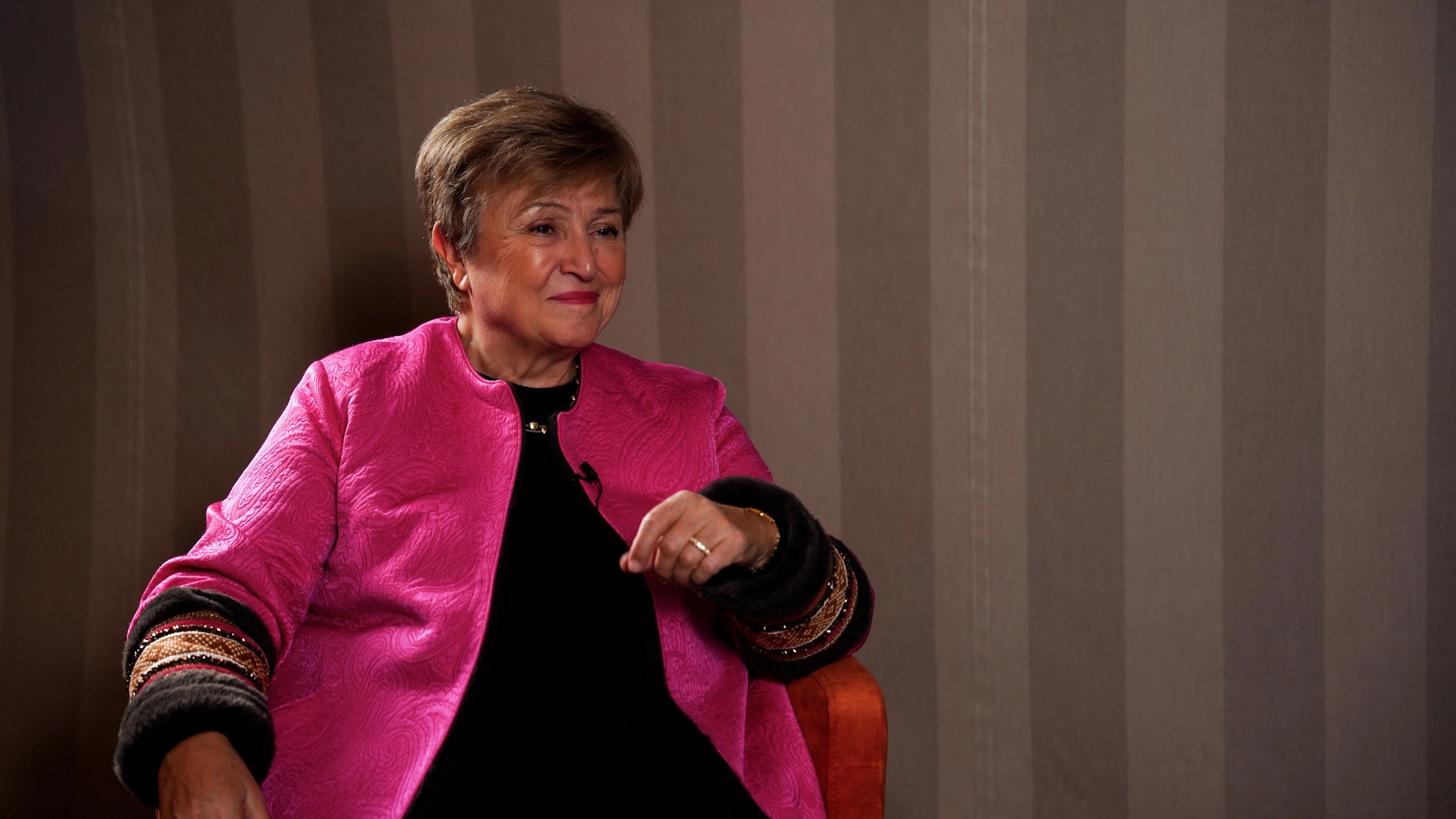
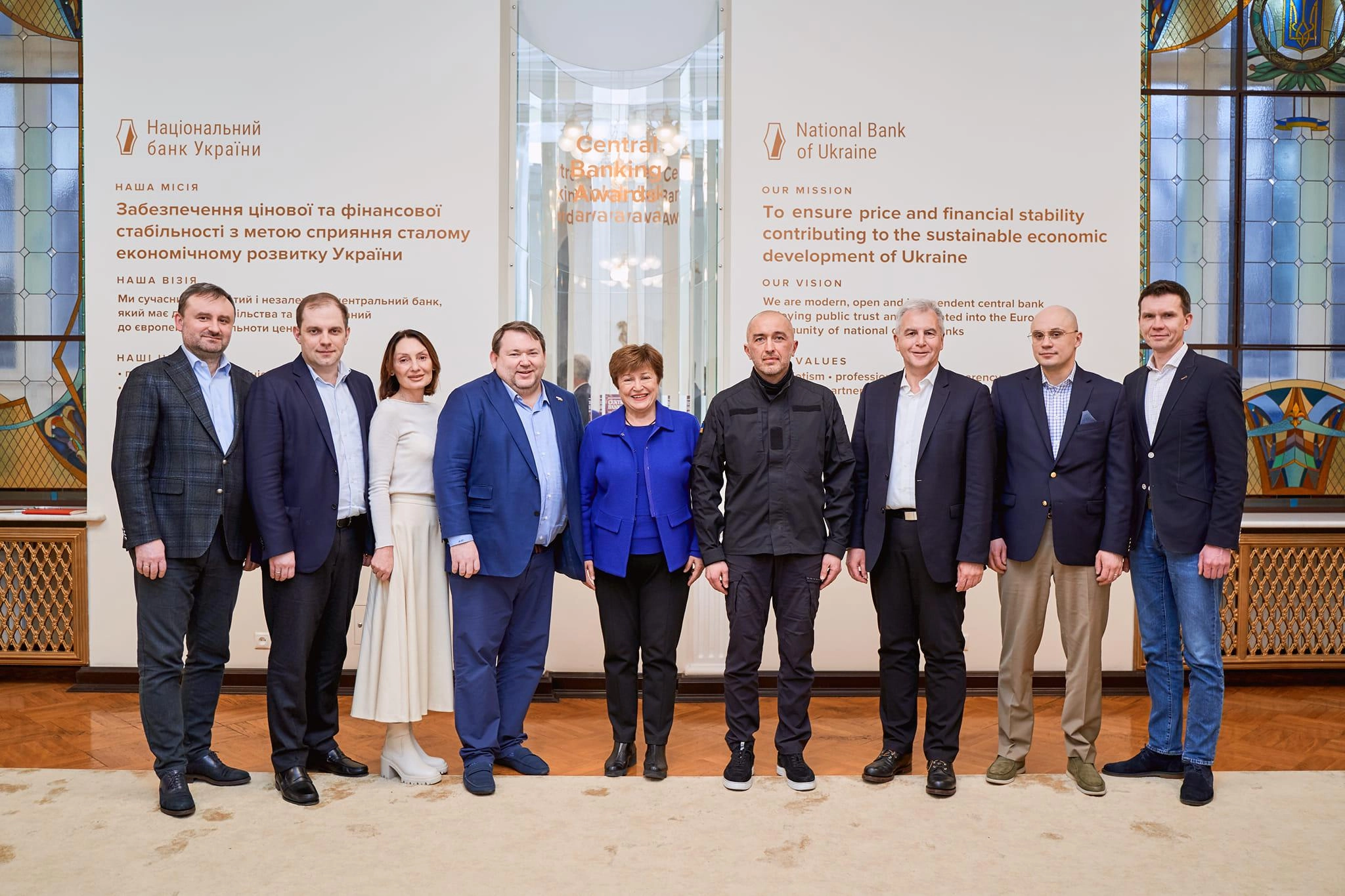
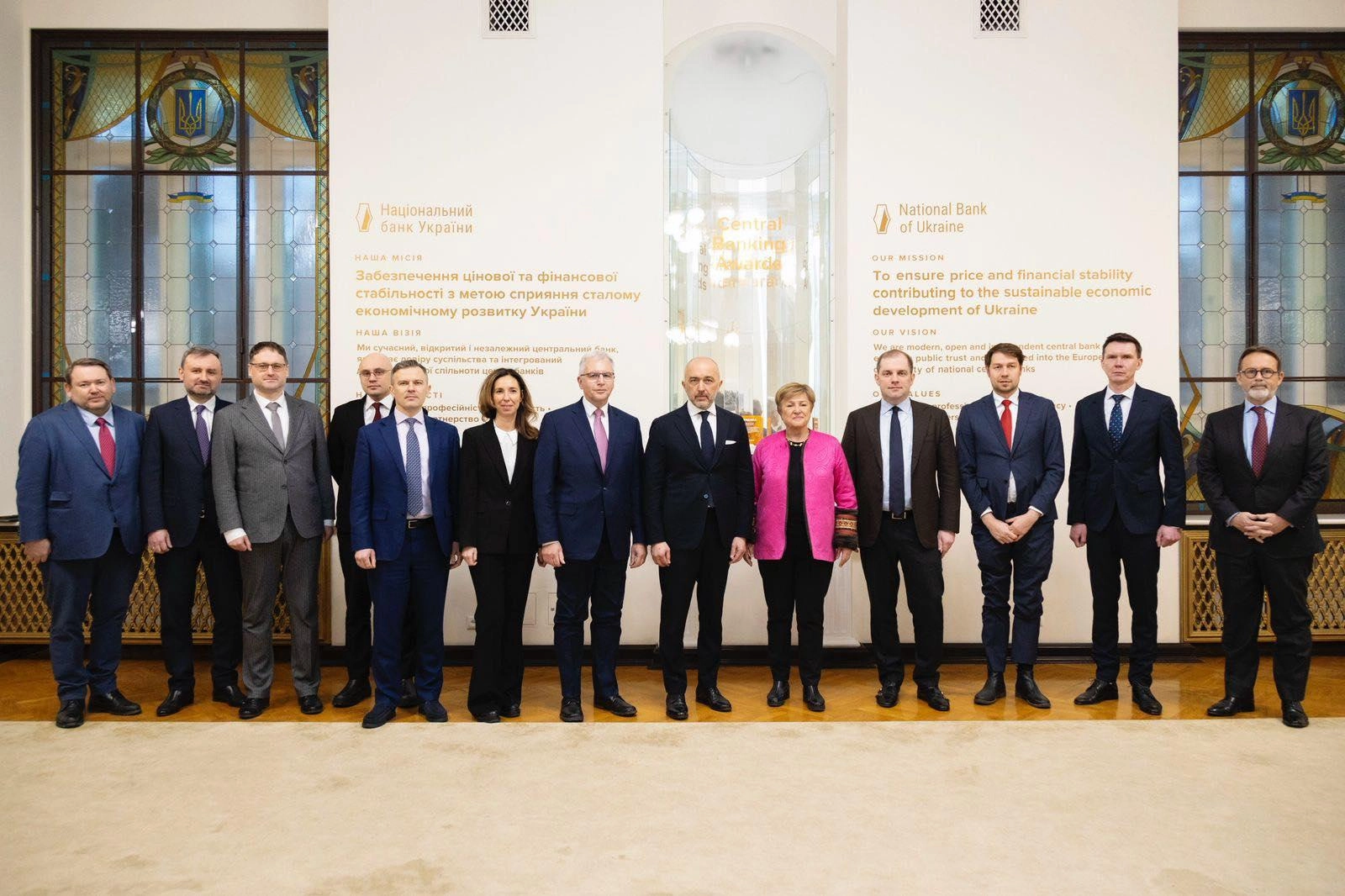
IMF Managing Director Kristalina Georgieva arrived in Kyiv as Ukraine’s government looks forward to a new program with the fund. She was accompanied by IMF Executive Director Jeroen Clicq, IMF Alternate Executive Director Vladyslav Rashkovan, IMF European Department Director Alfred Kammer, and Chief of Staff of the Managing Director Andreas Bauer. The delegation was joined by Kyiv-based IMF Resident Representative for Ukraine Priscilla Toffano.
Georgieva previously visited Kyiv in February 2023, before the IMF’s board of directors approved the four-year Extended Fund Facility (EFF) program for Ukraine, worth around $15.6 billion. $10.6 billion from this program has already been disbursed to Ukraine.
You Realize How Valuable Life Is When Death Feels Possible Every Day
The previous program was planned assuming Russia’s invasion would end in 2025, though it has become all too clear that Russia shows no sign of stopping the war. Ukraine’s defense spending from the budget increases each year despite hoping the war might one day end. It jumped by 83.5% during the first year of the full-scale invasion, increasing by less than 10% annually in subsequent years.
Ukraine’s Finance Ministry has repeatedly cut investments in the economy and reviewed the budget to meet wartime needs, while the country’s real GDP has continued to decrease as a result of Russian strikes. The war therefore ground on whilst IMF financing became increasingly depleted.
Ukraine needed a new program, and the authorities eventually negotiated one. In November last year, the IMF and Ukraine reached staff-level agreement on a new four-year $8.1 billion EFF. Ukraine now needs to vote on tax laws, then the final step will be a vote by the IMF’s board of directors to greenlight the new program – expected to take place in February.
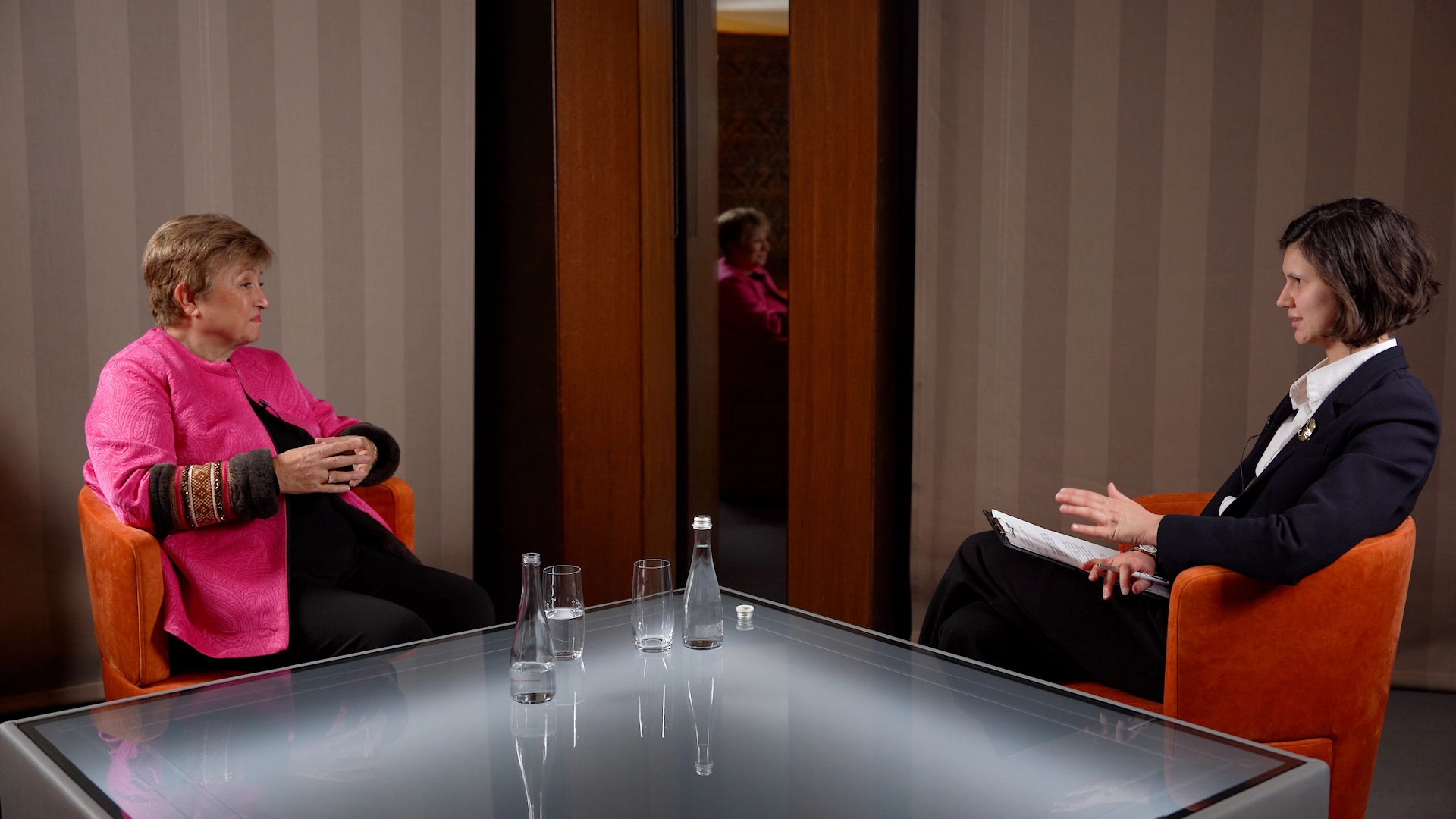
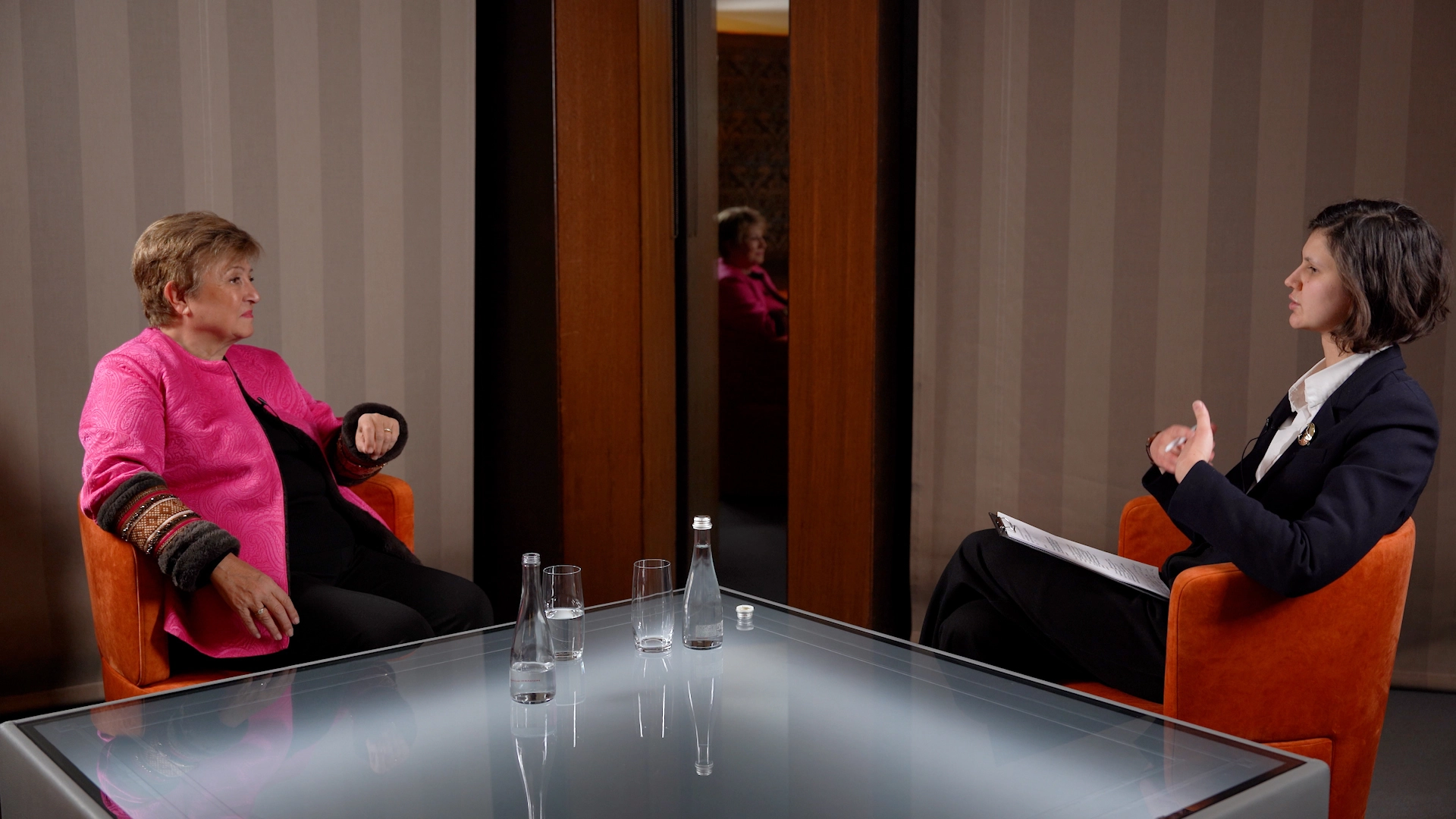
Kyiv Post spoke with the IMF managing director during her visit to Kyiv, to discuss the program, the impact of Russia’s war on Ukraine’s economy and on global trade.
The interview has been edited in this article for clarity and succinctness.
The video interview is also available on Kyiv Post YouTube channel.
“High respect” for Kyiv’s reform efforts
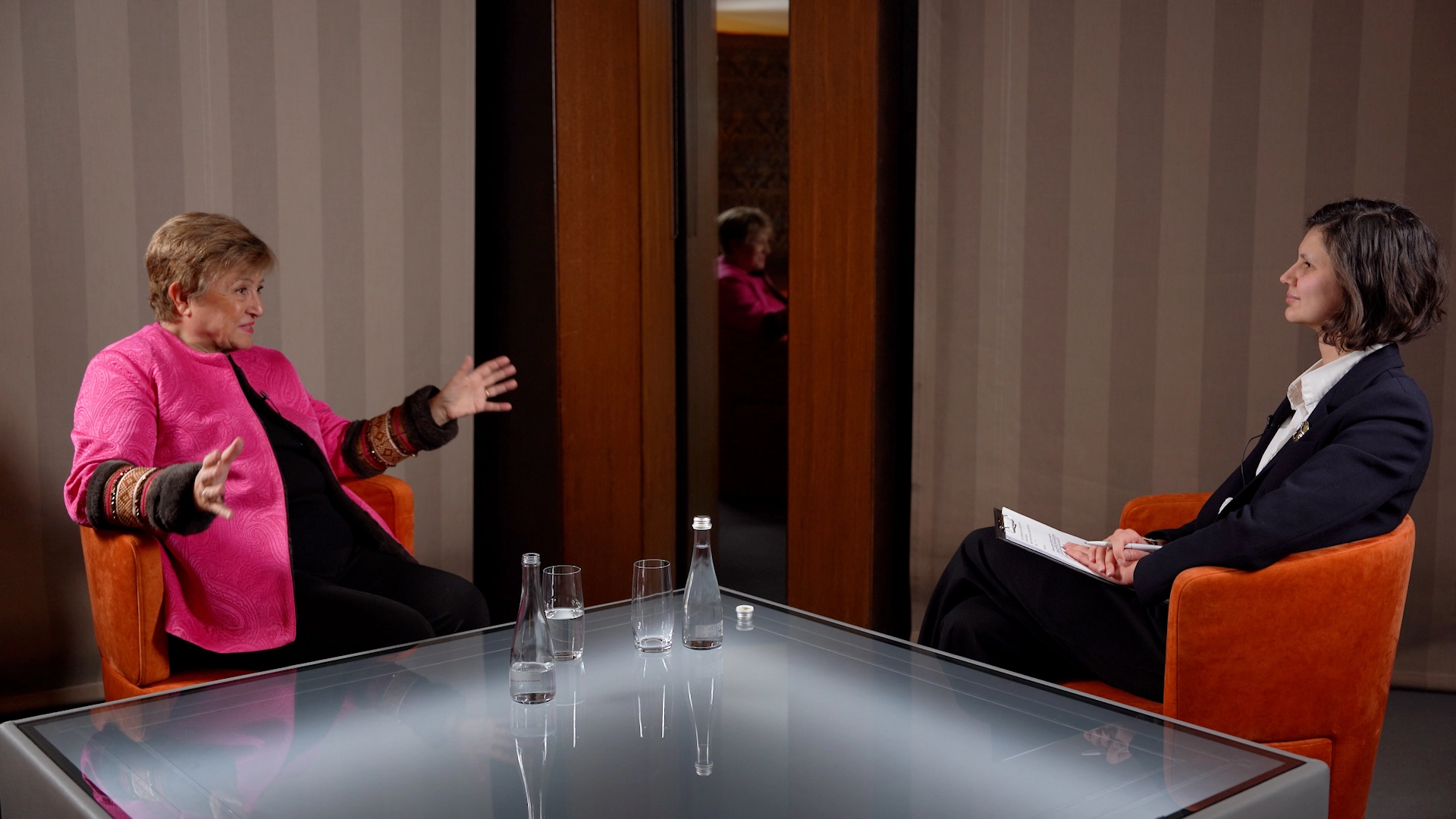
Kyiv Post: Welcome, Kristalina Georgieva, on your second visit to Kyiv. As far as I know, the IMF has long praised the efforts of Ukrainian authorities. What is your assessment now after the eight reviews of the previous program?
Kristalina Georgieva: Let me start by praising the people of Ukraine and the citizens of Kyiv. I came out of the train at six o’clock – it’s dark, it’s cold – clearly difficult, but the city is functional. And I can see people on their way to work. So bravo to you. I am full of admiration for the strength and resilience of the Ukrainian people.
Similarly, I have very high respect for the efforts of the government to continue to move reforms in Ukraine so the country can be more open for business, for domestic investors and foreign investors – to help create a level playing field [so that] gradually a catch up with your neighbors like Poland would take place.
We have been very impressed by the track record of the current program. Actually, before the war, it was harder to get things done. The discipline that the government and society has shown during the war is remarkable and it has given us a very sound footing to make the case for massive budget support – financial support for Ukraine.
Our current program brings on board over $130 billion dollars. But it was made on the assumption that the war would end by the end of 2025. That hasn’t happened.
I pray that early in 2026 there will be peace, but – nonetheless – we have to have a program that is anchored in the realities of today. I am very optimistic about the ability to bring this program to our board of directors.
I recognize that since we reached the staff-level agreement on the program in November, there have been some quite significant developments. One – Russia’s attacks on civilian infrastructure have intensified. That is making life harder, but it is also putting a dent on economic performance. Two – the advancements of negotiations for peace also means that the priorities and objectives remain the same. But how they are achieved has to be carefully calibrated.
So, I came to see with my own eyes so that when sitting in the board meeting, I could have this added authority of having seen it, as I did, by the way, last time around when we had the first program. But it’s also [important] to get a good sense as to what is on the minds of people.
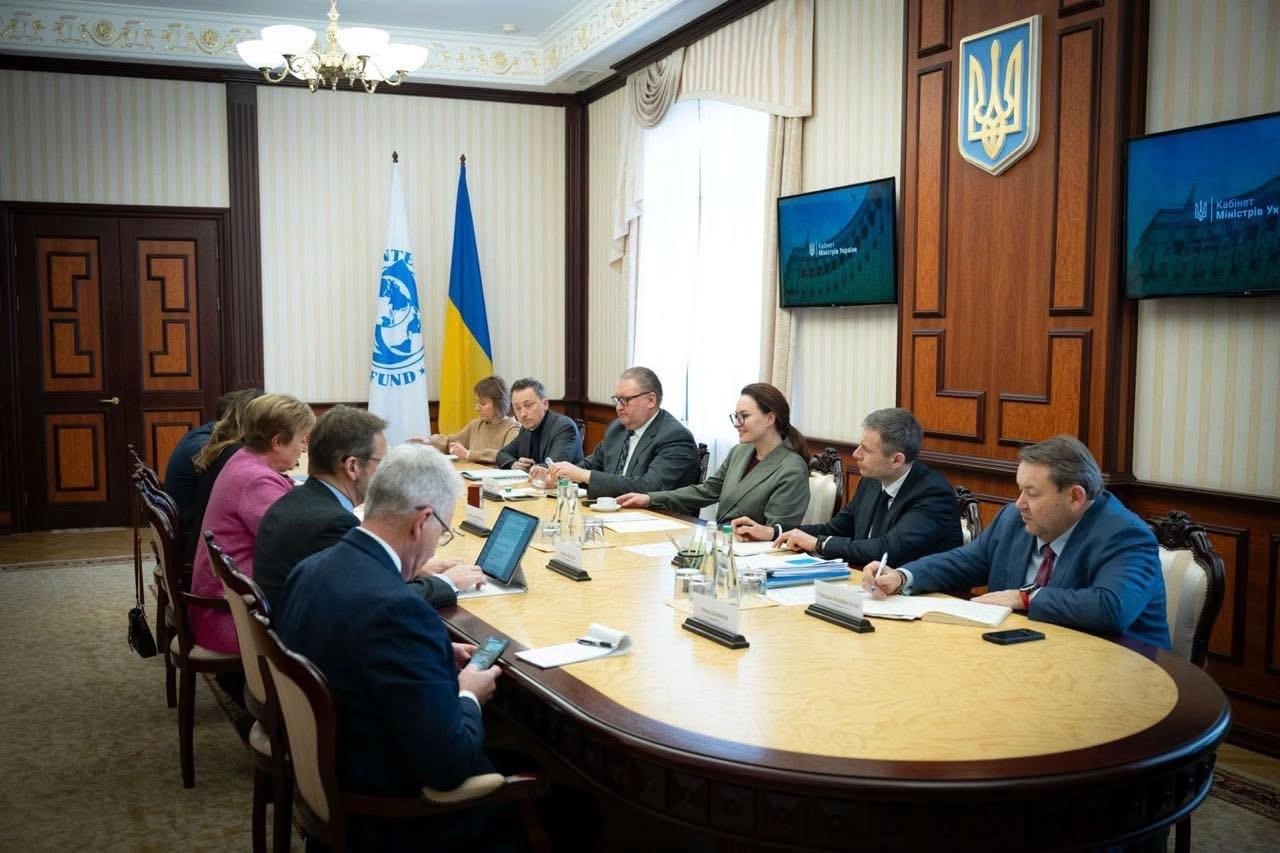
I was delighted to hear the private sector’s strong endorsement of the objectives of our program, and I was delighted to hear from the president, the prime minister, the central bank governor and minister of finance, very strong commitment to the IMF program to serve as an anchor of stability for Ukraine.
Growth slows as energy, labor pressures mount
Kyiv Post: If we talk about Ukraine’s macroeconomic indicators, the real GDP growth forecast for 2025 was lowered by the central bank to 1.9%. How do you assess the effects of recent strikes on Ukraine’s economy?
Kristalina Georgieva: We are seeing two negative factors for macroeconomic performance, specifically for growth. The first one is energy infrastructure, heating – very significantly damaged. It means that enterprises and services are affected.
When we were going around the city, I could see that many more stores and restaurants were dark. Whether they are open or not, it’s hard to judge, but clearly economic activity has been affected.
Two is labor supply. Not only do we have a shrinkage of labor because people are fighting for their country, many left, forced by harsh conditions, but also because women find it harder to leave their children. Female labor market participation is lower than it should be.
And we also see the impact of a skills mismatch. This is why creating more flexible conditions for deploying labor is part of the program and we are delighted that there seems to be good progress in that regard.
Widening tax base “preferred option” to boost revenues
Kyiv Post: Turning attention to the new IMF program – the staff-level agreement was published in November. We are shifting talks from widening tax volumes to widening the tax base. Widening the tax base is considered an unpopular political reform – so why you see the need of such a shift? How do you think Ukraine can overcome key challenges from implementing decisions that might be unpopular?
Kristalina Georgieva: So let me start from the obvious: increasing taxes – either the level of taxes or the tax base – is never popular. I don’t know of a single country whose people would go on the street and say: “Hooray, they’re going to tax us more.”
Is it necessary for Ukraine to find an avenue to increase revenues? Yes. Why is widening the tax base the preferred option? Because too big a part of the Ukrainian economy is in the shadows. And that is unfair to those that are not in the shadows.
If we want to have a level playing field, we have to be courageous and move on that front. Just for comparison: in Ukraine, five of 1,000 people are VAT payers. In the EU, on average, it is 77 out of 1,000. So [compare] 5 to 77.
[Ukraine] aspires to be a member of the EU. Clearly, for that aspiration, this is one area where attention has to be paid. How we go about it is very important – we recognize it cannot be executed immediately. There has to be a significant amount of time for businesses to adapt.
And so we are discussing the way forward to make sure that there is that time and speed of adjustment – in other words how far we go – is well calibrated. We are not mechanical. We look at the country with the objective of helping reforms to ultimately make the lives of people and businesses better.
We have to do it, we cannot abandon this. This is very clear – 5 versus 77. But how we do it, of course, is a matter for constructive discussion.
Balancing VAT reform, shadow economy risks
Kyiv Post: Recently, VAT tax on sole proprietors sparked a lot of discussion. And part of it is not because “we don’t want to pay taxes,” but because the design proposed by the Ministry of Finance risked pushing more of the economy into the shadows. Have you discussed this matter?
Kyiv Post disclaimer: Ukraine’s Ministry of Finance proposed requiring Sole Proprietor businesses on the simplified tax regime with annual turnover exceeding Hr.1 million ($24,400) to register as VAT payers from 2027, as part of Ukraine’s IMF commitments. Ukrainian analytical centers, including the Institute of Economic Research (IER) stated that the plan to impose VAT on them overstates fiscal gains, underestimates costs, and risks driving firms into the shadow economy.
Kristalina Georgieva: We have discussed it. Obviously, the fund brings experience from other countries. And we try to encourage countries to follow best practice.
How that is going to be done – again, we are at this stretch where it is not about “whether” – yes, we have to do something – but [about] the “how.” I heard feedback that the administrative burden [the burden of complying with tax administration and reporting rules] needs to be assessed carefully.
And obviously, our teams talked about it. We wrapped up our meeting today with an agreement that the Ukrainian team and the IMF team would identify where there may be need for some adjustment.
Planned programs
Kyiv Post: Can you share any additional details on the future program and planned actions?
Kristalina Georgieva: Let me first recognize the excellent work of the economic team of the Ukrainian government. I have only praise for Minister Serhiy Marchenko. I have only praise for Governor Andriy Pyshny.
Why? Because they will argue with our team on what needs to be done and how. Then they will turn their attention to implementation. And this is why we have had eight successful reviews in the previous program. I look forward to repeating this experience with the new program.
When we look at the list – we have a list of 20 prior actions and benchmarks. And when we go over this list, we see some already done, for example, the approval of the 2026 budget – a very important prior action. Some [benchmarks are] in good progress too, for example, easing the deployment of labor. This has become advanced.
There is some debate around how some actions can be achieved and the timeline, for example, VAT exemptions. And there are quite a number of detailed actions.
What we would like to have is not only unity of purpose and commonality of views between the two teams; we also want to see how this is going to be implemented over time.
And as you know from prior experience, in this world of unpredictability – and especially in Ukraine, where there is so much that can change – we have to combine firmness in direction with flexibility of how we get from here to there. And that is a matter for very robust and very frank discussions between Ukraine and the fund.
“Ukraine has done its part. You need to do yours. Ukraine has been strong in implementing commitments. You need to do your part.”
Kyiv Post: The European Commission has pushed legislation for a €90 billion ($104.4 billion) loan that will also assist Ukraine’s budget. But the most interesting detail about this is how the money has been split between military and general financial needs.
Although everybody is cheering the fact that the EU Commission is also supplying funding for military needs, support for general financial needs is smaller than everybody expected. This view stems from the critical situation affecting Ukraine’s basic budget needs.
Has the IMF and the Ukrainian government discussed this issue and whether the IMF can assist somehow in this matter?
Kyiv Post disclaimer: The EU Commission aims to allocate about €60 billion ($70 billion) toward military assistance, with the remaining €30 billion ($35 billion) toward general budget support that seems to be split by €15 billion annually. Meanwhile, Ukraine’s government needs $74.8 billion to cover 2026-27 only for budget needs. A total of $37.4 billion for 2026-27 is covered, but the same amount is not, the Ministry of Finance told Kyiv Post.
Kristalina Georgieva: Well, there are two elements of this that need to be taken into account. The first is the IMF loan itself and how it would unlock funding from the World Bank through a DPO [$1.05 billion financing under Development Policy Operation for Ukraine program].
And the second is the fact that in addition to the European Union, there are other friends of Ukraine that are making commitments – many of them in the context of an IMF program. So we have to make sure that the budgetary framework does not look like Swiss cheese with holes left unfilled. Talking to friends of Ukraine, I am confident that this won’t happen.
We are also somewhat in the dark around what the security needs of Ukraine will be over the year.
But when you ask businesses here what they worry about, they rank two topics as number one or number two: security and labor. So, it’s wise to make sure that security funding is in place. It’s wise to make reforms that allow labor supply to expand somewhat.
And it is, of course, very important for Ukraine to do what it has done successfully over the last four years: [maintain] strong commitment to reforms, action to address shortcomings in governance, and action to tackle corruption.
Where we found our job as the financial anchor for Ukraine to be easy was – and it needs to continue to be – the fact that I can tell the friends of Ukraine: “Ukraine has done its part. You need to do yours. Ukraine has been strong in implementing commitments. You need to do your part.”
Kyiv Post: Ahead of this interview, I spoke with various economists. One said: “Does everybody understand that Ukraine is also bearing the responsibility for the security of the continent?” Do international financial players understand that?
Kristalina Georgieva: Yes. I can tell you that one of the avenues I would like to pursue is to see how much we can help European partners of Ukraine to assess and reward the fact that Ukrainian soldiers are fighting for Ukraine. They’re also fighting for Europe.
As a Bulgarian, I have family in Sofia – my daughter is there, my nephews and nieces, and my grandson. And I’m very aware that your sacrifice is much bigger than a fight for your country. And I think I’m not alone.
Many people I talk to recognize that we owe you a debt of gratitude for what you do for all of us. How we can make that recognized in a more explicit way is a discussion that we intend to continue to carry out.
“Trouble travels to faraway places”
Kyiv Post: Since 2022 when Russia launched its full-scale invasion of Ukraine, the global economy has shifted and the IMF has also covered that in its reports. One of the most vivid trends is trade fragmentation and the forming of new trade blocks based on political unions. What threats and possibilities emerge for the global economy?
Kristalina Georgieva: Russia’s war immediately had a negative effect on Ukraine, but also on countries far away, [for example] Egypt, that relied on Ukrainian grain, faced a price shock. Energy prices were impacted, so the world felt the spillover effects of that instability.
Trouble travels to faraway places. Since then, what we have seen is that the world is moving into a kind of a multi-polar posture. There are areas in the world where there is an emergence of closer economic and trade relations, logically, because of proximity.
Places like ASEAN [The Association of Southeast Asian Nations that includes Brunei Darussalam, Cambodia, Indonesia, Laos, Malaysia, Myanmar, Philippines, Singapore, Thailand, Timor-Leste, Vietnam], like the Gulf Cooperation Council [includes Bahrain, Kuwait, Oman, Qatar, Saudi Arabia, and the United Arab Emirates].
We see in Africa some countries coming closer to each other economically.
And of course, we have the European Union that is now poised to likely expand – something that for a while was put on the back burner. And you, Ukraine, you are bringing this new energy of getting the convergence engine of the EU to work harder.
What we also see is that some of these alliances are not stable and some of the relations between countries – they go up, they go down. What does that lead to? More uncertainty. So we as a world economy – it’s not just Ukraine because of the war – we are kind of driving a little bit in the fog.
For the IMF, what that means is that we have an obligation to hold the torch through the surveillance work we do. We look at the whole world, we take the pulse of each country, and we combine the data to gain a sense of the direction the world is taking.
Kyiv Post: Ukraine’s economy has experienced a high level of uncertainty for the past 30 years and now the situation has become even more challenging. Do you think this brings lessons for Europe now it is also moving into these uncertain, foggy times?
Kristalina Georgieva: Certainly, what you have demonstrated is what we see as a trend in the rest of the world – and it is a resilience to shocks. And we are drawing lessons as to why the world has been so resilient.
And certainly, Ukraine’s story is one of incredible stamina and resilience to trouble. I see people here [in Ukraine] adapting to unthinkable challenges. I learned today that Ukrainians, when they don’t have electricity at home, might go to a store and use the utilities that are on sale there [Ukrainian retail chains are setting up in-store charging points and Wi-Fi access that customers can use during power outages]. It’s very smart.
I see the ability to focus on priorities sharpened in Ukraine much more than it was some years ago. So, you lose heat – all the attention goes on how to get the power plant back in operation. The emergency services are there.
People working on the site shift from whatever their duty was to getting services back. And they have been restoring heat in record short time because of this sharp focus on priorities.
So, yes, Europe and the world can learn from Ukraine. If I can say what I’m hoping to see in Ukraine, it’s that you would relentlessly pursue a stronger economy through reforms. There is no substitute for getting your house in great order.
Kyiv Post: We have certainly covered many key topics today.
Kristalina Georgieva: And can I say – being in Kyiv, on one level, makes me sad… The question “Why, why should all this [war] be taking place?” is bursting my brain. But I am also very uplifted because of you. Thank you. Dyakuyu [Ukrainian for “thank you.”]
Kyiv Post: Dyakuyu vam, takoj [Thank you, too].
You can also highlight the text and press Ctrl + Enter