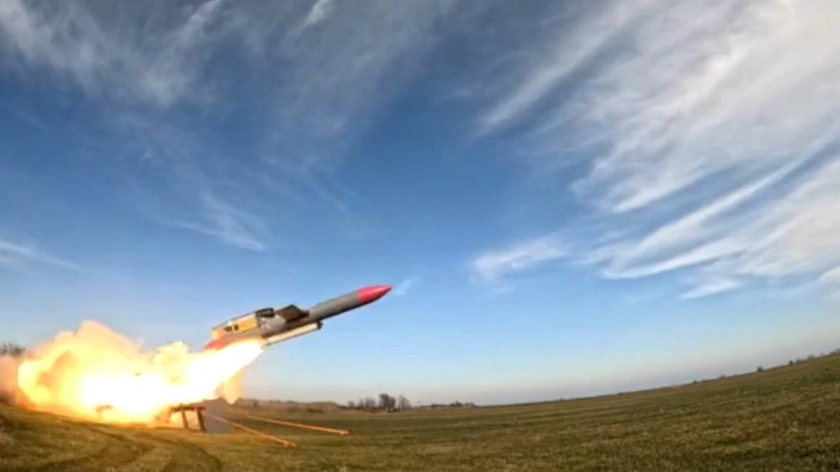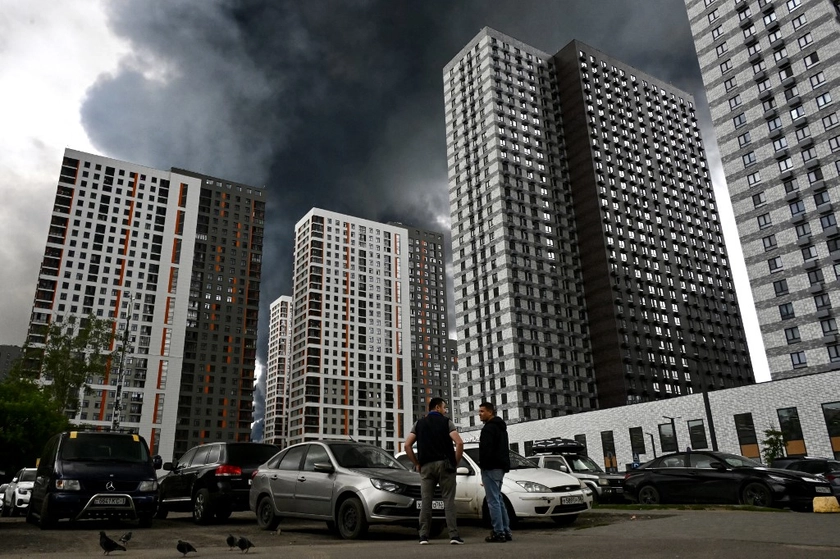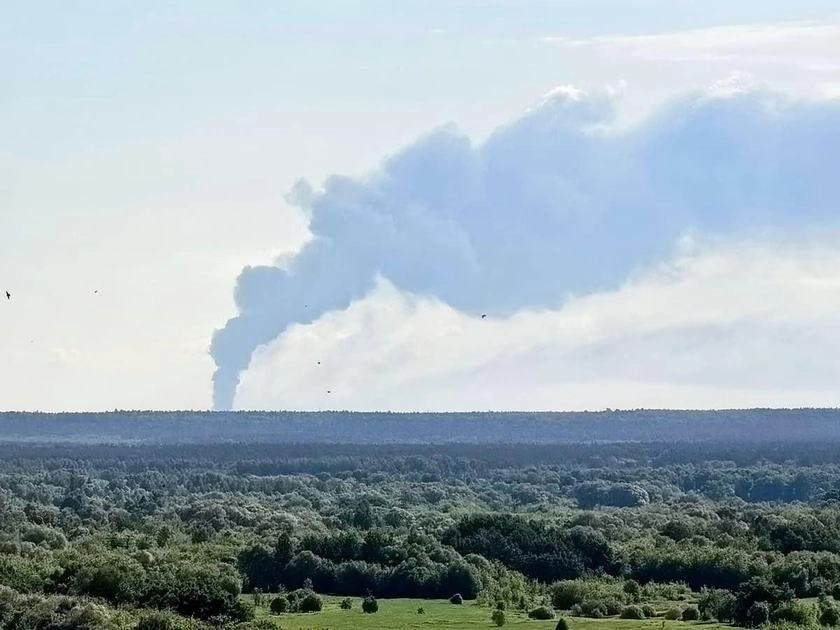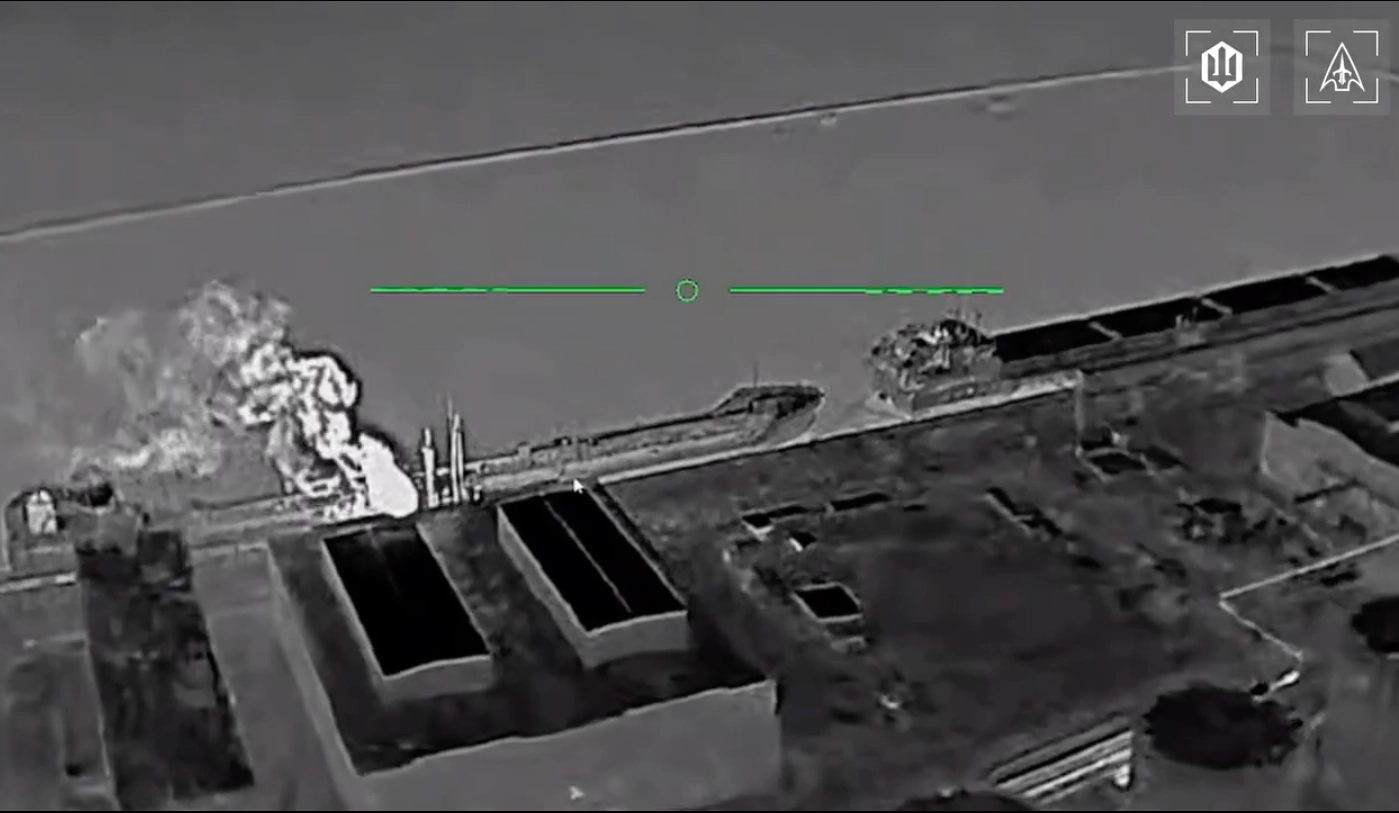
Ukraine’s Unmanned Systems Forces (USF) unleashed a coordinated, large-scale drone offensive late Friday night, damaging a Russian shadow fleet oil tanker, a strategic port oil depot, and a major marine fuel terminal in occupied Crimea.
The extensive weekend operation underscores Ukraine’s accelerating capabilities to execute complex, long-range asymmetric warfare targeting the financial and logistical backbones of the Kremlin’s war machine.
JOIN US ON TELEGRAM
Follow our coverage of the war on the @Kyivpost_official.
Deep strike center coordinates mass raid
USF Commander Robert “Madyar” Brovdi officially announced the wide-reaching results of the mission on Facebook. According to Brovdi, the multi-vector campaign was systematically synchronized and directed by the USF’s Deep Strike Center.
In total, Ukrainian long-range strike drones successfully bypassed regional air defense umbrellas and electronic warfare networks to engage 23 distinct military objectives and strategic infrastructure assets located deep within the operational rear of the Russia and occupied territories.
“On the night of May 30, USF Birds worked over 23 military targets and objects in the operational depth of the Russian Federation,” Commander Brovdi reported.
Shadow fleet and fuel Hubs hit in Taganrog and Crimea
In the port city of Taganrog, located along the Rostov region coast, a precision strike asset directly impacted a commercial oil tanker linked to Russia’s “shadow fleet” – the network of vessels used by Moscow to evade international maritime sanctions and transport petroleum products globally. Local occupation officials confirmed the impact ignited a large-scale fire aboard the vessel.
Russian Region Deploys Police at Gas Stations As Fuel Crisis Deepens
Simultaneously, drones targeted the mainland infrastructure of the Kurgannefteprodukt oil depot in Taganrog, triggering secondary explosions and igniting a specialized bulk fuel storage reservoir within the port’s industrial zone.
Hundreds of miles to the south, another vector of the drone swarm successfully breached local defenses in the temporarily occupied Crimean peninsula, striking the strategic marine oil terminal in the port city of Feodosia. This black-sea terminal serves as a primary logistical refueling chokepoint for the Russian military presence on the peninsula.
A night of logistics losses
The successful strikes on these three energy nodes capped an extraordinarily destructive night for Russian military infrastructure in the Rostov region.
The maritime and depot bombardments were closely synchronized with a parallel raid by the USF’s 1st Separate Center of Unmanned Systems, which used strike drones to devastate the Taganrog military airfield. That airfield attack completely destroyed two rare Tu-142 long-range maritime anti-submarine aircraft and wiped out an Iskander operational-tactical ballistic missile system caught exposed at its active firing position.
By simultaneously striking strategic aviation assets, mobile ballistic missile platforms, sanction-evading shipping vessels, and the fuel networks that feed them, the Unmanned Systems Forces’ newly established Deep Strike Center has demonstrated an effective blueprint for degrading the Kremlin’s regional command capabilities.
You can also highlight the text and press Ctrl + Enter