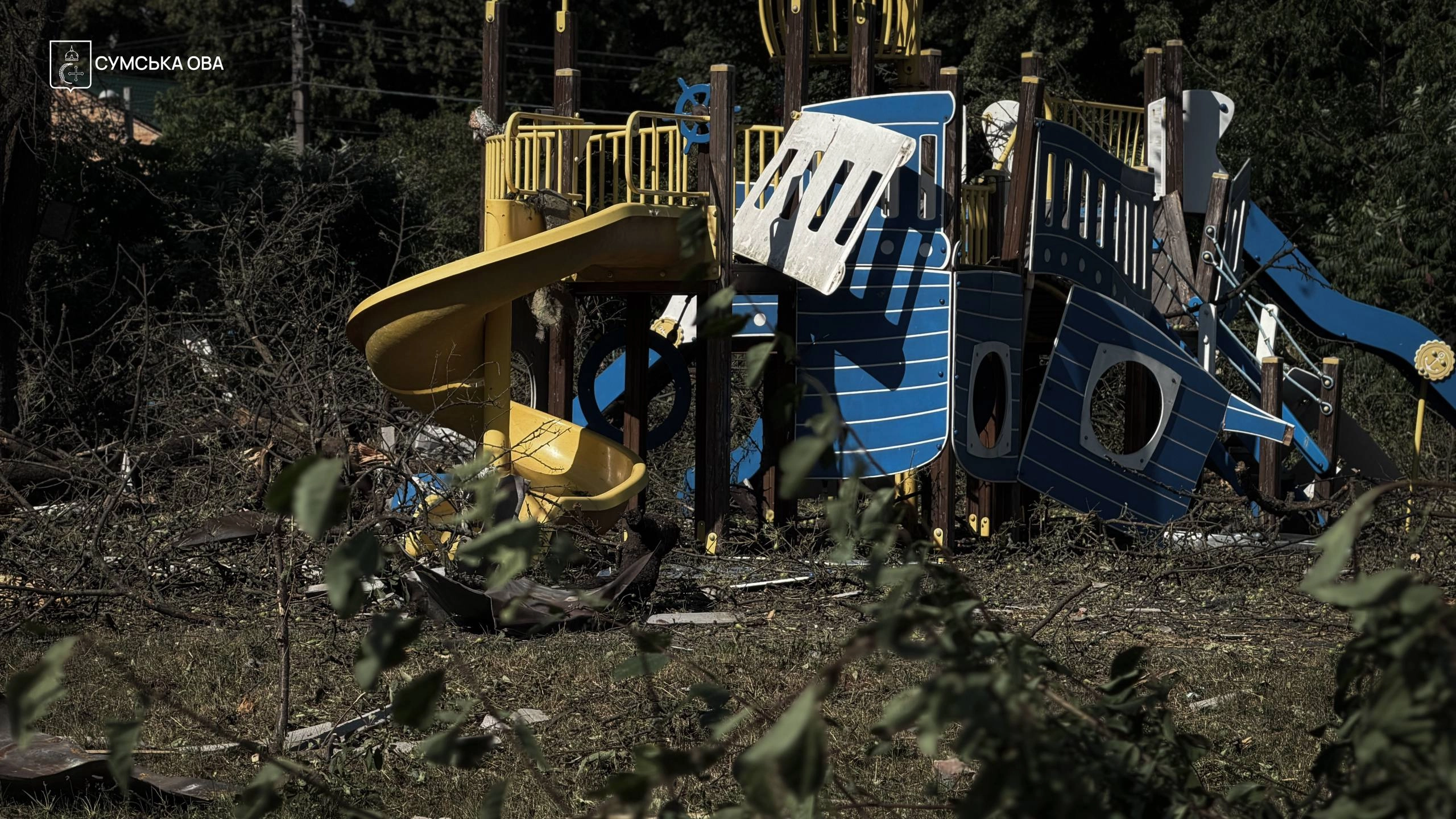
A Russian guided aerial bomb struck a kindergarten in Sumy on Thursday, injuring two staff members as summer educational activities for children were underway, according to local authorities.
The bomb hit the kindergarten directly, damaging three private homes and two nearby vehicles, Oleh Hryhorov, the head of the Sumy Regional Military Administration reported.
JOIN US ON TELEGRAM
Follow our coverage of the war on the @Kyivpost_official.
Separately, Russian independent outlet ASTRA cited city administration head Serhii Kryvosheienko, confirming that the guided bomb struck the facility.
“The enemy attacked the Sumy community with guided aerial bombs. The strike hit civilian infrastructure,” Hryhorov said, adding that “the building of an educational institution located in a residential area sustained significant damage.”
Casualties and ongoing assessment
Hryhorov said at least one person was known to be injured at the time of his initial report, though later updates from regional authorities raised the confirmed number of injured staff to two. Authorities said the full consequences of the Russian attack were still being determined, as of the latest update.
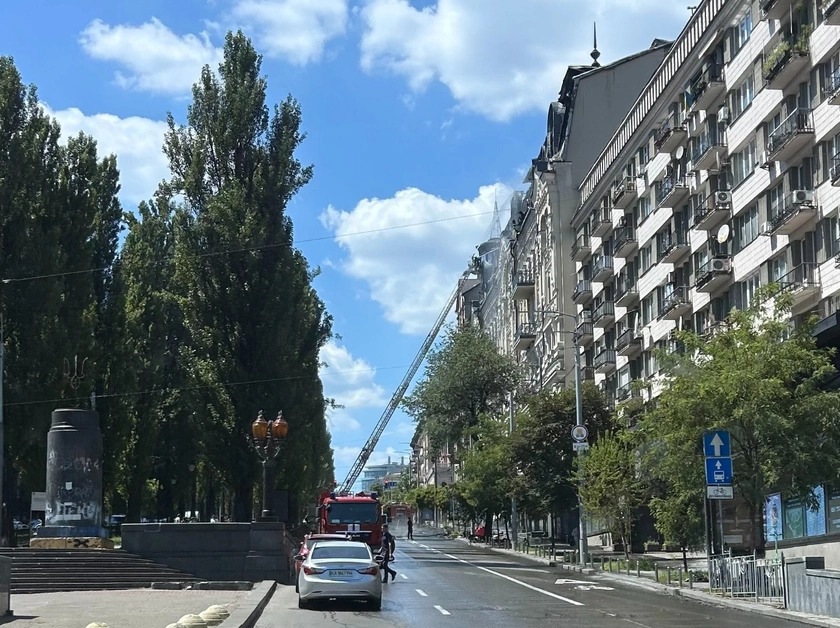
A Wednesday to Thursday Russian overnight missile and drone attack on Kyiv killed at least 25 people and injured more than 56, prompting the city to declare Friday, July 3 a Day of Mourning. The assault damaged more than 20 residential buildings and a medical facility, with rescue teams reportedly still searching for survivors trapped beneath collapsed buildings.
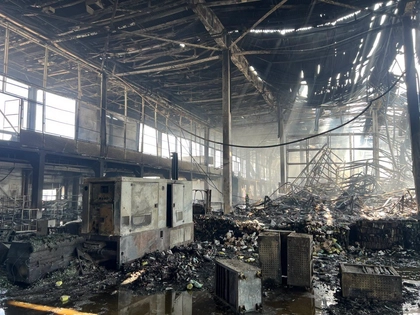
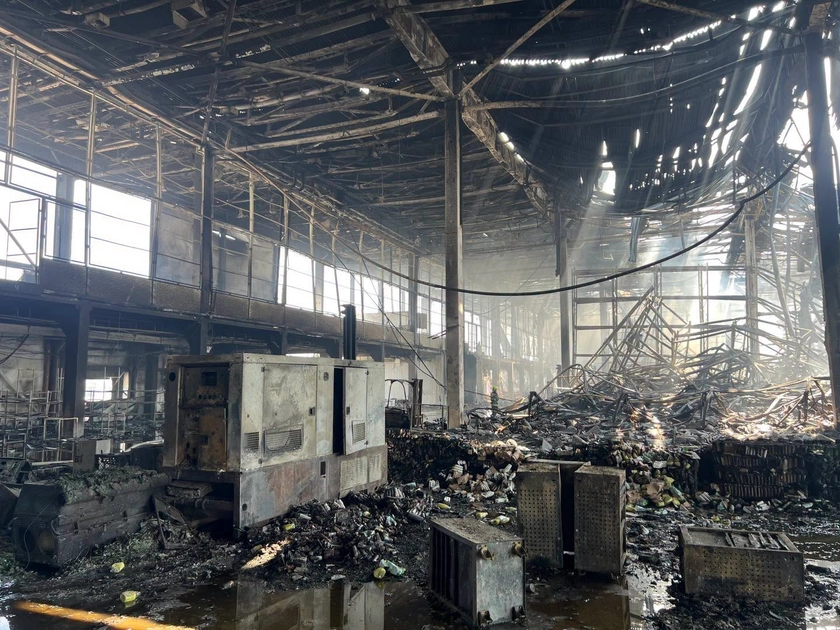
Red Cross Warehouse in Kyiv Destroyed, 320,000 Relief Items Gone
A Ukrainian Red Cross humanitarian warehouse in Kyiv was also struck, wiping out about 320,000 relief items worth over HR.79 million ($1,764,719), including generators, defibrillators, and other emergency supplies meant for vulnerable citizens.
The overnight assault drove a record 52,500 people, including about 4,500 children, into Kyiv’s metro stations, marking the highest wartime shelter use recorded.
Earlier strikes on schools
The kindergarten attack was far from the first.
This year, in May, Russian armed forces struck a kindergarten in central Sumy with two drones, killing a security guard and injuring two others. No children were present at the time. The attack came as part of a wider wave that included two Iskander-M ballistic missiles, one guided air-launched missile, and 108 drones, according to Ukraine’s Air Force.
In February, a Russian drone strike on the port infrastructure in the Odesa region also destroyed a kindergarten building, as part of a broader overnight assault that injured two people, including a 3.5-year-old girl.
But Ukraine is taking steps to try to protect its children.
New school shelters
Kharkiv opened its first underground kindergarten on May 27, with Mayor Ihor Terekhov saying the city has already built 10 underground schools and converted a metro station into a classroom, aiming to keep children learning despite ongoing Russian strikes.
“I don’t want our enemy to take away our children’s childhood,” Terekhov said, adding that a second underground school opened in Pechenihy, in the Kharkiv region.
On July 1, a Czech-funded underground shelter opened at a lyceum in frontline Nikopol in the Dnipropetrovsk region, ending remote learning for 120 students and staff. The shelter was built to allow lessons to continue even during air raid alerts, equipped with classroom furniture, as well as restrooms, showers, and storage spaces.
According to Ukrainian authorities, Russia has killed more than 707 Ukrainian children since the beginning of the full-scale invasion in 2022.
You can also highlight the text and press Ctrl + Enter