Russia is continuing its domestic missile production using foreign parts, alongside its own supplies and Belarusian components.
Vladyslav Vlasiuk, the Presidential Office’s commissioner for sanctions policy, told Suspilne that recent analyses of Iskander-M and an Oreshnik ballistic missile used in an attack near Bila Tserkva on May 24 confirm the Kremlin’s bypass of recent international trade restrictions.
JOIN US ON TELEGRAM
Follow our coverage of the war on the @Kyivpost_official.
“We see fresh components, we see the involvement of Belarusian enterprises, and we see that certain foreign technologies are still making their way into Russian weapons,” Vlasiuk said.
“Future international efforts should be aimed precisely at breaking these supply chains,” he continued, adding that “Ukraine has provided partners with detailed information on manufacturers and component serial numbers.”
Mixed origins found in Iskander-M
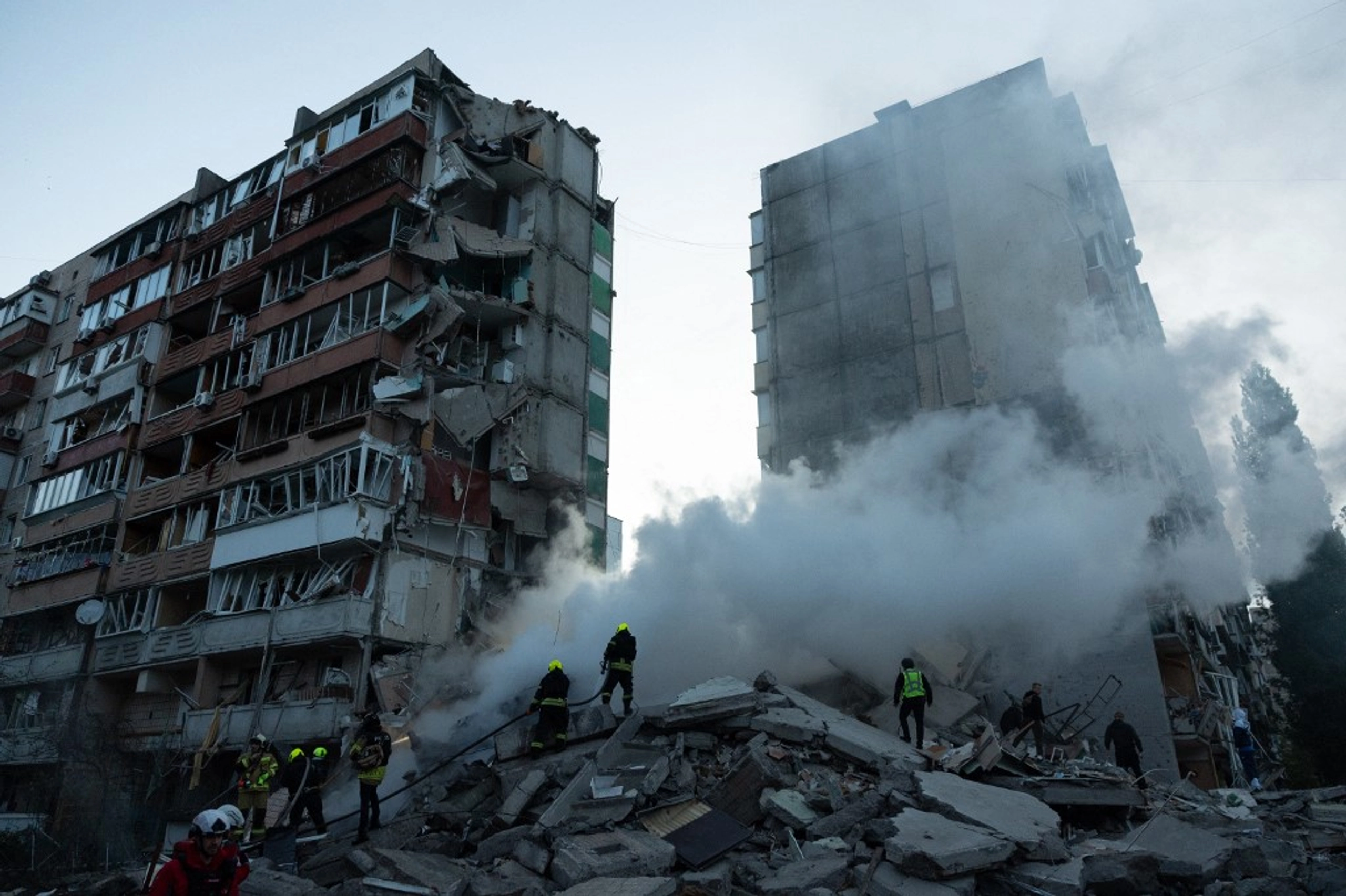
Iskander-M is Russia’s most common ballistic missile, carrying a half-ton warhead capable of leveling roughly one-quarter to one-half of a typical Ukrainian apartment building and collapsing that section on the people inside.
According to Vlasiuk’s report, examiners identified parts manufactured in the United States, Taiwan, Switzerland, Japan, China and Belarus inside the Iskander-M missile, with some of the electronics dated to production runs from 2024 and 2025.
Oreshnik demystified
Russia has heavily marketed the Oreshnik as an unstoppable weapon, using it to intimidate Ukraine and threaten NATO since its debut strike on Dnipro in November 2024. Since then, Russia has been leaning on the missile’s mystique, claiming it travels at Mach 10 and cannot be intercepted.

Kremlin Denies Interference in Trump’s Election
By contrast to the Iskander-M, all identified components in the Oreshnik missile came exclusively from Russian and Belarusian manufacturers. Among the identified suppliers, according to Vlasiuk, were the Belarus-based enterprises – Integral and the Transistor plant.
However, experts at the Polish Institute of International Affairs found that, unlike genuine hypersonic weapons, the Oreshnik’s warheads do not perform evasive maneuvers during their final approach. Instead, they follow predictable ballistic paths despite their speed, leaving them theoretically vulnerable to modern missile defenses on NATO’s eastern flank. In this respect, their behaviour mirrors older, more predictable ballistic systems rather than cutting-edge technology.
“The West must see the Oreshnik for what it truly is. It is the product of an isolated regime that masks structural weaknesses behind aggressive escalatory threats,” Dallas Analytics, a Ukrainian private intelligence and data analysis firm, reported.
EU responds with new sanctions
According to Suspilne, the findings were disclosed as the Council of the European Union introduced new sanctions against Russia’s military-industrial complex on Friday, following Russian strikes on Kyiv throughout the night of July 2.
The EU Council added the “ABS Electro” group of companies to its sanctions list, citing its role in producing electronic and radio-electronic parts for Russian drones. These companies are said to have helped develop systems that make Shahed and Geran drones more resistant to electronic warfare.
Several companies within the group are also believed to be involved in automated control systems for Russia’s energy sector, a business line that generates substantial revenue for Russia’s war machine.
Suspilne reports that the sanctions freeze all financial and economic assets tied to the companies and individuals involved, bar anyone from providing them with funding or resources, and impose a travel ban on Iryna Kharisova, chair of ABS Electro’s board, barring her entry into EU member states.
Russia hits Bila Tserkva in massive strike
Russian forces carried out a high-profile hypersonic escalation early Sunday morning, May 24, deploying an Oreshnik missile on the city of Bila Tserkva in the Kyiv region.
The use of the strategic system was officially confirmed by Colonel Yurii Ihnat, head of the Communications Department for the Ukrainian Air Force Command. The launch originated from the Kapustin Yar military test range in Russia’s southwestern Astrakhan region.
According to a morning update released by the Air Force Command, Ukrainian radar operators detected a total of 690 concurrent aerial assault weapons tracking through domestic airspace, comprising 90 missiles of varying classifications and 600 strike drones.
You can also highlight the text and press Ctrl + Enter

Trump Says US Will Let Ukraine Build Patriot Systems: ‘We’ll Show Them How to Make Them’
OPINION: The Bill for Crimea Comes Due for Putin