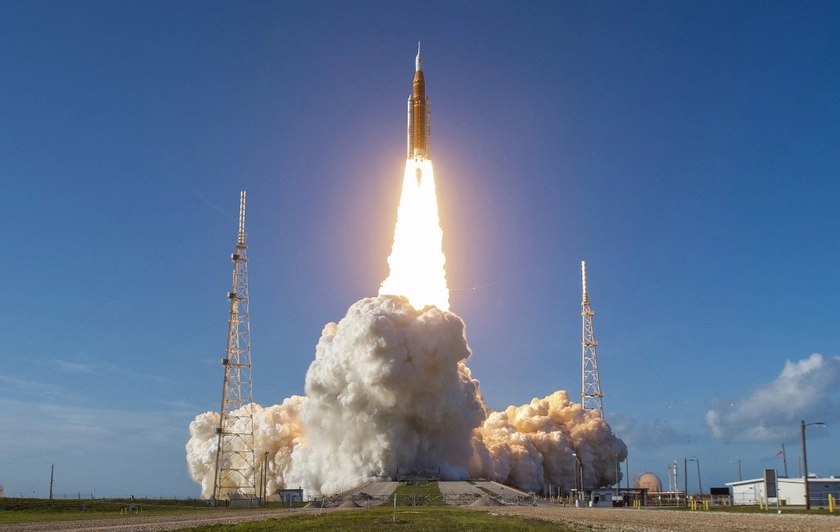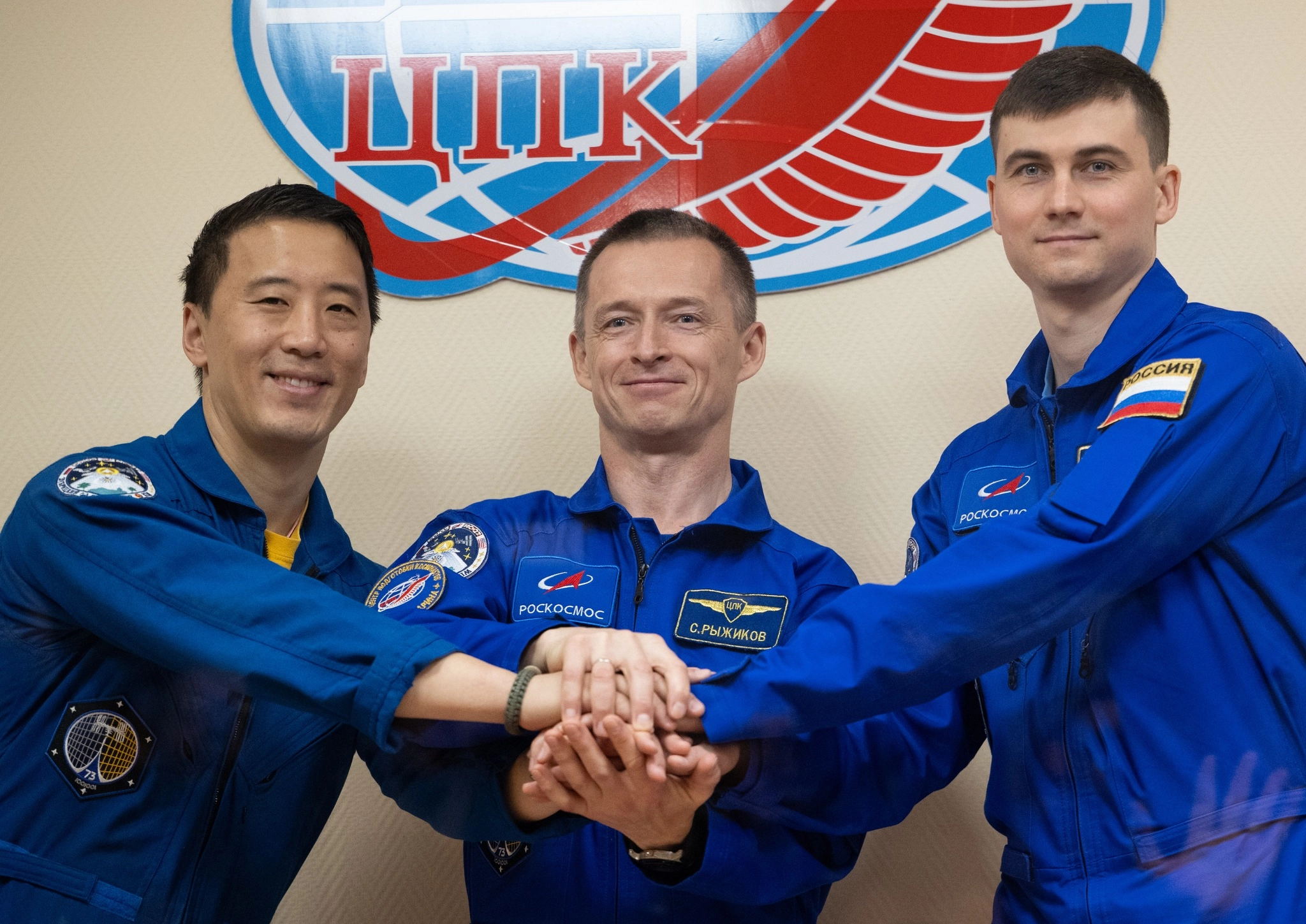
A Soyuz spacecraft carrying an American astronaut and two Russian cosmonauts launched on Tuesday from the Baikonur Cosmodrome in Kazakhstan to head to the International Space Station.
The MS-27 craft, which was decorated to celebrate the 80th anniversary of the end of World War II, took off at 10:47 am (0547 GMT), according to televised images shown by the Russian Roscosmos space agency.
JOIN US ON TELEGRAM
Follow our coverage of the war on the @Kyivpost_official.
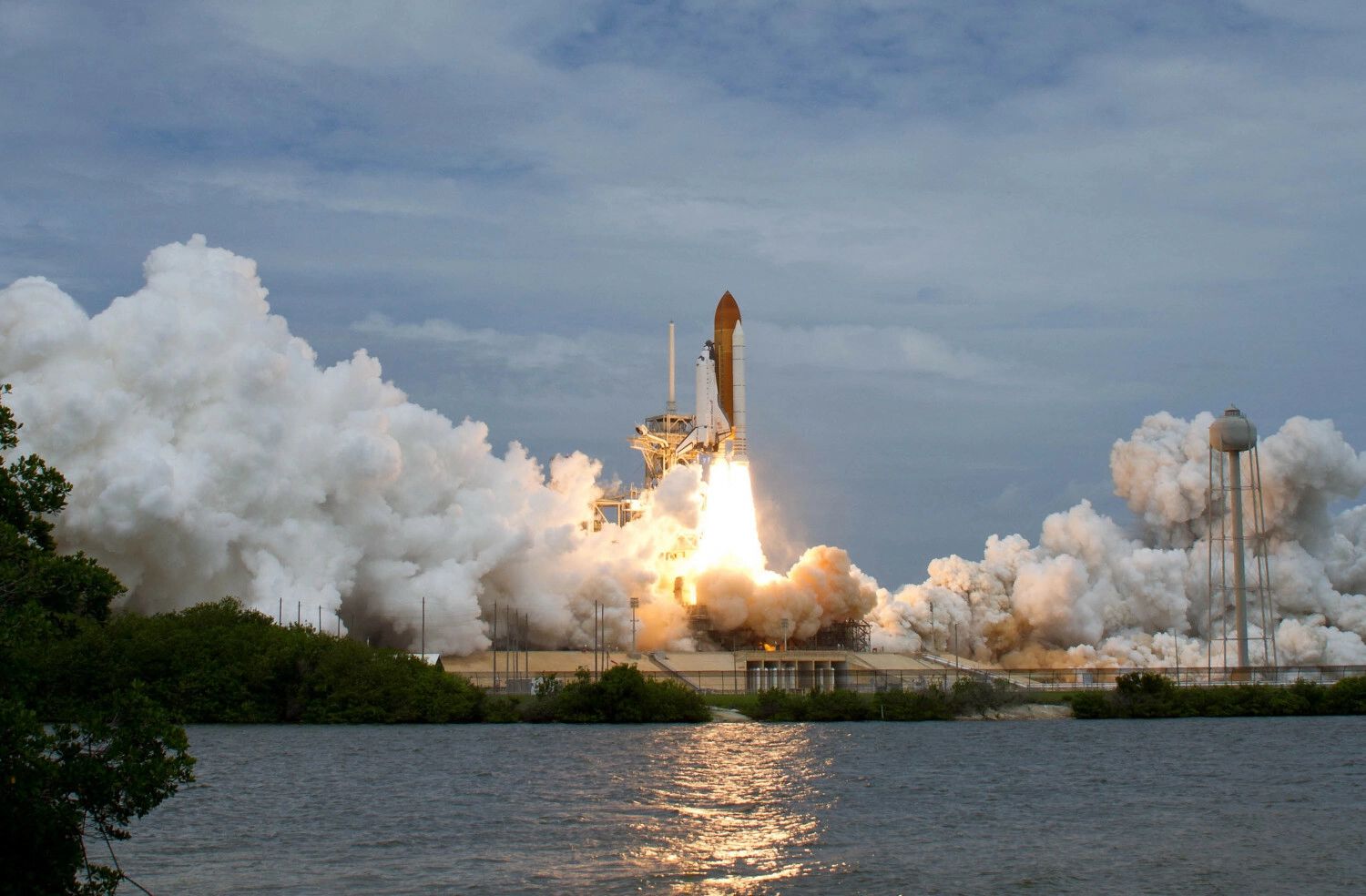
It entered orbit a few minutes later and is due to dock in the Russian segment of the ISS at 0904 GMT.
Onboard were Russian cosmonauts Sergey Ryzhikov and Alexey Zubritsky, as well as NASA astronaut Jonny Kim.
They are due to carry out 50 scientific experiments in space, Roscosmos said, before returning to Earth on Dec. 9.
A record of around 2,500 tourists watched the launch from Baikonur, Roscosmos said.
Russia has been renting the site from Kazakhstan since the fall of the Soviet Union more than 33 years ago. Moscow pays Almaty $115 million a year and has a contract until 2050 for access.
Space is one of the few remaining areas of cooperation between Russia and the United States, whose relationship deteriorated significantly after Moscow sent troops into Ukraine in February 2022.

Ukraine Strikes Oil Junction in Volgograd and Levels Enemy Command Posts
The return to the White House of US President Donald Trump, however, has sparked a thawing of tensions.
As part of the slew of sanctions imposed on Russia since its invasion, Western countries ceased partnerships with Roscosmos, but the Soyuz craft remains one of the few outlets to reach the ISS.
Russia’s space program, which for decades has been a source of great pride for the country, has been suffering for years from a chronic lack of funding, corruption scandals and failures such as the Luna-25 lunar probe in August 2023.
You can also highlight the text and press Ctrl + Enter

ANALYSIS: Russia’s Air Defense Problems Are Growing