In the first few months of 2025, there has been a widely publicized divergence in foreign policy interests between the US President Donald Trump’s administration on the one hand and most European governments on the other.
While the new president has been more willing to make concessions to Russia and pressure Ukraine in order to bring about an end to the Russian-Ukrainian war. Yet most European governments have remained staunchly supportive of Ukraine and suspicious of Russia.
JOIN US ON TELEGRAM
Follow our coverage of the war on the @Kyivpost_official.
Underlying the US administration’s disagreement with Europe on Ukraine is Trump’s longstanding belief that Europeans have for far too long taken advantage of American generosity by not spending enough on their own defense while the US shouldered the burden of protecting them.
Previous presidents going back to Eisenhower also tried to get European governments to spend more on defense, but Trump’s raising the possibility of the US withdrawal from NATO if they don’t, has gotten many of them to actually spend more.
Despite this, Trump’s interest in defending Europe is still uncertain – especially because he and many in his administration see China as a greater threat than Russia. Some in Washington even seem to think that the US can somehow persuade Russia to side with it against China since they think that Moscow must surely see Beijing as a threat too.
Those European governments who have continued to support Ukraine, though, do so because for them, Russia presents a much greater threat to them than China. However else China may threaten European interests, it does not pose the sort of direct military threat that Russia does.
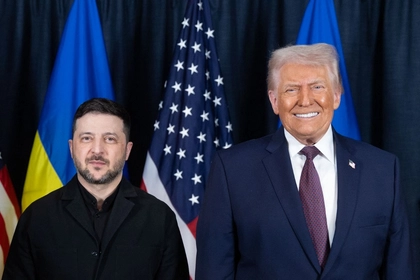
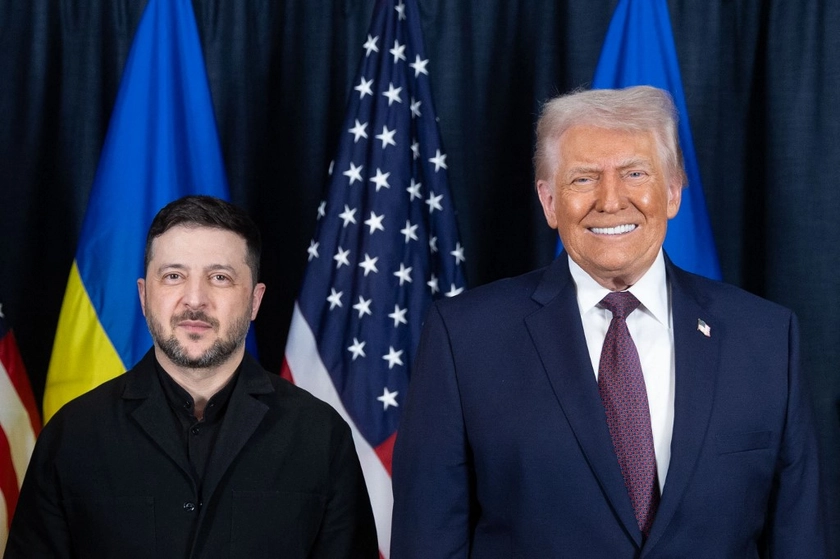
Trump to Join Zelensky for G7 Working Session on Ukraine Peace Conditions
While the continuation of the war in Ukraine may be seen to prevent what the Trump administration hopes will be Russian American cooperation against China, European governments are more immediately aware that a Russian victory against Ukraine could soon be followed by increased Russian threats, or even military attacks on them.
This is one area of divergence between European interests on the one hand and the Trump administration (if not most Americans) on the other.
But this may not be the only separation in foreign policy interests between them. Indeed, with Europe spending more on its own defense, Trump’s commitment to Europe remaining uncertain, and trade issues between the US and Europe likely to be exacerbated by Trump’s tariff policy, it would not be surprising if Europe becomes more willing to pursue foreign policy interests different from those of the Trump administration.
Israel and its ongoing Palestinian dispute may be an area where Europe may go its separate way. European governments have remained committed to the “two-state solution” to resolve the Israeli-Palestinian conflict even as the Trump administration appears to have dropped it.
Ireland, Norway, Spain, and Slovenia recognized Palestine as a separate state in 2024, and President Emmanuel Macron has indicated that France may do so soon. More may follow suit if European governments see themselves as abandoned by Trump.
European governments are unlikely to arm Israel’s opponents, but Europe may see differentiating itself even further from Washington on the Palestinian question as a means of maintaining good relations with the Arab and Muslim worlds even as US relations with them deteriorate. And if Trump displays further willingness to differ with Netanyahu as occurred during the latter’s April 2025 visit to Washington, Europe is hardly going to be more supportive of Israel than the US.
Views on Iran may also be an issue which divides Europe from America. While Israel and some of Washington’s Middle Eastern partners see Iran as an existential threat, Europe may not see it as being nearly as threatening to Europe as Russia is. European governments certainly do not want to see Iran acquire nuclear weapons, but they don’t necessarily see a nuclear Iran as being the irrational actor that the US and Israel anticipate that it will be.
Nuclear deterrence can work against Iran just like it does against other countries – including Pakistan and North Korea. Furthermore, at a time when Europe seeks to reduce its dependence on Russia for petroleum supplies, Iran may offer a possible alternative which US economic sanctions are currently blocking.
As some previous American administrations did, Trump seems to hope that Russia will als work with the US against Iran. European governments, though, may hope that Iran can be induced to work with Europe against Russia – or at least to cease supporting its aggression in Ukraine.
China might be another question that divides Europe from America. Trump sees China as a greater threat than Russia, but most European governments see Russia as more of a threat than Russia. Just as Trump appears willing to make concessions (at Ukraine’s expense) to obtain Russian cooperation against China, Europe may try to work with China to get Beijing’s cooperation against Moscow.
If both Europe and China face increased US tariffs, then an obvious solution will be for them to trade more with each other. Europeans may hope to persuade China that their interests in Europe would be harmed if Russia succeeds in its war against Ukraine.
Would European moves to work with Iran and/or China against Russia be realistic? Maybe not. But such hopes might be no more unrealistic than Trump’s belief that Russia will work with America against Tehran and Beijing in exchange for concessions on Ukraine.
What is clear from these varying viewpoints, though, is that if Europeans perceive America as less committed to their and Ukraine’s defense, then they are much less likely to be as deferential to US foreign policy preferences on other issues than when Washington’s commitment seemed firmer.
Mark N. Katz is a professor emeritus of government and politics at the George Mason University Schar School of Policy and Government, and a nonresident senior fellow at the Atlantic Council.
The views expressed in this opinion article are the author’s and not necessarily those of Kyiv Post.
You can also highlight the text and press Ctrl + Enter

Putin’s Worst Nightmare