A far-right candidate won the first round of Romania’s rebooted elections, and now the prime minister has resigned in response.
With Romania being a key member state of NATO’s eastern flank defense, the turmoil might have a lasting impact on the region’s security for years to come.
JOIN US ON TELEGRAM
Follow our coverage of the war on the @Kyivpost_official.
What’s happening?
Romania is facing political turmoil just two weeks before a crucial presidential runoff. Prime Minister Marcel Ciolacu resigned on Monday, and Interior Minister Cătălin Predoiu has stepped in as interim prime minister.
The resignation followed after far-right candidate George Simion won the Sunday elections with 41% of the votes.
Nicușor Dan, the independent centrist mayor of Bucharest, trails behind with 21%, as the two are set to stand face-to-face in the run-off on May 18.

What’s the backstory on the election rerun?
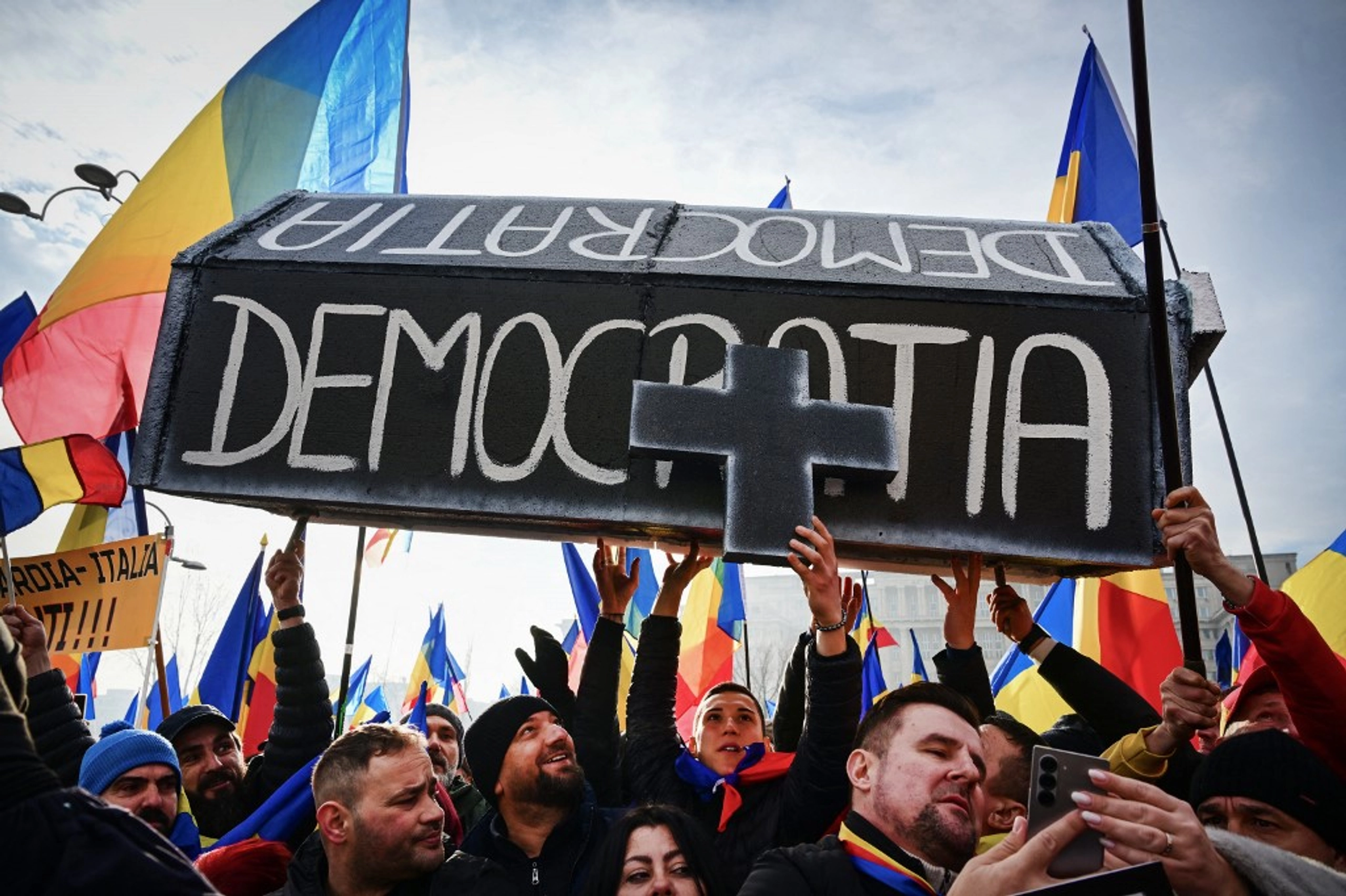
This vote was actually a redo. Romania’s constitutional court threw out the December election due to alleged irregularities – including claims of a Russian-backed TikTok campaign supporting another far-right candidate, Călin Georgescu. That controversial move fueled anger among nationalists, with Simion labeling it a “coup.”
Sweden Warns Russia Could Test NATO in Near Future
Who’s Călin Georgescu?
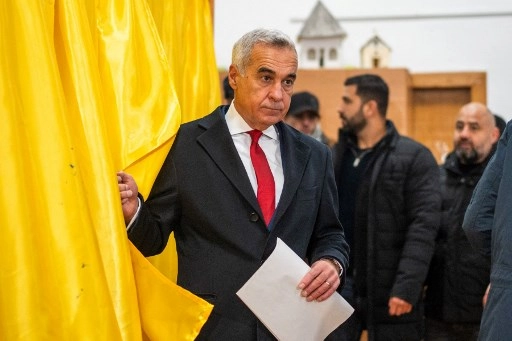
Georgescu is a Romanian agronomist who netted a surprising victory during the now-annulled elections in late 2024.
His campaign was marked by nationalist rhetoric and pro-Russian sentiments, with critics condemning him for his admiration for wartime leaders associated with Romania’s Holocaust. Romania’s Central Electoral Bureau (BEC) subsequently barred him from running again due to what the bureau deemed anti-democratic and extremist views.
Georgescu backed the winner, Simion, in the latest elections.
Why did Ciolacu resign?

Ciolacu, leader of the Social Democratic Party (PSD), quit after his party’s preferred candidate, Crin Antonescu, was eliminated in the first round of the rebooted presidential election.

This opened the door for a likely change in leadership – and rather than wait to be pushed out by a new president, Ciolacu stepped down voluntarily. His party also announced it was leaving the ruling coalition but will remain in a caretaker role until the next vote.
Who is Cătălin Predoiu?

Predoiu, age 56, is a seasoned politician who once served as justice minister and briefly as interim PM back in 2012. He now leads the center-right National Liberal Party (PNL) and is doubling up as acting prime minister.
Who is George Simion?

Simion, the winner of Sunday’s elections, is a populist and nationalist who supports US President Donald Trump and has criticized the EU, calling its officials “unelected bureaucrats.”
He opposes military aid to Ukraine, arguing that the war has hurt Europe and must be ended through a ceasefire – a position he says aligns with Trump’s peace efforts.
While a former Moldovan official has accused Simion of working with Russian intelligence in a 2023 interview, Simion told the Financial Times in 2025 that he considered Russian leader Vladimir Putin “one of the biggest threats for the European states.”
Why is this a big deal?
Romania’s president wields real power: representing the country internationally, appointing the prime minister, and helping shape EU policy. Simion’s strong showing puts him on the brink of winning – a development that worries pro-European leaders and institutions.
What now?
Simion has now picked up endorsements from two major far-right groups, boosting his chances in the May 18 runoff. The outcome could have major implications not just for Romania, but also for the EU, NATO, and Ukraine.
You can also highlight the text and press Ctrl + Enter

EU Moves to Ban Entry for Russian Troops
EXPLAINED: More and Better Western Assistance to Ukraine Announced This Week
EXPLAINED: What’s the Deal With Russia’s Frozen Assets in Europe? All You Need to Know