The outgoing Austrian leader of the European Union Military Committee (EUMC) urged Europeans to define roles for their armed forces in defending the continent in his final remarks on Thursday before stepping down from the post.
Gen. Robert Brieger, the former head of the Austrian Armed Forces, is set to be replaced by Irish Lt. Gen. Seán Clancy for the next three-year term.
JOIN US ON TELEGRAM
Follow our coverage of the war on the @Kyivpost_official.

That will keep a neutral-country general in the EU’s four-star military post, even at a time when much of European leadership is focused on the threat posed by Russia and the EU has backed efforts to rebuild military might on the continent.
Brieger reiterated the need for cooperation with the NATO alliance but warned that the United States’ shifting focus toward the Indo-Pacific region means Europe needs to do more for its own defense.
Brieger said that the chiefs of defense from all 27 EU countries – known as the CHODS – agree that there needs to be a “more concrete definition” of the EU’s mutual defense clause, outlined in Article 42.7 of the Treaty of the European Union. That article states that members have an obligation to aid if another EU country is the victim of armed aggression.
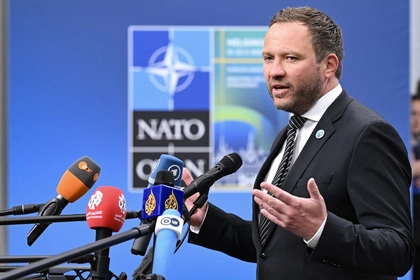
Estonia Urges EU Alumina Ban and Total Russian Energy Maritime Service Blockade
The defense chiefs had met earlier in the day with the EU’s top diplomat, Kaja Kallas, and Defence Commissioner Andrius Kubilius.
Brieger, in his parting remarks, said the EU needs to improve the “quantity” and “quality” of its defense capabilities. He said the most important priorities include artillery ammunition, anti-aircraft and anti-drone capabilities, military mobility and strategic reconnaissance.
But he told Euractiv that it will take “years” to fill those gaps, even with the necessary political will and industry incentives.
See the original here.
You can also highlight the text and press Ctrl + Enter

Putin’s Worst Nightmare