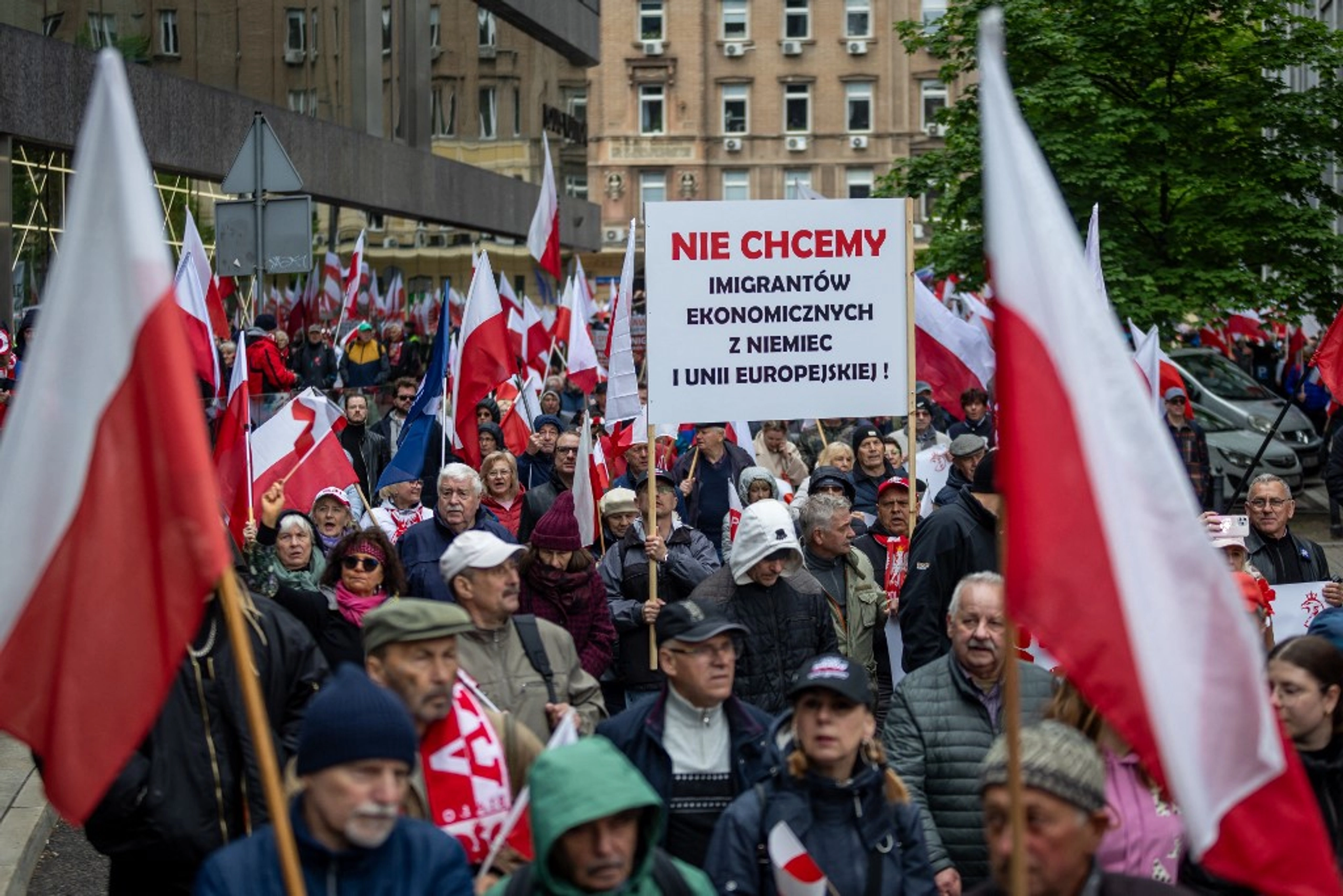
Right-wing media, along with politicians from the Confederation party and Law and Justice (PiS), have long been pushing a narrative that German services are “dumping illegal migrants” in Poland. They speak of tens of thousands of people, allegedly based on information from the Bundestag itself.
Recently, nationalist figure and PiS affiliate Robert Bąkiewicz announced the formation of the “Border Defense Movement” – the organization behind the citizen patrols at the Polish-German border. This narrative was further fueled by the recent killing of a 24-year-old Polish woman by a Venezuelan citizen who was illegally staying in Poland.
JOIN US ON TELEGRAM
Follow our coverage of the war on the @Kyivpost_official.
On Tuesday, PiS announced it would submit a bill proposing a temporary entry ban to Poland for individuals from the Middle East and North Africa. Leaving aside the fact that Venezuela is in neither of these regions, the proposal itself is clearly a political move aimed at deepening polarization.
It is hard to imagine how such a ban could be practically enforced, especially considering growing economic exchange and tourism, not to mention the potential for stoking anti-immigrant sentiment that could lead to tragedy. It’s also hard to take this initiative seriously as a meaningful policy to address migration issues.
Is Poland really facing a migration crisis?
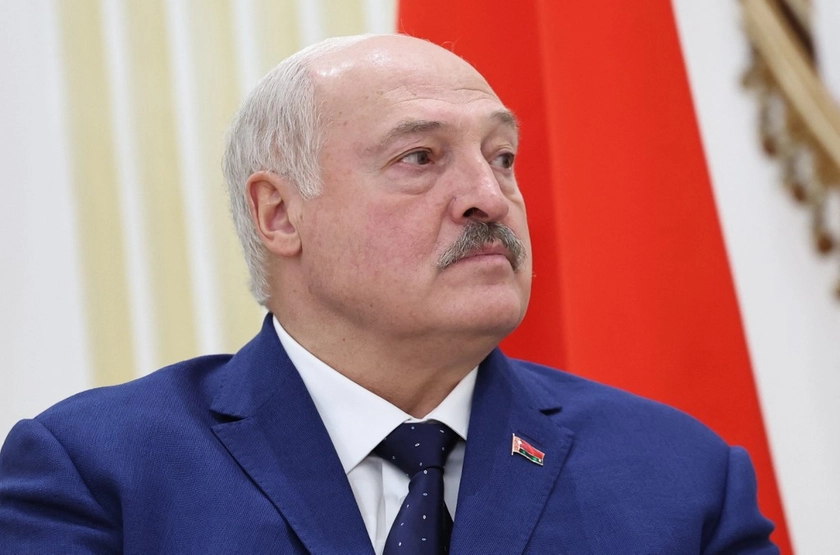
It’s true that Germany has returned some migrants to Poland – a result of the hybrid warfare waged since 2021 by Belarusian dictator Alexander Lukashenko. Belarus, in coordination with Russia, has encouraged people from the Middle East and Africa to migrate to Europe, offering flights to Minsk and then forcibly pushing them toward the borders with Poland and Lithuania. These are also EU and NATO borders, heavily guarded by military forces, infrastructure, and fencing.
EU Extends Russia Sanctions for First Full-Year Term
The number of migrants who actually manage to cross is very small, and even fewer are sent back to Poland by Germany. In 2024, around 690 people were returned, and by April 2025, just 116. These returns are based on the Dublin Regulation, which states that an asylum seeker should wait for a decision in the country where they submitted their application.
The “tens of thousands” figure cited by some right-wing media outlets, allegedly based on Bundestag data, refers to the number of foreigners who were not allowed to enter Germany – not those who were sent back to Poland.
This narrative is political in nature and crumbles when confronted with reality: Poland is not experiencing a migration crisis. The security level in the country is very high, and among the foreigners residing in Poland, there is no evident overrepresentation of any single nationality.
Tusk’s troubles
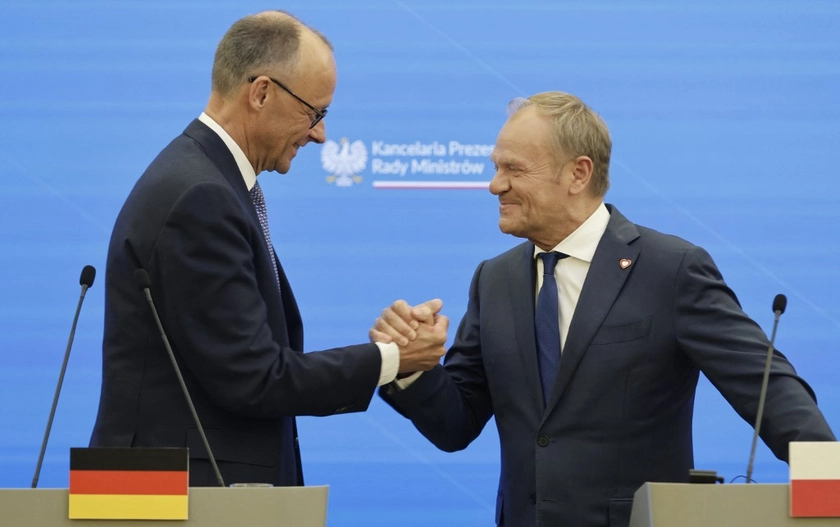
The narrative of a supposed migration crisis led Prime Minister Donald Tusk to announce temporary border checks with Lithuania and Germany on Tuesday, July 1. In doing so, he politically conceded ground to the right.
But this isn’t his only problem. The “Silni Razem” movement – die-hard fans of the prime minister’s party, including the radical Roman Giertych – questioned the integrity of the recent presidential election and the appointment of Karol Nawrocki as president of Poland. As with the migration debate, this is a classic case of narratives over facts.
There’s simply no way the opposition could have rigged the election, especially given that representatives of all political parties participated in the election commissions. Even Tusk’s coalition partners expressed skepticism toward this line of thinking and acknowledged Nawrocki’s election.
The recently concluded Polish presidency of the Council of Europe hasn’t helped either, as it’s been widely seen as ineffective. Polls conducted after the presidential election show a 7–8% drop in support for the ruling party, now standing at around 25%. Many are asking whether Donald Tusk can learn from defeat.
Facts, not fear
In the face of serious global migration challenges, it is crucial to separate real threats from political storytelling. The data clearly shows that Poland is not engulfed in a migration crisis, and while EU mechanisms may require improvement, they do not justify alarmist rhetoric. A constructive public debate on migration must be grounded in facts – not emotions.
The views expressed in this opinion article are the author’s and not necessarily those of Kyiv Post.
You can also highlight the text and press Ctrl + Enter