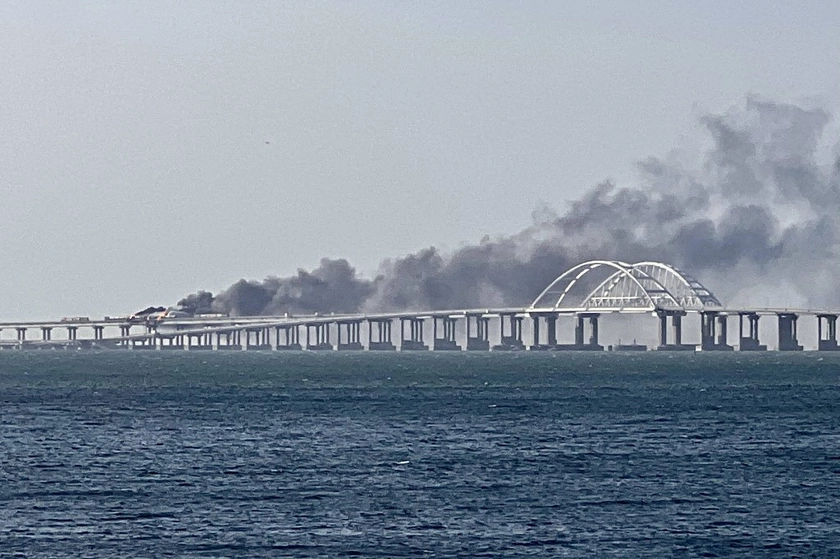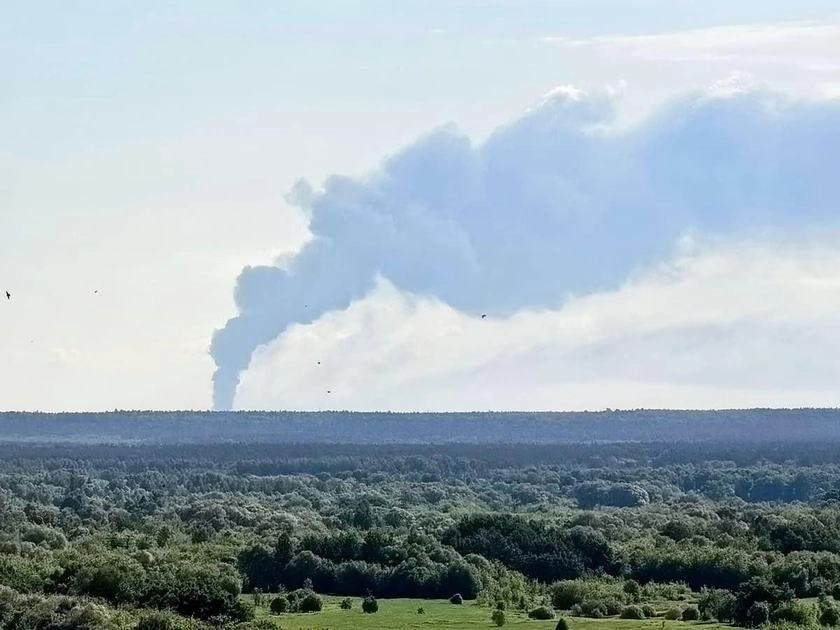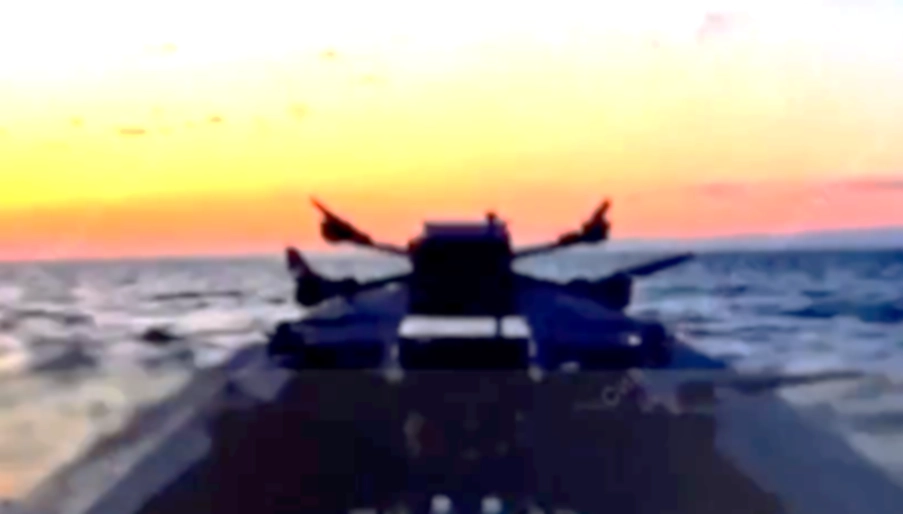
The Ukrainian Ministry of Defense (MOD) posted a report on X on Thursday that it had used unmanned surface vehicles (USV – sea drones) to launch “Baba Yaga” bomber drones against Russian air defense radars in Crimea – although it was unclear just how many USV and aerial drones were used.
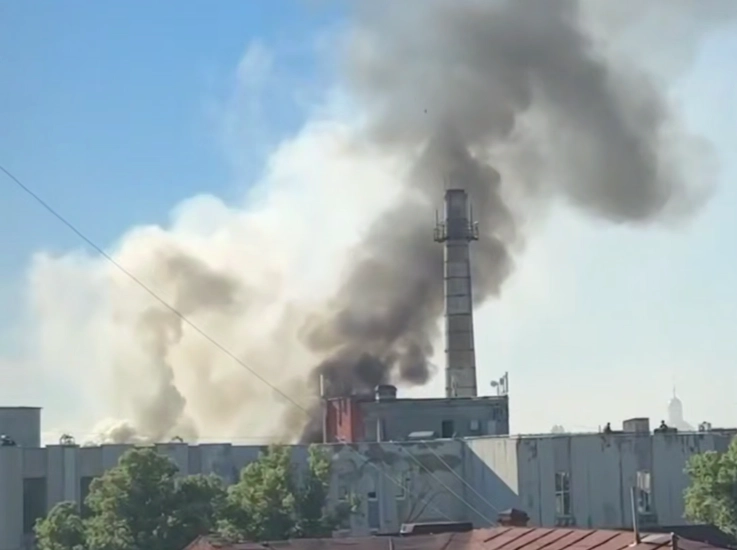
The report said that the operation had destroyed three Nebo-M radars that are effectively the “eyes and ears” of Moscow’s air defense network on the occupied peninsula.
JOIN US ON TELEGRAM
Follow our coverage of the war on the @Kyivpost_official.
The MOD wrote: “On the night of July 1 to 2, 2025, Ukraine’s Southern Defense Forces carried out a brilliant, high-precision special operation!”
Just as in the June 1 Spiderweb operation against five airfields across Russia, this attack is another example of Ukraine exploiting the vulnerability that exists in Russian strategic defense systems to smaller first-person view (FPV) drones more usually seen on the battlefield. The key to Ukraine’s strategy is to use a secondary delivery system to get the short-range weapons close enough to act – Spiderweb used cargo trucks to deliver the drones hidden in prefabricated “sheds.”
The edited MOD video, just over a minute-long, shows the bomber drones launching from the bow of the sea drones before point-of-view (POV) footage shows several explosive munitions being dropped onto their targets – one RLM-M radar, one RLM-D radar and a radar control station – critical components of Russia’s Nebo-M air defense system.
Ukraine Unveils ZIRKA Interceptor Drone Built to Down Shaheds
On the night of July 1–2, Ukraine’s Southern Defense Forces launched heavy Lazar strike drones from naval platforms and successfully destroyed three Russian Nebo-M radar systems near the village of Mayak in occupied Crimea. The confirmed losses include one RLM-M 55Zh6M, one RLM-D… pic.twitter.com/OsGXsv53VG
— NOELREPORTS 🇪🇺 🇺🇦 (@NOELreports) July 3, 2025
The Nebo-M multi-purpose long-range radar system, which came into service in 2017, is essential to allow Russian S-300 and S-400 air defense weapons to detect, track, and intercept aerial threats, including ballistic missiles out to 600 kilometers (375 miles). Without the radars Russian forces will be hamstrung in their defense against Ukrainian long-range drones, Storm Shadow cruise missiles and other aerial weapons attacking Crimea.
While the concept of using the USV to bring the bomber drones into range seems quite straightforward it relied on a complicated hybrid radio and satellite-based navigation and communications system to bring the sea drones onto station then to steer the bomber drones onto their targets.
Ukraine’s USV uses mature onboard satellite navigation and communication systems, which have been used and refined since it began its campaign against Russia’s Black Sea Fleet. On this occasion, some form of a direct line-of-sight radio link from the USV to the bomber was added.
Once the bombers were launched, the USV acted as a radio-relay platform allowing its Ukrainian operators to theoretically observe, operate, and direct the FPV drone onto their targets in real time from anywhere in the world.
This is not the first time that Ukraine has used its sea drones to deliver a variety of weapons. From their original use as a kamikaze drone to crash into their target, Ukraine’s HUR and SBU intelligence agencies, who are the main users, have developed them into launch platforms for drones, anti-aircraft cannon, and surface-to-air missiles (SAM).
The heavy bomber drones allow Ukraine to deliver a bigger punch against onshore targets, particularly on the occupied Crimean Peninsula. In theory, they could also return to the USV after dropping their payload, be recovered and used again – a feature that was acknowledged by pro-Russian milbloggers.
The “Two Majors” Telegram channel commented that Ukraine’s sea drones, “… snuck up, and launched drones ... A new element was the use of drones with drop systems; thus, the enemy achieved several strikes from each UAV.”
The blogger claimed that at least one USV was attacked and destroyed by Russian aviation, although it was unable to provide any visual confirmation. He said the incident underlined a need to allocate more Russian military resources to protect its forces in Crimea:
“They know how to fight this floating junk, controlled through Elon Musk’s Starlink, in Crimea. We just need to give resources to effective units ready for unconventional solutions.”
In December, a Magura V5 USV fired an R-73 (AA-11 Archer) air-to-air missile to down a Russian Mi-8 Hip helicopter, and in early May, a Magura V7 USV, used modified AIM-9X Sidewinder air-to-air missiles, to bring down two Russian Su-30 (NATO: Flanker) fighters over the Black Sea.
It is unclear at the moment how many sea drones Ukraine is using to launch bomber drones. If the results of the attack earlier this week in Crimea are any indication, there is an incentive to boost this capability. It gives Ukraine another asymmetric weapon system to amplify its combat power.
You can also highlight the text and press Ctrl + Enter

Russia Hit by 660-Drone Overnight Barrage Targeting Moscow, Crimea and Key Military Sites