Russia’s drone war has entered a new, dangerous phase, increasingly driven by state funding, foreign supply chains, and long-term battlefield planning. With over 200 drones launched daily and production rising, Ukraine and its Western partners must treat this as a strategic challenge, not just a tactical nuisance. A significant escalation may hit this autumn, and it is crucial to prepare for it.
A shift in scale and intention
JOIN US ON TELEGRAM
Follow our coverage of the war on the @Kyivpost_official.
In 2025, Russia’s drone warfare strategy has shifted into a more coordinated, state-backed campaign that combines battlefield innovation and industrial scaling. The Kremlin’s objective is to apply prolonged pressure on Ukraine’s critical infrastructure, degrade national resilience, and psychologically exhaust its population.
This summer is a turning point for the Kremlin, with several recent developments since June indicating that it is preparing for long-term and high-volume drone attacks this autumn and winter. These moves require urgent action from both Ukraine and its Western partners, including steps to boost air defenses and infrastructure, and to expand drone and anti-drone technologies ahead of the next escalation phase.
The Kremlin streamlines production and increases investment
In June 2025, Russia launched a $132 million fund to support dual-use technologies such as drones, AI-enabled systems, and battlefield robotics. Over 250 firms are connected via the Centre for Unmanned Systems, established by the ruling United Russia party and Promsvyazbank to coordinate UAV and dual-use innovation. The Kremlin aims to scale battlefield-ready technologies from prototype to mass deployment.
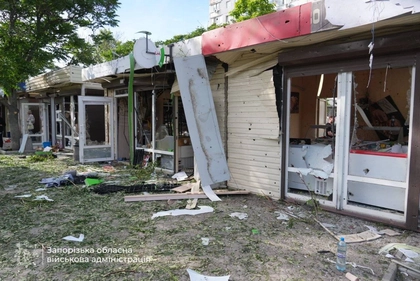
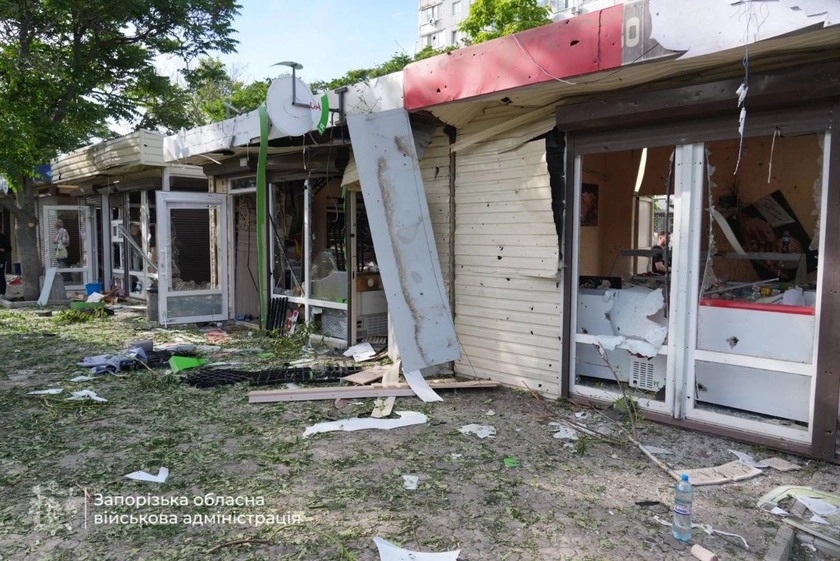
Russian Strike on Zaporizhzhia Residential District Leaves 2 Dead, 18 Wounded
The following month, Russia introduced a full VAT exemption for drones under 30 kg and their components. This applies across the Eurasian Economic Union and is valid until the end of 2027. This measure is intended to lower production costs and enable domestic and allied manufacturers to scale up production quickly.
The Kremlin is gearing up for a significant drone offensive for the remainder of this year.
China and Belarus increase support for the Kremlin
There have been several worrisome developments in terms of new support from Belarus and China aimed at sustaining the Kremlin’s drone production efforts. In Belarus, authorities have relaunched previously inactive drone production facilities, establishing new lines for optics and critical electronics. These factories are now part of Russia’s drone supply chain. This comes alongside a recently announced plan to build a drone manufacturing plant in Belarus with a projected production capacity of up to 100,000 drones annually.
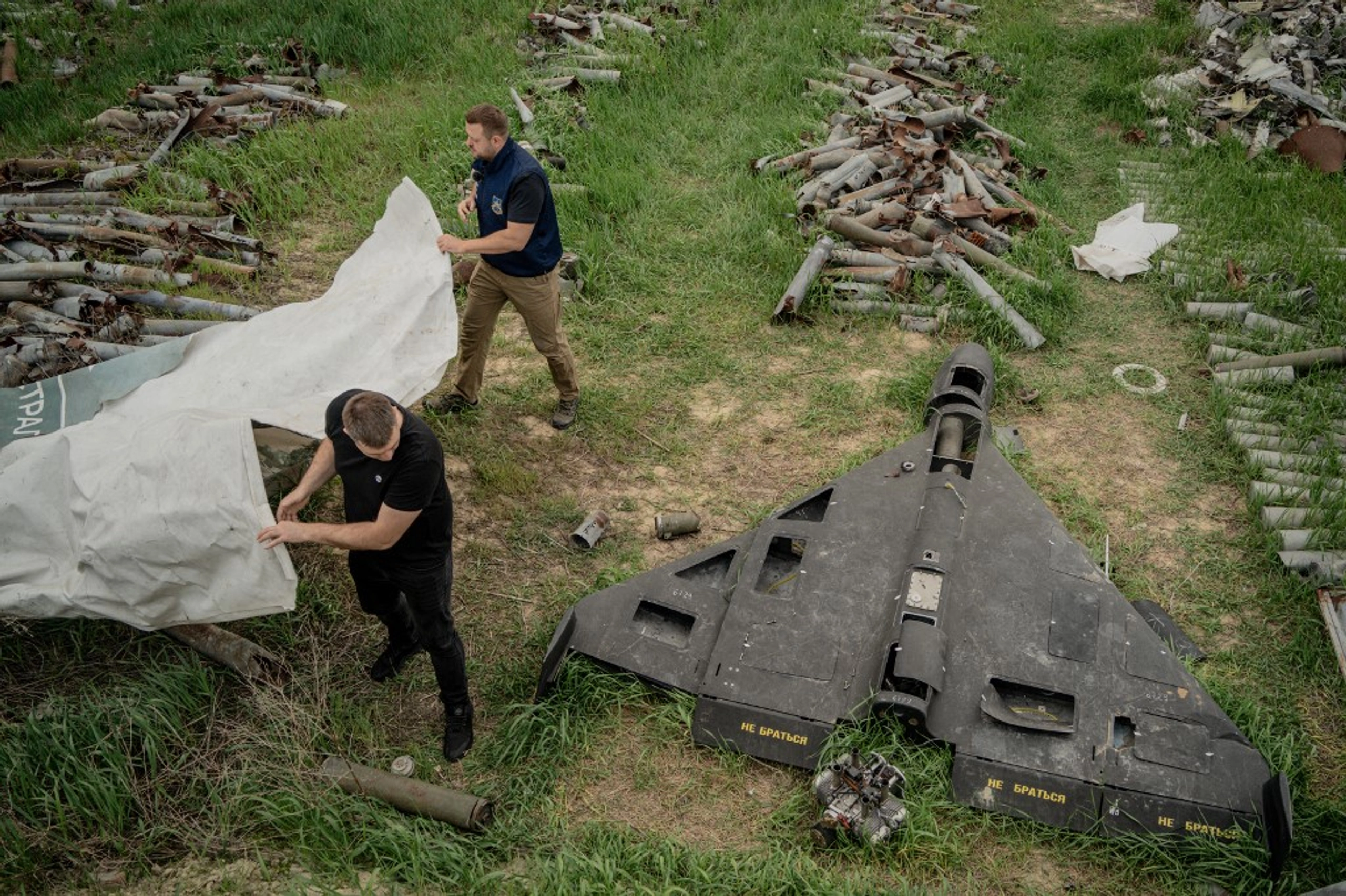
In turn, China is playing an increasingly central role in supplying drones and drone components. This month, Ukraine’s military intelligence confirmed that the Kremlin is now using decoy drones nearly entirely composed of Chinese elements. Moreover, a recent Reuters investigation revealed that Russian plants have been receiving drone engines disguised as “industrial refrigeration units.” Furthermore, these shipments reportedly go to the Kupol plant, where the Garpiya-A1 drones, long-range strike drones designed to hit both military and civilian targets, are assembled. In 2024, Kupol produced around 2,000 units, and production is expected to exceed 6,000 units this year, with over 1,500 delivered by April.
A quiet period before the storm
The Kremlin’s increasing usage of drones across Ukraine is visible in terms of growing impact on critical infrastructure and numerous civilian casualties. The Kremlin has been launching an average of 209 drones daily in July. These strikes have targeted both frontline areas and major cities such as Kyiv, Dnipro, Kharkiv, Sumy, Pokrovsk, and Kherson.
The Kremlin has been using new models more frequently, such as guided FPVs, loitering drones, and semi-autonomous variants, to sever logistics routes, damage infrastructure, and apply daily pressure on the population.
All these developments indicate that the Kremlin is gearing up for a significant drone offensive for the remainder of this year. We could expect the situation in the autumn to become particularly severe in terms of the scale and pace of attacks.
According to the Institute for the Study of War, Russia may be preparing for a significant drone escalation in the coming months. Their assessment warns that the Kremlin could deploy up to 2,000 drones in a single night by November. In this regard, recent developments, including a noticeable pause in large-scale drone attacks, serve as an indication of possible stockpiling ahead of symbolic dates or colder weather, when energy infrastructure becomes a priority target. Such drone saturation attacks would aim to overwhelm Ukrainian air defenses, deplete ammunition, and disrupt operations far beyond the battlefield.
Ukraine and its Western allies need to prepare now
The next phase of this war will depend not only on how many drones Russia can launch, but on how effectively Ukraine and its allies can respond. It is crucial to ramp up investments in joint production of defensive technologies such as drone-on-drone interceptors, mobile jammers, and laser-based platforms. At the same time, bolstering civil protection infrastructure, from urban shelters to emergency response systems, is another crucial step. And most importantly, Western allies need to monitor and disrupt supply routes bringing critical components into Russian drone factories.
The Kremlin is methodically conducting its drone development activities. And the longer it operates without effective disruption, the more confident and capable it will become. Ukraine’s partners must act now. Delays in coordination or delivery will not just cost time, but they will also cost lives, infrastructure damage, and critical defensive capacity.
The views expressed in this opinion article are the author’s and not necessarily those of Kyiv Post.
You can also highlight the text and press Ctrl + Enter