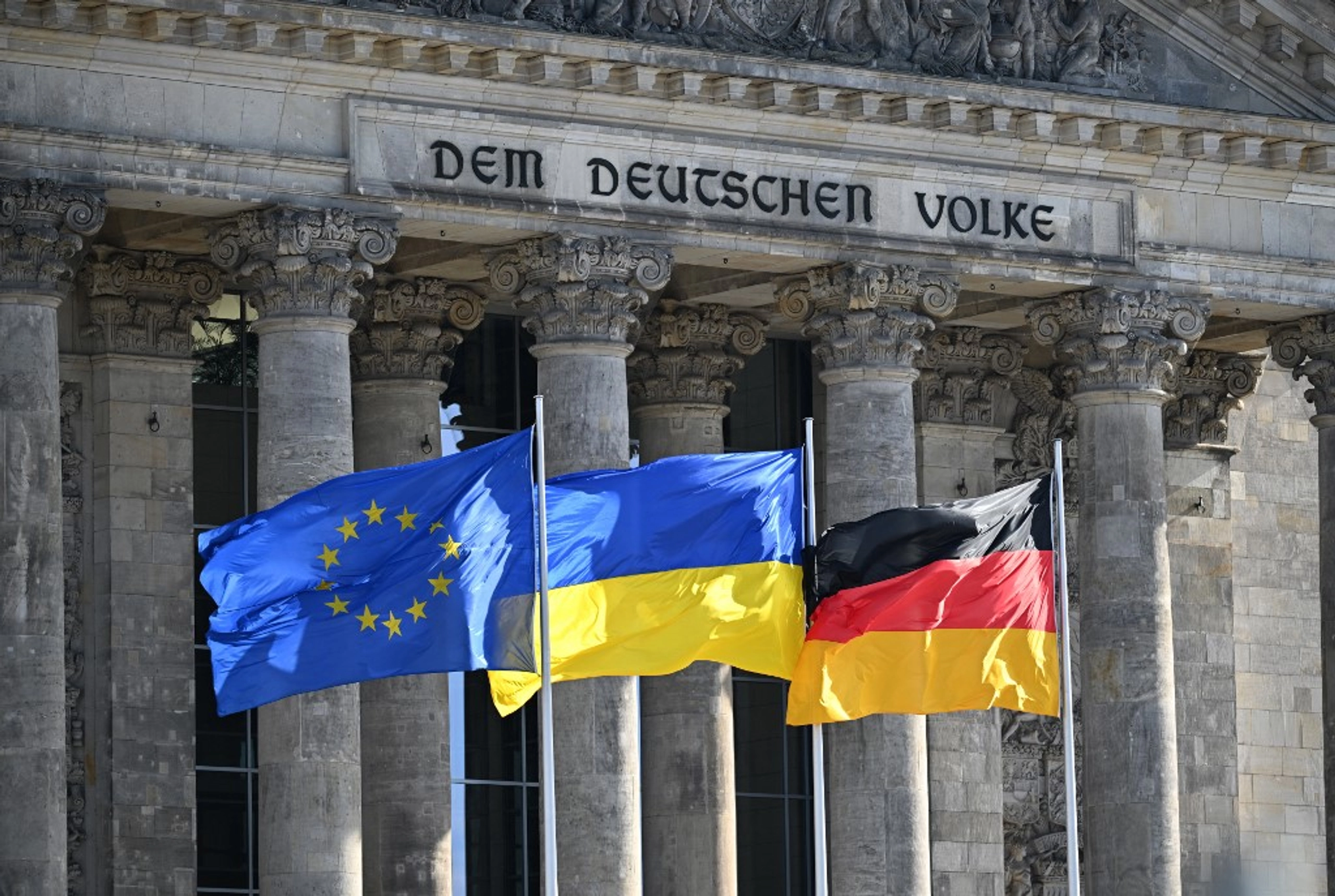
Prime Minister Yuliia Svyrydenko and Germany’s Vice Chancellor Lars Klingbeil discussed the financing of Ukraine’s defense needs during a meeting in Kyiv on Monday, as Berlin underscored the same day that Russia has no interest in peace.
“We talked about the key challenges Ukraine is facing today: financing the state budget, defense needs, and macro-financial stability. Continued cooperation with the IMF and partner support are critically important for us,” Svyrydenko announced on Telegram.
JOIN US ON TELEGRAM
Follow our coverage of the war on the @Kyivpost_official.
The two sides also discussed reforms and economic recovery, but security guarantees were top of mind.
Klingbeil, while noting security discussions were in the early stages, stressed that guarantees would have to be reliable to “ensure lasting peace” for Ukraine.
“What is important is that there are security guarantees in the end that ensure Ukraine is no longer attacked,” he said.
Svyrydenko presented Klingbeil with the Reform Matrix – an interactive tool that tracks more than 200 reforms and over 400 indicators on how those reforms are working, state news Ukrinform noted.
“The government is focused on steps toward deregulation and privatization. It is important to create conditions for the private sector to invest and rebuild industry, energy, and housing,” the Prime Minister wrote.
Meanwhile, a spokesman for the German government German government Stefan Cornelius, said that Russian leader Vladimir Putin is still not interested in peace, even after talks with US President Donald Trump in Alaska to make the first step towards a deal.
Ukraine Approves National Pantheon Law to Honor State Builders, Military Leaders and Cultural Icons
Cornelius did say that at least beginning the process Ukraine was a “a major step forward,” the most significant step since Russia launched its full-scale invasion in 2022, but said that “despite all the shifts in the positions of individual actors, it is becoming increasingly clear that Russia, as the aggressor, is still not really ready for a political settlement.”
While Trump walked away from those talks at a military base in Anchorage echoing Putin’s position that a finalized peace deal was the only option, Germany and other European allies have rallied around Ukraine’s preference for a ceasefire until details can be hammered out.
“Only a ceasefire will ultimately underline Russia’s seriousness in seeking peace,” Cornelius said.
Trump noted that any security guarantees from the United States to enforce a peace deal would not include ground troops, but rather providing air support was more likely.
While Trump has arranged to send more air defense batteries to Ukraine in recent months, he has made it clear that the US would not be sending the sorts of multi-billion aid packages to Kyiv that the previous administration provided.
Rather, Ukraine will buy weapons from the US. Last week, Zelensky said that Ukraine had proposed a deal to the US “for $50 billion over five years – 10 million drones per year,” accompanied by a plan for Kyiv to purchase US weapons worth $90 million.
The European Union, by contrast, over the weekend delivered €4.05 billion ($4.7 billion) in financial support to Kyiv on Ukraine’s 34th Independence Day.
The package includes two separate transactions: €3.05 billion (almost $3.6 billion) from the Ukraine Facility and €1 billion ($1.2 billion) from the G7-led Extraordinary Revenue Acceleration (ERA) loan initiative, backed by Russian frozen assets.
“As Ukraine celebrates its 34th Independence Day, the EU sends a clear message: our solidarity with Ukraine is unwavering,” the EU Commission press release quotes Ursula von der Leyen, President of the European Commission. “This new funding underlines our commitment not only to Ukraine’s recovery, but to its future as a sovereign and democratic country.”
In May, Germany’s Bundesregierung, or federal government, calculated that it had provided just shy of $44 billion in aid to Kyiv since the start of the full-scale invasion. In recent months, the government has revisited the possibility of sending Ukraine its much sought-after Taurus missile, something it has thus far refused to do, worrying that its capabilities could greatly escalate the war.
You can also highlight the text and press Ctrl + Enter