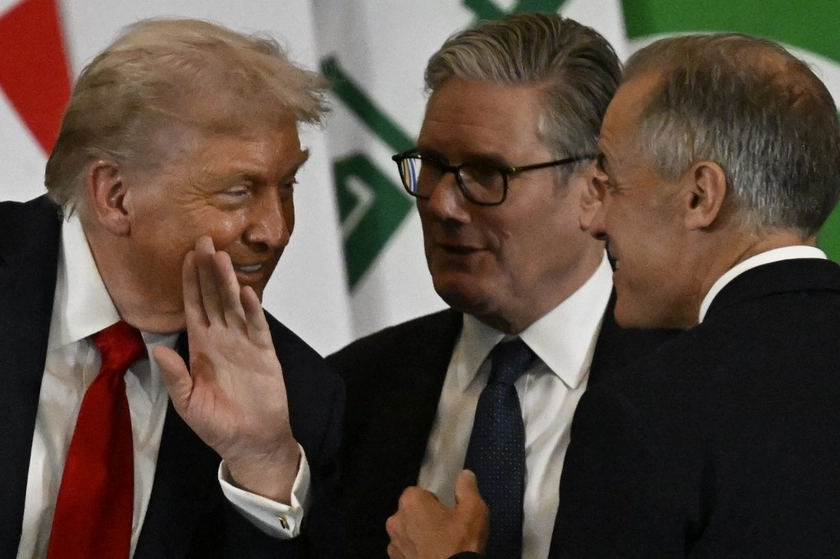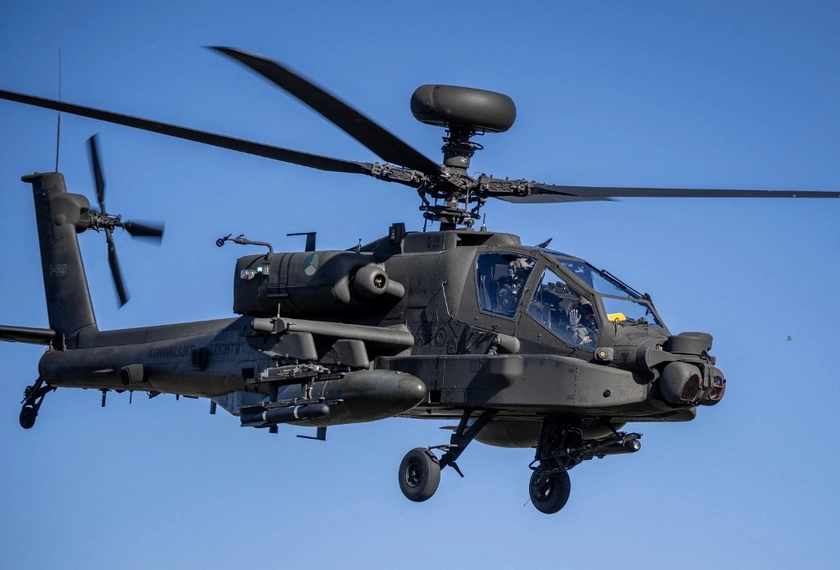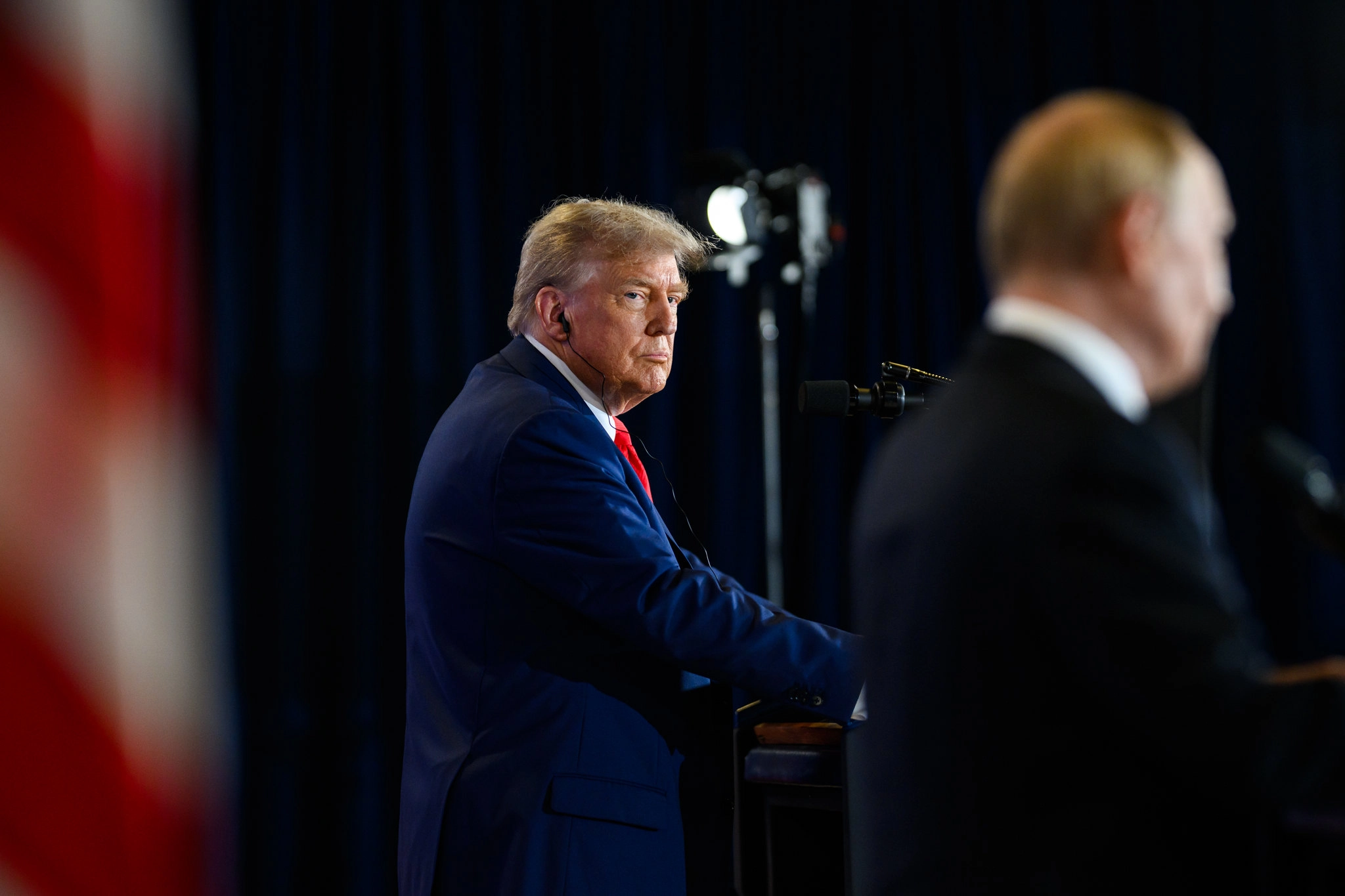
WASHINGTON DC - US President Donald Trump on Friday offered a terse assessment after three Russian fighter jets brazenly violated Estonian airspace.
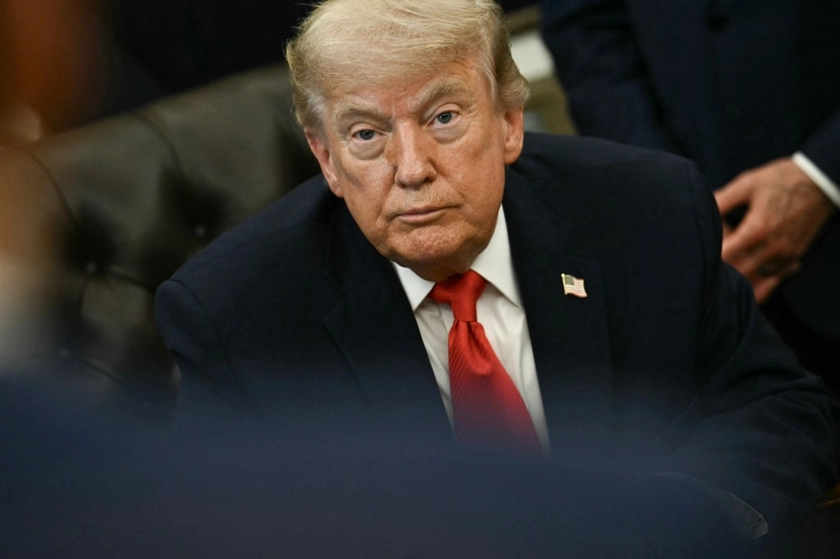
“I don’t love it,” Trump said, adding, “I don’t like when that happens. It could be big trouble, but I’ll let you know later.”
JOIN US ON TELEGRAM
Follow our coverage of the war on the @Kyivpost_official.
He also told reporters in the Oval Office, “I’m going to have to look at it. They’re going to be briefing me in a short while, so I’ll let you know about it tonight or tomorrow.”
Trump’s words brought into focus the delicate power balance in Europe and underscored the pivotal role of American leadership – or the lack of it – in the face of Russian aggression.
Incursion and immediate NATO response
The incident, which saw Russian MiG-31 fighters linger in Estonian airspace for 12 minutes, is the latest and most aggressive in a series of Russian incursions that have increasingly rattled European governments.
It comes just a week after NATO planes downed Russian drones over Poland, a move that brought the war in Ukraine to a new and dangerous level of proximity for the alliance.
For Estonia, a staunch supporter of Kyiv and a NATO member that shares a border with Russia, the violation was “unprecedentedly brazen,” according to Foreign Minister Margus Tsahkna.
Estonian officials, visibly alarmed, wasted no time in escalating the matter. They summoned a Russian diplomat to protest the breach and, in a significant move, initiated consultations with NATO allies under Article 4 of the North Atlantic Treaty.
G7 Summit to Address ‘Five-Point’ Peace Plan as Trump and Zelensky Join European Leaders
This provision, which states that parties will consult when “the territorial integrity, political independence or security of any of the Parties is threatened,” signals the seriousness with which the alliance is treating the incident.
NATO’s principal political decision-making body is set to convene early next week to discuss the matter in detail, according to NATO spokesperson Allison Hart.
The response to the incursion was swift and decisive. Italian Air Force F-35 fighter jets, currently deployed as part of the NATO Baltic Air Policing Mission, intercepted the Russian aircraft, a move praised by NATO Secretary-General Mark Rutte as “quick and decisive.”
The incident underscores the critical role of NATO’s air policing mission, which sees dozens of jets on round-the-clock alert across Europe. While NATO fighter jets scramble hundreds of times a year to intercept Russian planes flying too close to member countries’ airspace, it is rare for them to actually cross the boundary.
European leaders condemn Russia’s actions
The violation has sent a ripple of anxiety through European capitals, where leaders are already on edge.
EU foreign policy chief Kaja Kallas condemned the act as an “extremely dangerous provocation” that “further escalates tensions in the region.”
Her words echoed a growing consensus that Russia’s actions are not random, but part of a calculated campaign to test the West’s resolve. “We must not show weakness because weakness is something that invites Russia to do more,” she said.
This sentiment was also reflected by European Commission President Ursula Von der Leyen, who wrote on social media: “Europe stands with Estonia in the face of Russia’s latest violation of our airspace. We will respond to every provocation with determination while investing in a stronger Eastern flank.”
President Volodymyr Zelensky also called the incursion “outrageous” and part of a “systematic Russian campaign directed against Europe, against NATO, against the West.”
France also joined the chorus of condemnation. President Emmanuel Macron wrote on X, “I strongly condemn the incursions of Russian aircraft into Estonia. They represent yet another step in Russia’s accumulation of provocations and irresponsible actions.”
He extended his “full support to the Estonian authorities” and stated that “A security posture will be adopted in response to these repeated violations.”
German Foreign Minister Johann Wadephul also weighed in, writing on social media: “Vigilance is the price of freedom. This principle of NATO has lost none of its relevance. The unacceptable violation of Estonian airspace by Russia today demonstrates this with utmost clarity.”
He added, “By immediately intercepting the Russian aircraft, we demonstrate: The NATO is always ready to defend.”
From the Netherlands, Defense Minister Ruben Brekelmans also condemned the action, writing on social media that every Russian incursion “makes us more determined to: Bolster NATO’s defense, accelerate support to Ukraine, [and] increase pressure on Russia to stop its aggression and reckless behavour.”
He added, “NATO borders are our security borders. We stand in solidarity with Estonia!”
Sweden’s Minister for Foreign Affairs, Maria Stenergard, also voiced her alarm. “We have seen repeated airspace violations from the Russian side in recent weeks in Poland, Romania, and Estonia,” she wrote on social media, noting that Swedish Jas Gripen jets had gone up to escort Russian fighters over the Baltic Sea.
She called the incident “extremely serious” and a test of NATO’s preparedness, stating, “This clearly demonstrates that Russia is a threat not only to Ukraine but to the security of all of Europe.”
Stenergard emphasized that Sweden had joined NATO to be part of the alliance’s collective security and was now “safer today than we were before we became members.”
Western diplomats analyzing Russia’s provocations
Speaking to Kyiv Post Friday afternoon, two senior Western diplomats called the incident “a clear sign that Russia is testing the West’s resolve.”
They suggested the violation may have been a deliberate attempt to shift the focus of NATO and its members on to defending itself, rather than bolstering Ukrainian defense.
This assessment is shared by other senior US officials. The timing of the incident – coming on the heels of the Polish drone downing and the ongoing war in Ukraine – only serves to heighten the sense of unease, one US official told Kyiv Post.
In the meantime, with US-led efforts to stop the war in Ukraine having “come to nothing,” as one European official put it, the continent finds itself increasingly vulnerable.
The focus is now on what comes next. As President Zelensky stated on Friday, “Strong action must be taken—both collectively and individually by each nation,” to ensure that Russia feels “increasing pain from the world’s pressure, first and foremost through its economy, and that is best ensured by sanctions.”
The question that hangs in the air, a question that Donald Trump’s cryptic words only amplify, is whether the West is united enough to deliver on that promise.
You can also highlight the text and press Ctrl + Enter