“We expect February to bring us good news,” National Bank of Ukraine (NBU) governor Andriy Pyshny said during a briefing on Feb. 3. He was referring to a meeting of the International Monetary Fund’s (IMF) board of directors, where a new four-year $8.1 billion Extended Fund Facility (EFF) program looked set to be approved.
Tailored to Ukraine’s needs in response to Russia’s protracted war against Ukraine, the new program had been under discussion by the IMF and NBU with Ukraine’s Ministry of Finance, Prime Minister Yulia Svyrydenko and President Volodymyr Zelensky.
JOIN US ON TELEGRAM
Follow our coverage of the war on the @Kyivpost_official.
The IMF delegation held final negotiations on the program with the government and NBU representatives in Kyiv in November 2025. The meeting took place two days after Ukraine’s anti-graft agencies unveiled a possible large-scale corruption case involving the state energy giant Energoatom, where Zelensky’s close associate, Timur Mindich, allegedly organised a $100 million embezzlement scheme.
A source familiar with the discussions told Kyiv Post that this made negotiations difficult. “I have never heard such a tone from Gavin Grey,” the source said, referring to the aggressive tone of the IMF mission chief. “He told us the probability of getting a new program after such a scandal is very unlikely. But initially, we got the program.”
Not yet it seems.

Baltic States Urge EU to Accelerate Russian Oil Ban
The IMF initially required Ukraine to register a bill amending the VAT law to impose VAT on private entrepreneurs with annual incomes of at least UAH 1 million (US$24,000) and to vote on the introduction of duties on imported parcels worth less than €150 (US$178). Another IMF-related bill on the agenda would require digital platforms to collect user data and report annually to tax authorities on income generated through their services, and would reduce the tax rate on income from sales of goods and services through these platforms from 23% to 5%, with a €2,000 ($2,371) allowance per person for the sale of goods.
Once voted on, these steps – called the “prior actions” – were to open the door for a vote by the IMF’s board of directors, who were expected to greenlight the new program in February.
The parties shook hands and the IMF announced that Ukraine had reached staff-level agreement on the new program. All that was left was for Ukraine’s Ministry of Finance to submit the aforementioned bills to Ukraine’s parliament – the Verkhovna Rada – find the votes, and be done.
That was the moment when it all went wrong – businesses, Zelensky and Svyrydenko became dissatisfied with the new policy design.
In response to the Finance Ministry’s tax policy announcement, business associations, Ukraine’s economic think tanks, and the Business Ombudsman issued statements saying that the Hr. 1 million threshold risked harming real entrepreneurs; furthermore that it would not fix the problem of tax evasion.
Zelensky privately criticized Finance Minister Serhiy Marchenko for agreeing to the “unpopular conditions,” Bloomberg wrote..
“The head of state expressed his gratitude for the attention given to Ukraine and for the programs that help strengthen the Ukrainian economy and stability,” according to a press release from the Office of the President on its website during the visit of the IMF Managing Director, which took place before Bloomberg published the news with information about internal discussions.
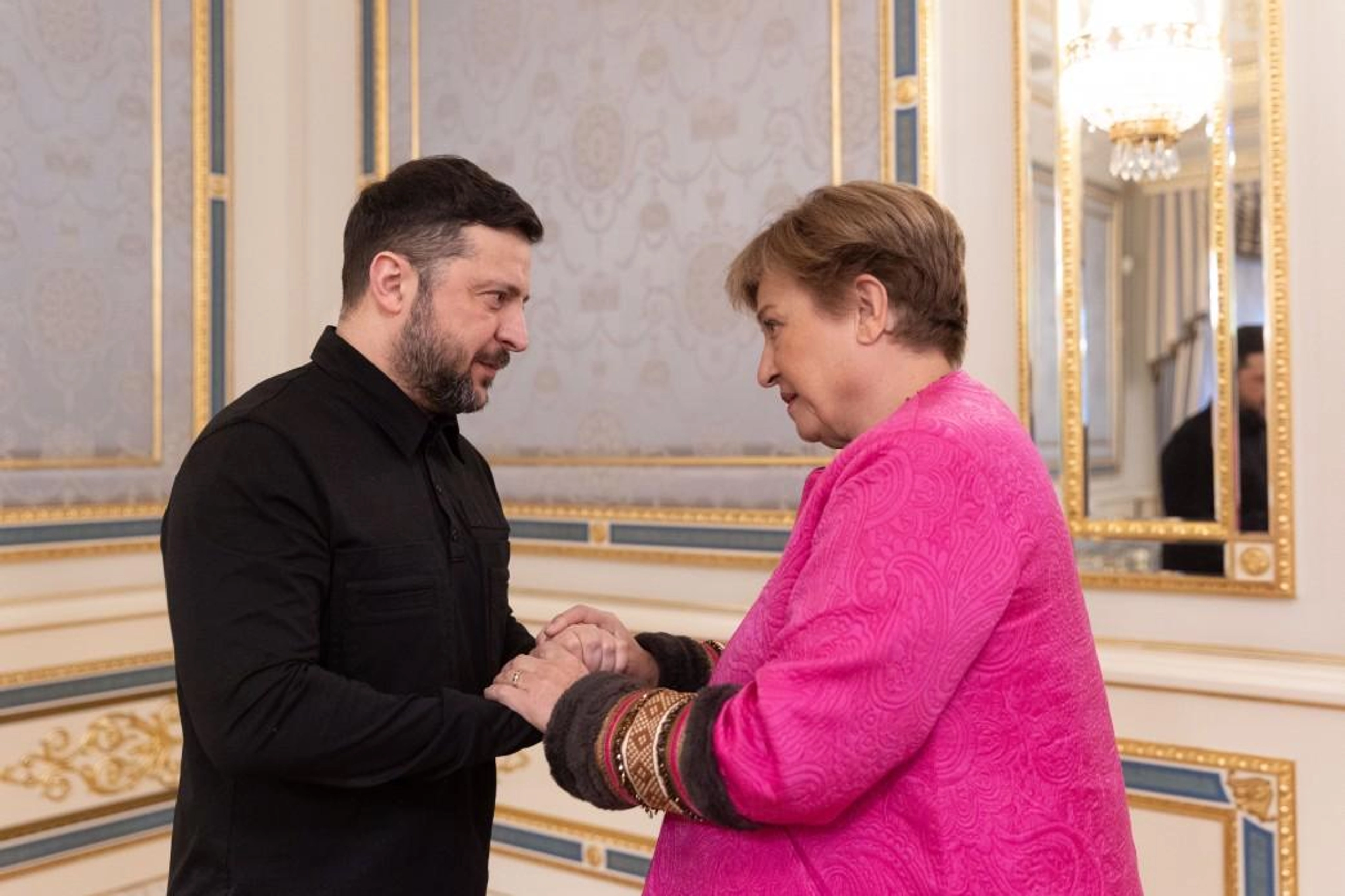
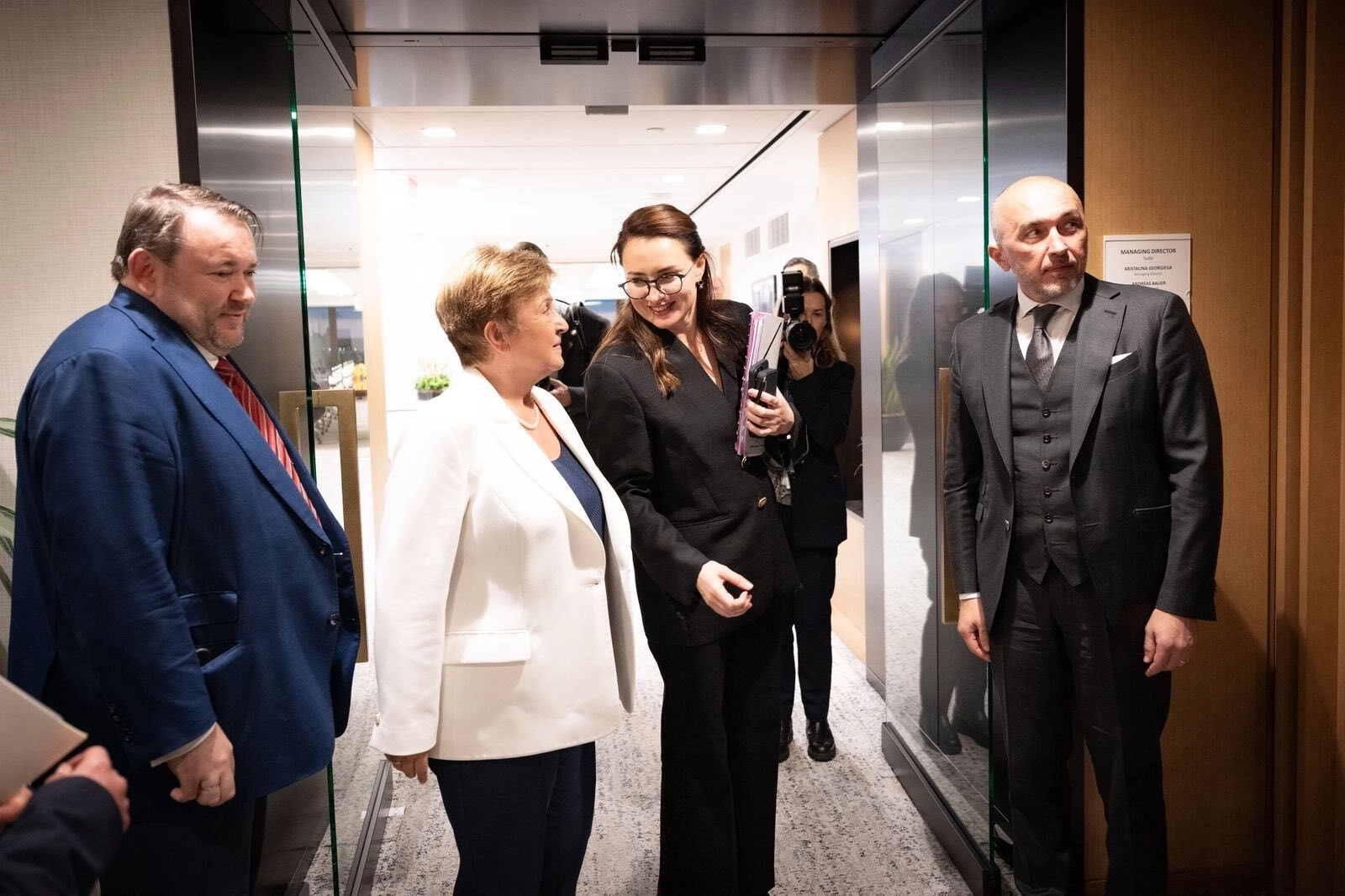
Speaking to Kyiv Post during her January visit to Ukraine’s capital, IMF Managing Director Kristalina Georgieva said that Ukraine and the IMF would adjust the agreements on imposing VAT on sole proprietors with at least a $24,000 income. “I heard feedback that the administrative burden [the burden of complying with tax administration and reporting rules] needs to be assessed carefully,” she said.
But when the time came to vote on the laws during the parliamentary session on Feb. 9-13, the drama unfolded and the bills lacked votes. Publicly, in their parliamentary speeches and behind the scenes, lawmakers expressed only dissatisfaction, with no willingness to discuss the matter or reach a compromise.
Partly, they were dissatisfied because they were not consulted on the bills and the voting strategy. “I was told that the Servant of the People [the president’s party] would not be present at the sessions when such bills [voted under the IMF’s demands] were up for consideration,” Nina Yuzhanina, European Solidarity lawmaker, told Kyiv Post.
They may also not have known what they were voting for or considering. “Lawmakers do not even have a list of the key bills tied to Ukraine’s international commitments or clarity on what they entail,” Holos lawmaker Yulia Sirko told Kyiv Post.
Kyiv Post obtained the full voting agenda for the week. The digital platforms bill – the only one available for voting from the IMF list during Feb. 9-13 – was available on the vote list during the week but was removed from it on Wednesday, Feb.11, without any public explanation.
Lawmakers wrapped up the week without any progress on voting, which could cost Ukraine not only $8.1 billion from the IMF but also the IMF’s evaluation of Ukraine’s capacity to receive more aid.
For now, the IMF and the Ukrainian government have found a compromise. The Fund decided to waive the prior actions tied to Ukraine’s program, including VAT changes for sole proprietors, parcel customs duties, digital platform taxation, and military levy provisions, according to Svyrydenko’s statements to reporters on Friday. The prior actions became the program’s benchmarks, shifting the status – they should still be implemented, but later, after the program is voted on by the Board.
But it is unclear whether the lack of communication between the government and lawmakers has been resolved.
The voting drama
Could this dreadlock have been avoided?
Lawmakers speaking to Kyiv Post say they should have been consulted before the bills were reviewed in parliament, although representatives of the president’s party say everything was explained to them.
“An election season has effectively begun in parliament. Some politicians are trying to destabilize the situation, knowing that blocking the IMF bill could jeopardize pensions, public salaries and even military pay,” Danylo Hetmanstev, leader of the Servant of the People party and chairman of the Committee on Financial, Tax and Customs Policy, told Kyiv Post.
In its November press release about the new program, the IMF listed Ukraine’s commitments that the government should have submitted to parliament. These included:
- efforts to prevent tax evasion and avoidance
- broadening the tax base, including by taxing income earned through digital platforms
- closing customs loopholes for consumer good imports and removing exemptions for VAT registration”.
“Agreement was also reached on measures to tackle economic informality, including by increasing competition in public procurement, and addressing loopholes in the current labor code,” the IMF wrote in its press release.
Some of those legislative changes were not new, but were under discussion as a concept when the Finance Ministry presented the strategy for increasing domestic revenues – the National Revenue Strategy – at the end of December 2023.
The Ministry of Finance originally introduced the VAT bill on Dec.18, 2025. Following significant opposition, the Finance Ministry now aims to amend the draft legislation by raising the VAT revenue threshold to Hr. 4 million ($93,000), according to sources cited by Bloomberg. The prime minister confirmed this intention publicly in February, according to Interfax-Ukraine.
But during the voting week, the government did not submit the VAT bill, Hetmanstev told Kyiv Post. “Until lawmakers see that the government is willing to submit this initiative to the Verkhovna Rada at least, it is too early to discuss it,” he texted.
With respect to the digital platforms bill, the Finance Ministry wants digital platforms to collect user data and report annually to the tax authorities on income earned through their services. The players include taxi apps such as Bolt and Uklon, rental services, online marketplaces like OLX, and other service apps.
Ukrainian offices of Uklon, Bolt, Uber and Glovo supported the initiatives, but OLX opposed them, saying in its press release sent to reporters that the bill’s rules could force even occasional sellers to pay tax or seek refunds, making simple online sales more burdensome, even though most users are just selling items they no longer need.
Despite concerns by several lawmakers that the bill was badly written, it was the only one to make the voting list. So the Servant of the People party decided to vote it in during the first review, then add amendments to VAT for sole proprietors and submit it for the second and final reading, thus implementing the IMF prior action, according to the source familiar with the discussions.
On Monday, opposition lawmaker from the Holos party, Yaroslav Zhelezniak, posted the above information in his Telegram blog, which triggered an unwillingness to vote for the bill under any terms, according to Yuzhanina. Hetmanstev denied to Kyiv Post that this had taken place. “Let those who spread such rumors explain it,” he replied in a text comment.
Sirko still said lawmakers do not know what they need to vote for. She noted that Ukraine’s government lacks discussions with parliament about which commitments should be put to a vote by lawmakers. “They sign something that is a priori unfeasible”, she told Kyiv Post.
“There has never been a situation where lawmakers were whispering among themselves, trying to figure things out,” Yuzhanina told Kyiv Post, describing the situation in the Verkhovna Rada during the voting week.
According to Servant of the People party lawmaker Roskolana Pidlasa: “As a rule, a good committee chair explains the content of their laws many times, so anyone who wants to listen and understand knows everything,” she told Kyiv Post.
“Just for comparison: in Ukraine, five of 1,000 people are VAT payers. In the EU, on average, it is 77 out of 1,000. So [compare] 5 to 77,” IMF Chief Georgieva told Kyiv Post previously.
Opposition lawmakers said that fiscal measures will not work if enforcement and tax management are absent or challenging.
“The problem with introducing VAT is not the increase in taxes, but the problem of maintaining very complex and expensive accounting for SMEs, blocking VAT invoices, etc. Therefore, we need to consider how to simplify all this into a single button,” Sirko explained to Kyiv Post.
“And I would suggest to Ms. Georgieva that we follow the example of broadening the VAT base in Belgium, for instance,” Yuzhanina told Kyiv Post. She explained that, in Belgium, citizens and entrepreneurs report their incomes to the tax service, and [the tax service] does not take the initiative to interpret certain actions as violations of the law when, in fact, there are none. She added that the Ukrainian tax service interprets violations on its own, forcing Ukrainians and Ukrainian businesses to constantly explain whether the transactions comply with tax laws.
“I have heard from Ukrainian auditors and accountants who say, you know, the smart Ukrainian accountant will leave two or three minor mistakes that will allow the tax office to then issue a minor fine. But then prevent them from getting angry and issuing a big fine, which is what you might get if you’re totally compliant,” ex-Business Ombudsman Roman Waschuk told Kyiv Post in an interview in September 2024.
The tax system should be more transparent so that people are not afraid to tackle tax problems, Yuzhanina added.
Adding the IMF prior actions to the existing bills is still the only way to vote on the laws before the Board’s meetings, where it should greenlight the program, Yuzhanina said.
Can February still bring good news?
The prime minister said the government will not submit the VAT tax law for self-employed entrepreneurs in February, Interfax-Ukraine reported. At the time of writing this article, the IMF has not listed any board meetings in Ukraine in its schedule. The next scheduled parliamentary session is due to take place on Feb. 24 – the anniversary of Russia’s invasion of Ukraine.
Speaking to reporters on Friday, the prime minister made clear the strategy of adding the IMF requirements to existing bills: “We are working with parliamentarians and will most likely adopt these measures as part of a consolidated tax bill. It will also cover issues related to digital platforms, parcels, and the preservation of military levies after the end of martial law, which are viewed positively by the business community,” Interfax-Ukraine quoted her as saying.
There remains no guarantee that such parliamentary turmoil, with bills vital to the economy, will not recur. February will reveal if there is any good news still to come – there is still half of the month to go.
You can also highlight the text and press Ctrl + Enter