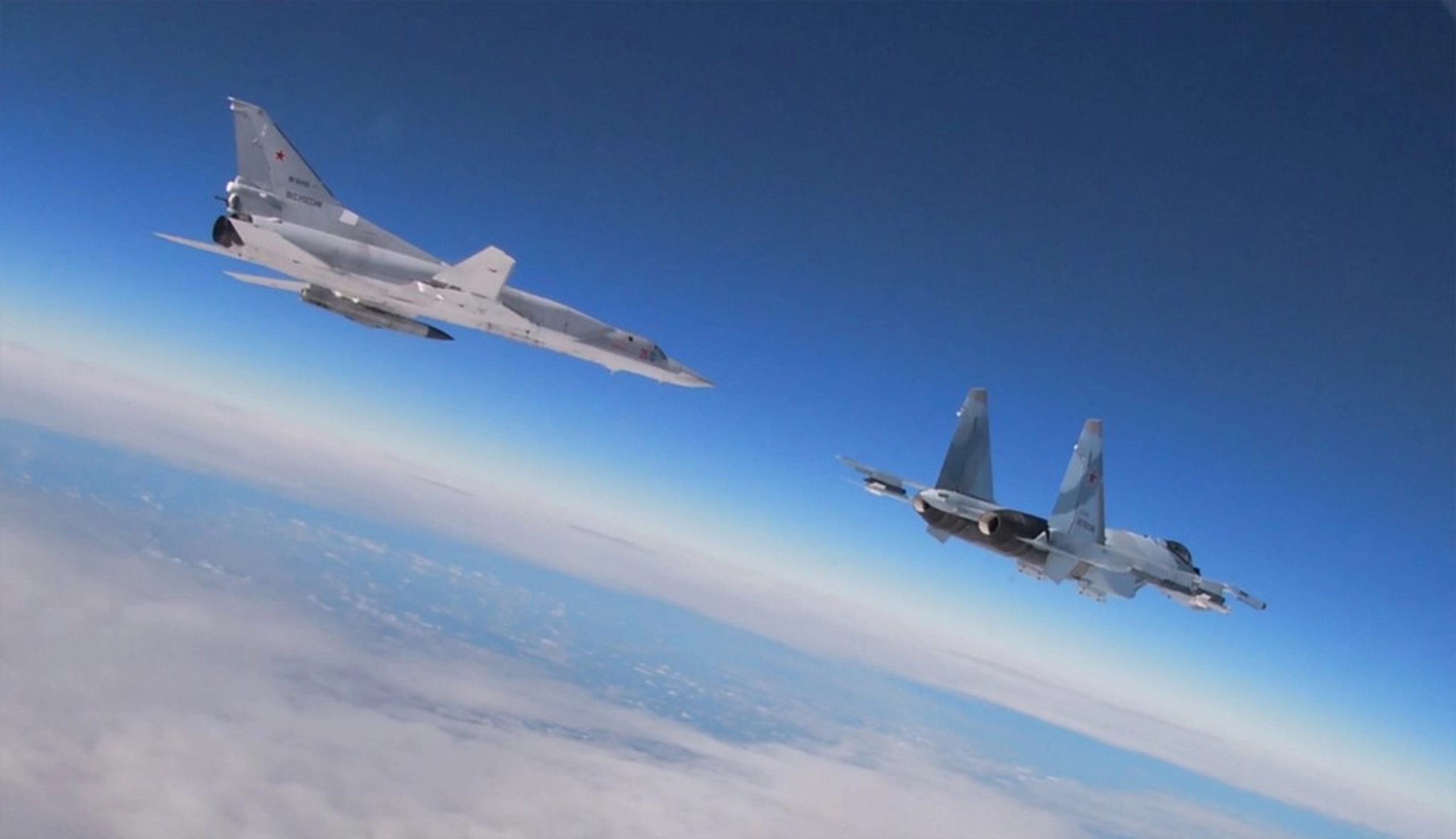
The Swedish Air Force said it had intercepted two Russian Tu-22M3 strategic bombers over the Baltic Sea on Monday.
In an X update, it said the bombers were escorted by two Russian fighter jets, adding that the mission was “coordinated with NATO allies” as part of the alliance’s routine Quick Reaction Alert (QRA) mission.
JOIN US ON TELEGRAM
Follow our coverage of the war on the @Kyivpost_official.
“Swedish QRA fighter jets intercepted two Russian Tu-22M3 strategic bombers over the Baltic Sea today. The bombers were escorted by two Russian fighter jets, and the interception was coordinated with NATO allies,” the update says.
Local outlet the Sweden Herald said Sweden scrambled two JAS 39 Gripen fighters to shadow the Russian bombers when the latter were discovered at around 10 a.m. on Monday.
Lieutenant Colonel Robert Krznaric, the Swedish Air Force’s chief of operations, told another outlet the bombers were spotted northeast of Gotland Island after entering through the Gulf of Finland, passing between Sweden and the Baltic states, continuing south to Bornholm, and then turning back toward Russia.
The Tu-22M3 is frequently used by Moscow to launch Kh-22 missiles over Ukraine. The purpose of their latest flights over Sweden remains unclear.
Sweden’s chief of defense has recently warned that Russia might capture an island in the Baltic Sea – one of the thousands scattered in the region – to test NATO’s response.
The update followed similar reports from the Royal Norwegian Air Force, also known as the Luftforsvaret, which said on Friday that it had intercepted two Russian maritime spy planes – an Il-38 and a Tupolev Tu-142 – within the past week.

Russian Region Deploys Police at Gas Stations As Fuel Crisis Deepens
In its update, the Luftforsvaret said it had carried out 19 QRA missions and identified 28 aircraft thus far in 2026.
The QRA is part of NATO’s Air Policing mission, involving routine encounters dating back at least to the 1950s, when military aircraft – from fighter formations to intelligence, surveillance, and reconnaissance (ISR) platforms – enter another nation’s air defense identification zone (ADIZ), a charted buffer area meant to prevent unwanted peacetime confrontations.
You can also highlight the text and press Ctrl + Enter

Russia Hit by 660-Drone Overnight Barrage Targeting Moscow, Crimea and Key Military Sites