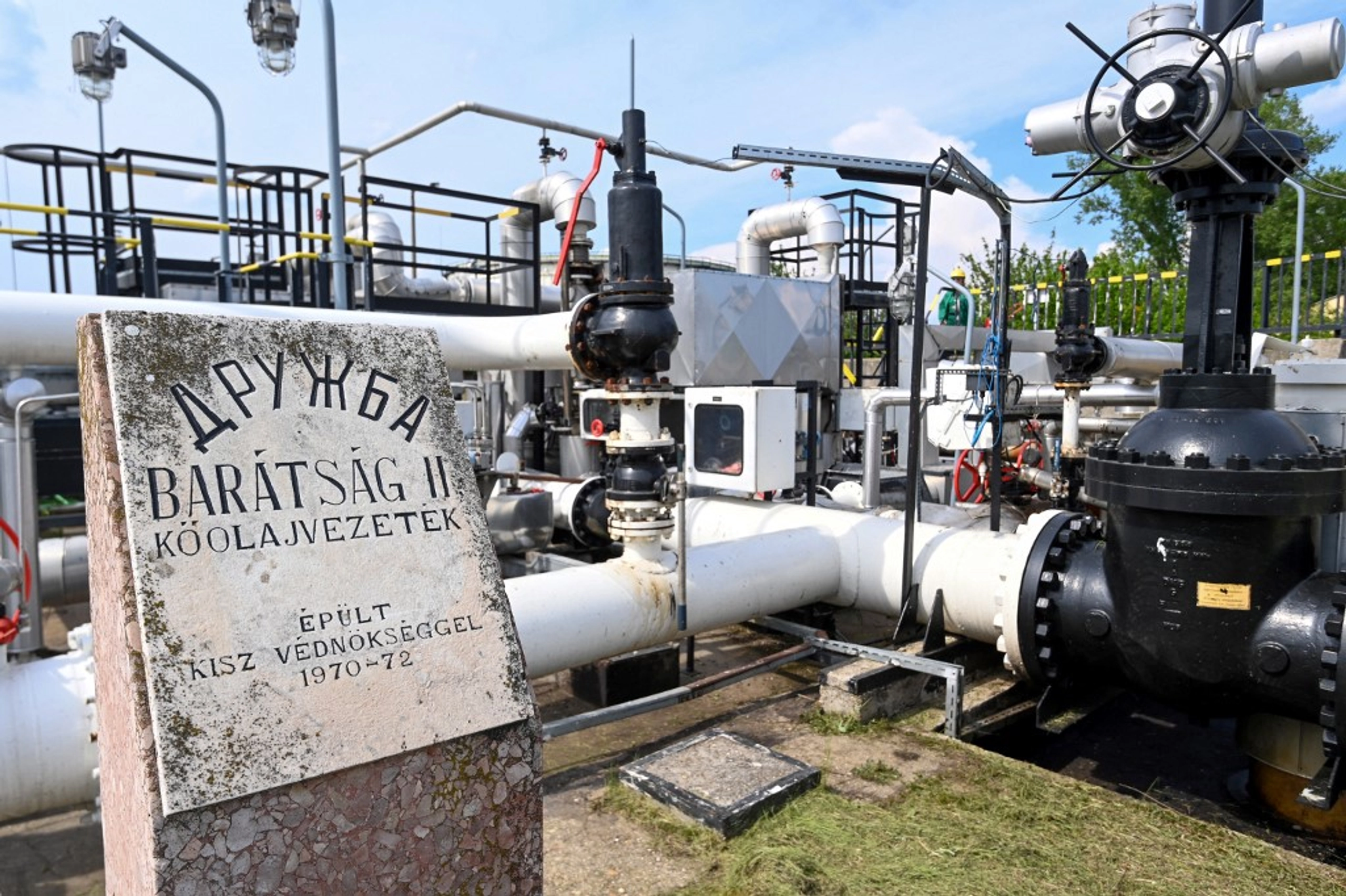
Ukraine is set to resume oil transit through the Druzhba pipeline on Wednesday afternoon, an industry source told Reuters on April 22.
“Oil pumping is scheduled to begin tomorrow at lunchtime,” the source said, adding that Hungary’s oil company MOL had already submitted requests for initial transit volumes.
JOIN US ON TELEGRAM
Follow our coverage of the war on the @Kyivpost_official.
According to the source, the first shipments will be split between Hungary and Slovakia.
The resumption comes as Kyiv seeks to unlock a €90 billion European Union loan, which has been linked to the restoration of oil transit flows.
The Druzhba pipeline, one of the largest oil transport routes in Europe, carries Russian crude via Ukraine to several Central European countries.
Disruptions and political tensions
Oil transit via Druzhba has been suspended since January following damage caused by a strike, disrupting supplies to Hungary and Slovakia.
The outage became a point of political tension, with Hungarian officials accusing Ukraine of delaying repairs – a claim denied by President Volodymyr Zelensky.
The disruption forced refiners in the region to rely more heavily on alternative supply routes, including shipments via the Adriatic pipeline.
On April 17, Hungary’s prime minister Peter Magyar said Russian oil flows through the Druzhba pipeline could resume as early as next week after months of disruption. Magyar said the information came from Zsolt Hernadi, head of Hungarian oil group MOL, who is expected to travel to Russia to discuss future supplies.
Ukraine’s Energy System ‘More Prepared’ for Winter, DTEK CEO Says
Outgoing Hungarian Prime Minister Viktor Orban accused Kyiv of delaying repairs for political reasons, a claim denied by Ukrainian President Volodymyr Zelensky.
Zelensky said earlier this week that the pipeline could be operational again by the end of April.
Magyar also signaled that he may lift the Orban-era veto on a €90 billion ($106 billion) EU loan package for Ukraine once oil flows are restored.
Hungary and Slovakia have continued to rely on Russian crude despite EU efforts to reduce imports following Moscow’s full-scale invasion of Ukraine in 2022.
Hungary has also begun withdrawing troops previously deployed to guard critical energy infrastructure, local outlet HVG reported on Wednesday, after authorities said improved security measures reduced the need for military protection.
Around 600 soldiers had been stationed at facilities, including oil and gas infrastructure, following concerns raised earlier this year over potential threats to energy transit routes, including the Druzhba pipeline.
The troop withdrawal follows Hungary’s recent change in government, with Magyar signaling a more pro-EU stance, though future support for Kyiv remains uncertain as Magyar also ruled out support for Ukraine’s accelerated EU accession.
You can also highlight the text and press Ctrl + Enter