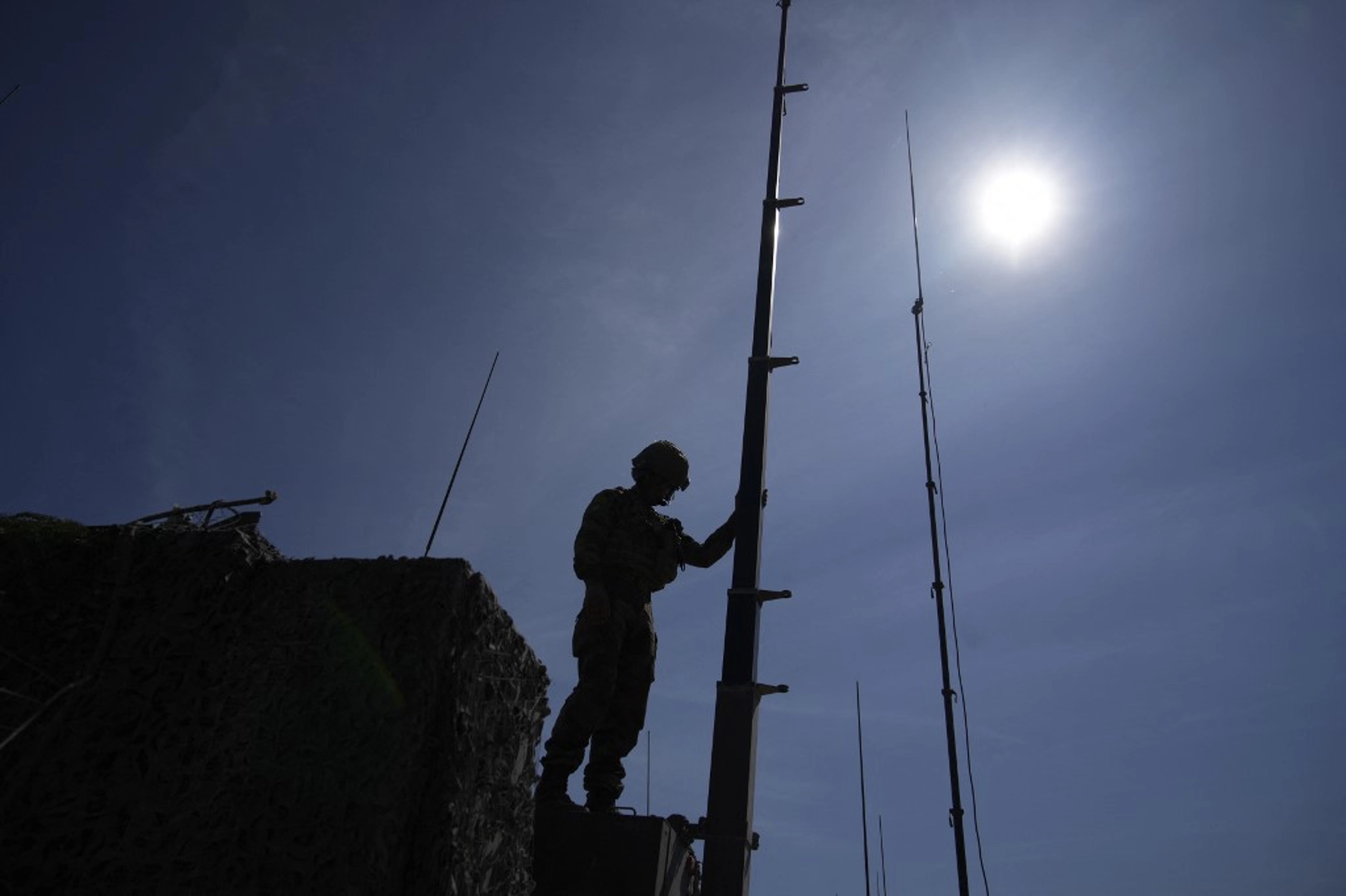
Estonia has taken its first major step toward insulating its sovereign airspace from cross-border aerial incursions, activating its initial cluster of stationary drone detection and monitoring systems along its southeastern frontier, ERR reported.
The technical deployment represents the opening phase of a multi-stage national defense initiative aimed at erecting a comprehensive surveillance umbrella capable of tracking low-altitude unmanned aerial vehicles (UAVs) in real time.
JOIN US ON TELEGRAM
Follow our coverage of the war on the @Kyivpost_official.
Building the nationwide anti-drone shield
The newly acquired electronic monitoring devices have been permanently installed and are fully operational across three critical sectors of the land border. According to a press release issued by the Ministry of Internal Affairs, Estonian authorities plan to expand the hardware array to cover all remaining sections of the country’s land borders before the end of the year.
Estonian Interior Minister Igor Taro emphasized that the successful activation of the initial sectors validates months of intensive logistical planning and risk assessments.
“The first devices are installed and working,” Minister Taro stated. “Of course, this is only the beginning: we are moving toward creating a drone network that will cover all of Estonia, but this step shows that the previous preparatory work has borne fruit. Recent drone incidents show that we very realistically assessed the risks when planning our capabilities.”

Stray Ukrainian Drones in NATO Airspace Are ‘Price Worth Paying,’ Estonia FM Says
To maintain operational coverage while the permanent infrastructure expands, the Estonian Police and Border Guard Board will utilize agile, mobile monitoring systems in high-priority zones or areas currently lacking fixed radar stations. The department is actively managing the procurement of specialized tracking components for the next phases of construction, with site preparation moving directly on or ahead of schedule.
Securing NATO’s contested Eastern flank
The rapid implementation of the drone monitoring network follows a series of unprecedented airspace violations that have tested regional air defense grids along NATO’s eastern frontier. Just days prior to the deployment, Estonia’s national warning system issued an emergency public air threat alert across six southern counties before NATO Baltic Air Policing fighter jets intercepted and shot down a drone over Lake Võrtsjärv. Top defense officials noted the target was likely a long-range asset traversing the region.
The vulnerability of regional border corridors has been further underscored by consecutive incidents in neighboring states. Latvia has repeatedly scrambled allied fighter jets and temporarily suspended regional rail traffic this month following multiple border breaches by stray, explosive-laden drones traveling from Russia, one of which impacted an industrial fuel depot in Rēzekne.
Concurrently, Finland was forced to completely lock down its primary international transit hub, Helsinki-Vantaa Airport, after an unidentified long-range drone breached its territory near a high-capacity oil refinery.
By establishing a continuous, automated tracking line along its frontier, Estonia aims to eliminate blind spots used by low-flying drones, providing its defense forces and NATO allies with the early warning capacity needed to neutralize incoming threats before they reach populated areas.
You can also highlight the text and press Ctrl + Enter

Russia Hit by 660-Drone Overnight Barrage Targeting Moscow, Crimea and Key Military Sites