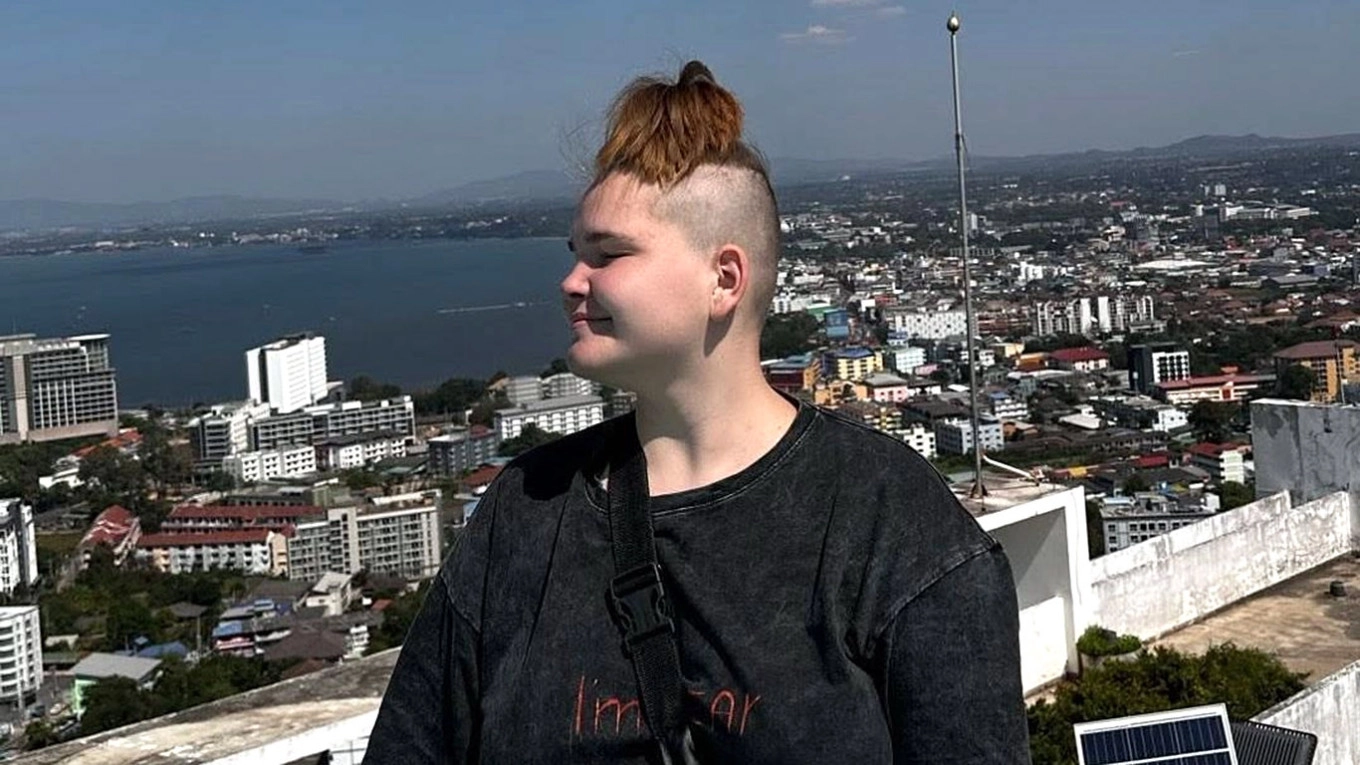
Turkey has deported Russian anti-war activist Ariadna Litvinova to Moscow, in a case rights advocates say underscores growing risks for Kremlin critics living outside Russia.
Litvinova was deported from Turkey to Russia on July 4, after being detained in the Turkish Republic, according to the Russian legal aid project “Prison Lawyer.” She had been wanted in Russia since February, initially facing vandalism charges under Article 214 of the Criminal Code before her case was reclassified under Article 280.3.
JOIN US ON TELEGRAM
Follow our coverage of the war on the @Kyivpost_official.
“Russian authorities had charged Ariadna Litvinova, 24, with ‘discrediting’ the army after she wrote messages on banners at a pro-war exhibition in St. Petersburg that read: ‘Murderers,’ ‘Peace to Ukraine’ and ‘Freedom for political prisoners,’” The Moscow Times reported, citing her lawyers.
First known deportation of an anti-war Russian citizen from Turkey
Reportedly, Litvinova’s removal from Turkey was formally initiated by Ankara as a deportation, rather than as an extradition in response to a Russian request.
She was flown to Moscow’s Vnukovo Airport on Saturday and was detained on arrival, now facing up to seven years in prison, the same sentence the LGBTIQ+ club staff got in a recent precedent case where Russia jailed the employees for organizing and participating in an “extremist organization.”
Anastasia Burakova, a lawyer and the founder of Kovcheg (The Ark) – a project that supports Russian anti-war emigres – explained that deportation “does not require months-long extradition proceedings, appeals or other legal processes,” that extradition involves.
Confident Zelensky Arrives at NATO Summit After Ukraine Regains Momentum
Her recent report on transnational repression and politically motivated persecution says tactics used against Russian dissidents abroad can include detention on the basis of extradition requests, imprisonment pending extradition, deportations under fabricated pretexts, entry bans, revocation of residence permits, and even extreme measures such as kidnapping and forced transfer to Russia.
“None of the countries in these regions can be considered fully safe for free voices,” she said, referring to Russia, Belarus, Central Asia, and the Western Balkans, adding that “Russia is a party to 96 bilateral agreements and a member of 20 international treaties on extradition.”
While having an agreement does not necessarily mean automatic response to extradition requests, many countries choose to cooperate in returning citizens back to their country of origin.
Litvinova’s background and earlier case
Litvinova, a police college graduate, was arrested in Russia in 2025, initially charged with vandalism for damaging a photo exhibition about the war near the General Staff building in St. Petersburg.
Her lawyer told a Russian outlet Rotonda that she admitted damaging property and described her actions as the result of an emotional outburst. Meanwhile, her mother said that Litvinova had been “far from politics,” despite her earlier social media posts pointing to a more active stance, according to The Moscow Times.
“I am not a politician, not a journalist, I am a small person. I do not claim to change everything alone. But I know one thing: if you stay silent, nothing will change,” one deleted post read, according to Rotonda.
Litvinova was able to leave Russia after her pre-trial detention was replaced by a ban on certain activities, which did not prohibit her from traveling abroad, prompting her to fly to Turkey, where her father lives.
Her lawyer now says contact with Litvinova has been lost since her deportation and that she is expected to be transferred to St. Petersburg in Russia for further proceedings.
The age of digital repression and broader human rights regression
The use of a deleted social media post as evidence to bring criminal charges against her raises broader concerns about surveillance and digital repression. Rights advocates note that such practices reflect a growing pattern in which online speech, even after being removed, can still be used as grounds for prosecution.
In Russia, this pattern extends beyond political speech to cultural and gender expression – recently, a 22-year-old man was fined for “LGBT propaganda” after posting a photo of Queen band members dressed in drag from their 1984 “I Want to Break Free” video, with a Moscow court claiming the image helped “destroy family values” and “distort the idea of the relationship between a man and a woman.”
The ruling illustrates how even sharing a pop-culture image that authorities deem “extremist” or morally harmful can lead to punishment and imprisonment, mirroring the way prosecutors have used wigs and drag clothing as evidence to pursue charges against staff at venues like the Pose gay club in Orenburg.
Turkey’s shifting stance
In the early phases of Russia’s full-scale invasion of Ukraine, Turkey initially became sort of a key hub for Russian citizens opposing the war.
However, Kovcheg’s report notes that in 2025 it documented the first case of direct cooperation between Russian and Turkish Interpol bureaus that bypassed the central office, resulting in a Russian dissident’s detention and deportation on national security grounds – based on Russian “extremism”-related allegations over online comments.
Similar cases appear to be increasing across the region.
The Russian Anti-War Committee reports that Kazakhstan has granted at least four Russian extradition requests this year for citizens facing criminal prosecution, while in 2023 Kyrgyzstan transferred anti-war activist Alexei Rozhkov to Russia over an arson attack on a military enlistment office carried out in protest of the invasion of Ukraine.
“Countries appear to be increasingly beginning to normalize their relations with Russia, including when it comes to handing [anti-war] people over and engaging in informal forms of cooperation,” Burakova told The Moscow Times. At the same time, she said, it remains extremely difficult to prove political pressure from Moscow when cases are formally presented as deportations or sovereign decisions by another country.
The expanding surveillance apparatus
An investigative report conducted in June says Russia’s Federal Protective Service (FSO) runs a secret polling unit that conducts large-scale opinion surveys and monitors social media to brief top officials on public mood.
In 2025, Russia disrupted WhatsApp in major cities while directing state employees to adopt its own Max messenger, a platform critics describe as built around state surveillance.
You can also highlight the text and press Ctrl + Enter