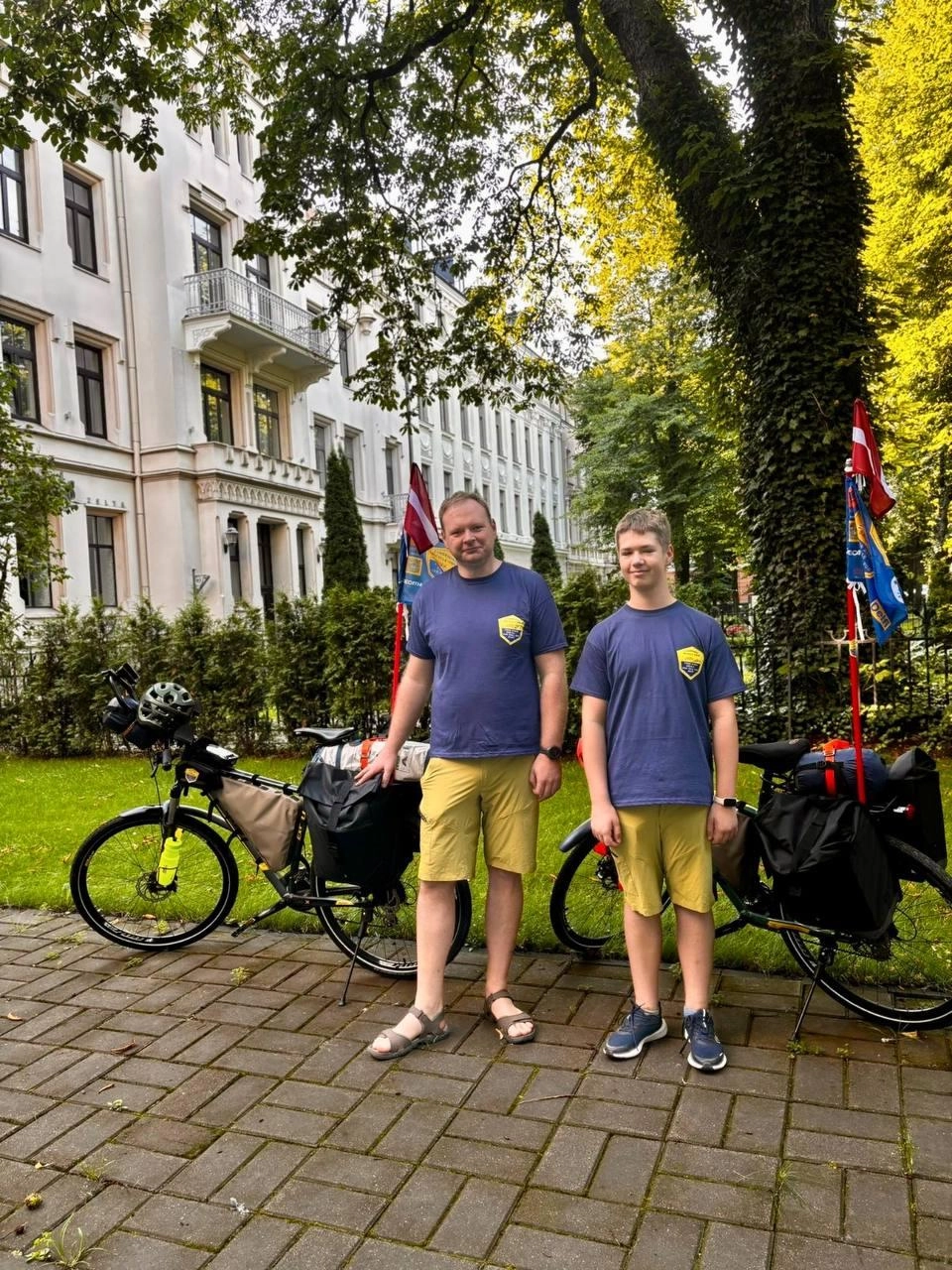
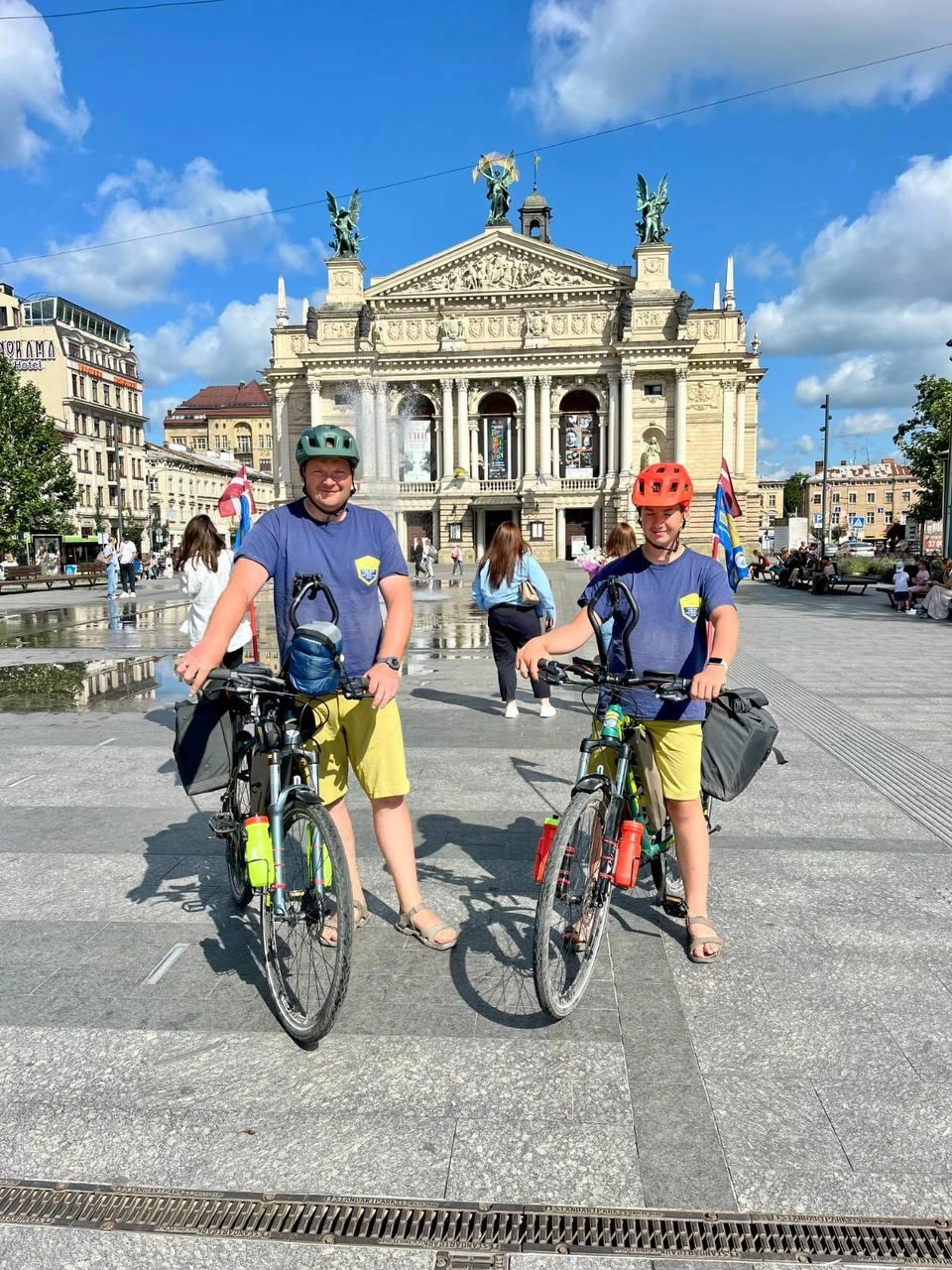
Jānis Grandāns, an entrepreneur from Riga, and his teenage son, Kārlis Grandāns, traveled 1,600 km (994 miles) by bicycle from the Baltic Sea to the Black Sea.
Their goal? To see Ukraine from a perspective different from the usual news reports and to support a charity initiative, they said.
JOIN US ON TELEGRAM
Follow our coverage of the war on the @Kyivpost_official.
Motivation and logistics
Back in Latvia, Jānis runs a laser-printing business and owns “Urban van Glamping Riga,” a hotel in the capital of Latvia built inside converted vans, while Kārlis is a student.
Jānis explains that his interest in Ukraine stems partly from his personal history.
“I was born just two weeks after the Chornobyl disaster, so I always had an interest in visiting Ukraine,” he told Kyiv Post.
Since Russia’s full-scale invasion began in 2022, the family has visited Ukraine several times, initially as tourists in Lviv and the Carpathian mountains in western Ukraine, and later driving confiscated vehicles to donate to the Ukrainian army.
The idea to cycle to Odesa emerged as a way to raise funds for a bomb shelter classroom in School No. 117.
“Latvia supports Ukraine with military aid, but we wanted to highlight a different side – the tourism potential, the daily life of people, and the scenery,” Jānis said. Despite concerns from friends and family regarding safety, they proceeded with the plan.
“It reminded me of the Latvia of my childhood, 20 years ago.”
Syrsky: Russian Maps Show False Advances to Please Top Command
1,600 kilometers: the route
The journey began on Aug. 2 and ended on Aug. 18 in Odesa, covering roughly 1,600 km (994 miles) over 16 days. They cycled from Riga to Lublin in Poland, then took a bus to Lviv to bypass border issues, before resuming cycling through Ternopil and Sataniv in western Ukraine, heading south toward the Moldovan border and finally reaching Odesa.
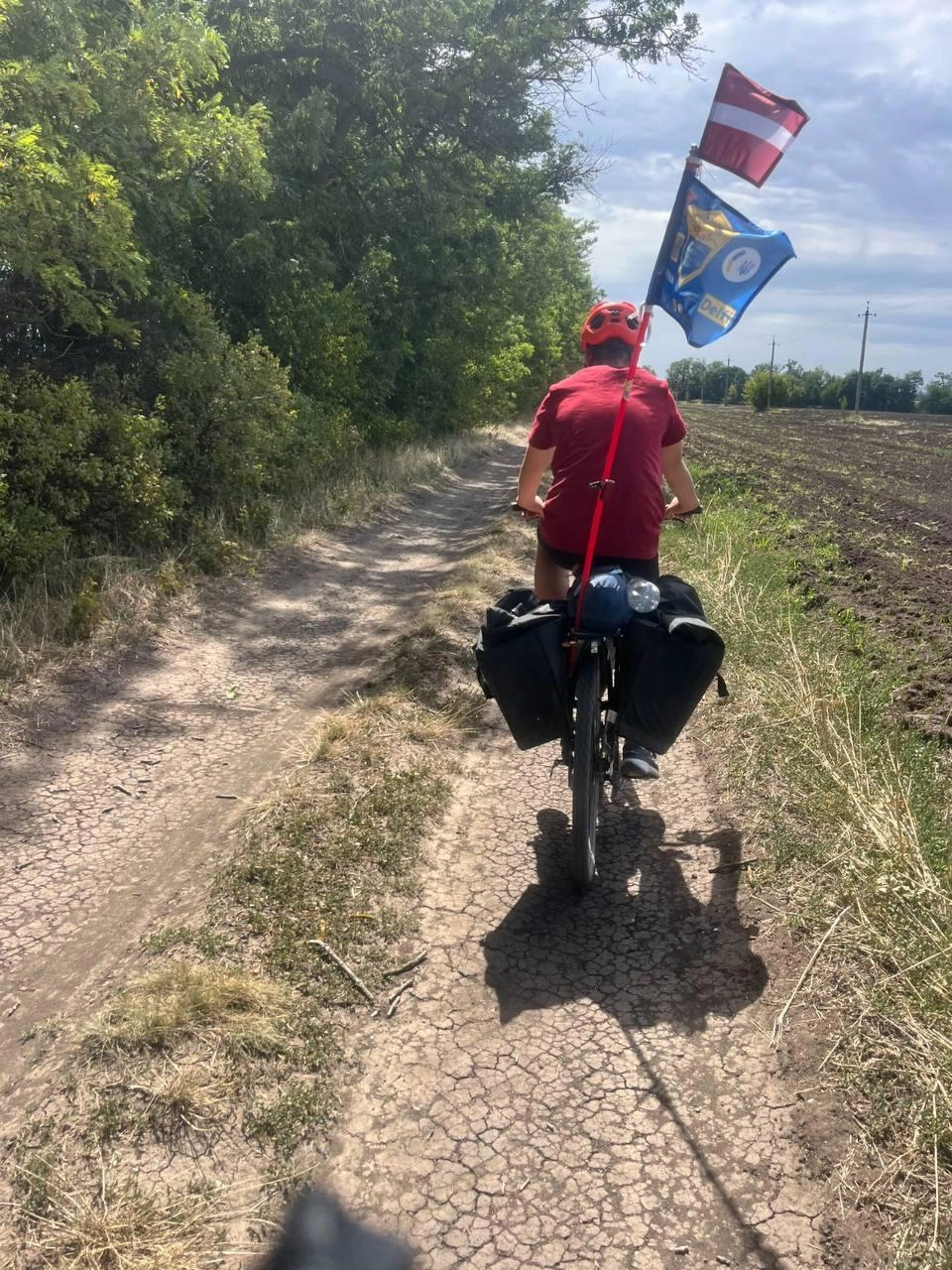
Jānis describes the road conditions as varied and challenging.
“One moment there is fresh asphalt, and the next – a dusty steppe road. We also encountered ‘concrete slab’ roads, which are difficult to ride on, followed by gravel mixed with sand and large stones,” he said.
For the two, the rural landscapes felt familiar yet distant in time.
“We saw long villages with houses lining the road, livestock walking on the edge, and elderly women leading cows home. It reminded me of the Latvia of my childhood, 20 years ago,” Jānis said.
Encounters and hospitality
The cyclists, riding with Latvian flags on their bikes, frequently interacted with locals.
In the town of Dolinska, they stopped at a supermarket where staff recognized their flag. Along the trip, they encountered acts of hospitality that often helped solve logistical challenges.
In Zolochiv, they found that the local hotel was fully booked. However, a man named Dmytro, born in Latvia to a military family, came forward and spoke to them in Latvian. He offered the travelers his room. “We are now friends, and we are going to visit his family in Brovary for New Year’s,” Jānis said.
In another town, an elderly woman scolded them for booking a hotel instead of coming to stay at her house. Twenty minutes later, she returned with fresh pierogi (dumplings).
Even official interactions were welcoming. Near the Moldovan border, guards checked their documents but then suggested hiding their bicycles in the bushes and invited them to the block post to share dinner.
“He took out a small, worn chevron with the Ukrainian flag that he had with him in the trenches.”
In Znamianka, after a hotel booking error left them without a room, they found accommodation in a former collective farm building.
“The owner warned us it might be too simple, but for €12 ($14), it was sufficient. We bought snacks, waited out an air raid siren for an hour, and went to sleep,” Jānis said.
Arrival in Odesa
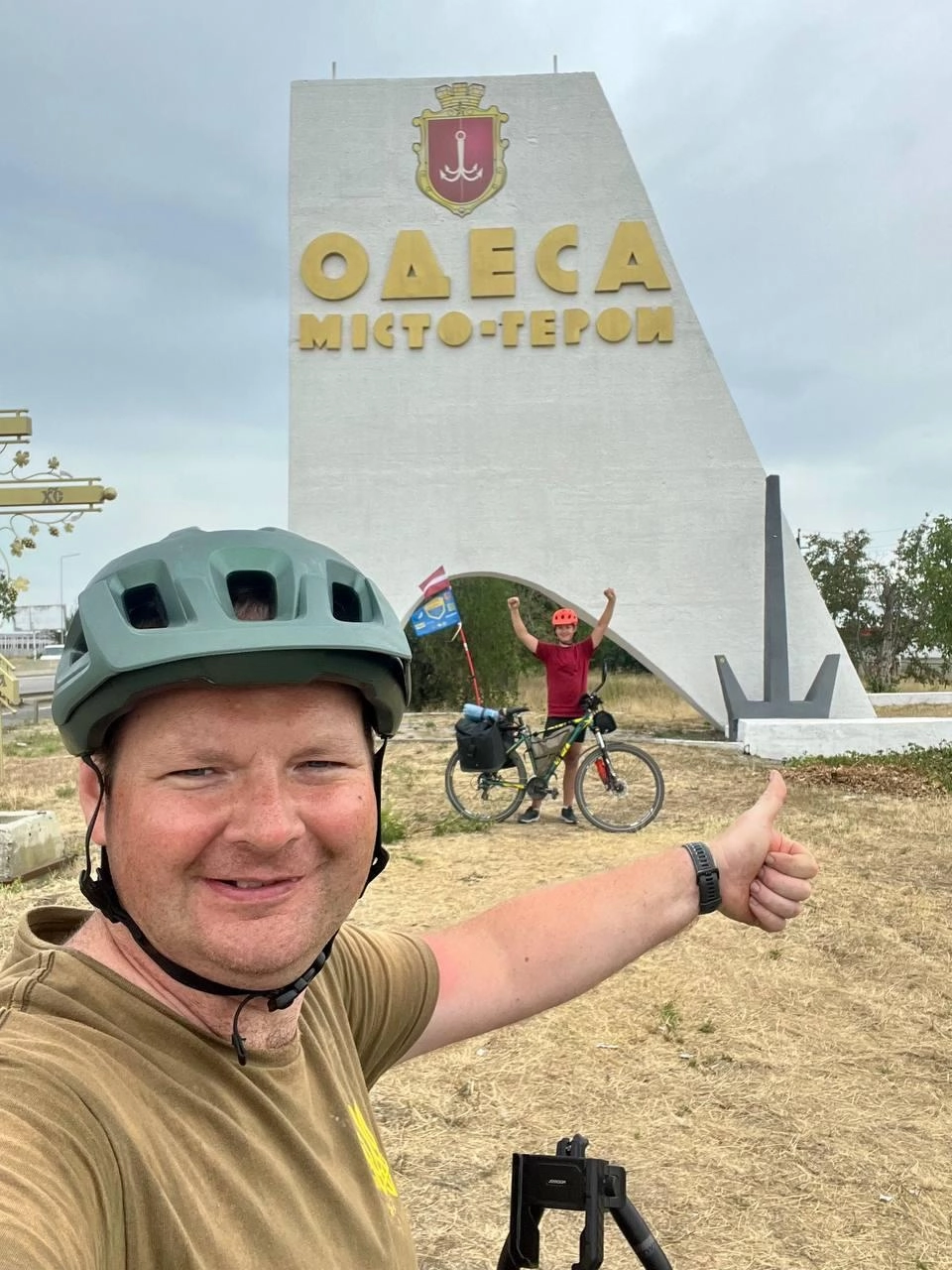
Reaching Odesa on Aug. 18 was a major milestone after navigating hilly terrain and heavy traffic from grain trucks heading to the port. Upon seeing the city sign, Jānis describes feeling a sense of accomplishment comparable to “winning the Olympic Games.”
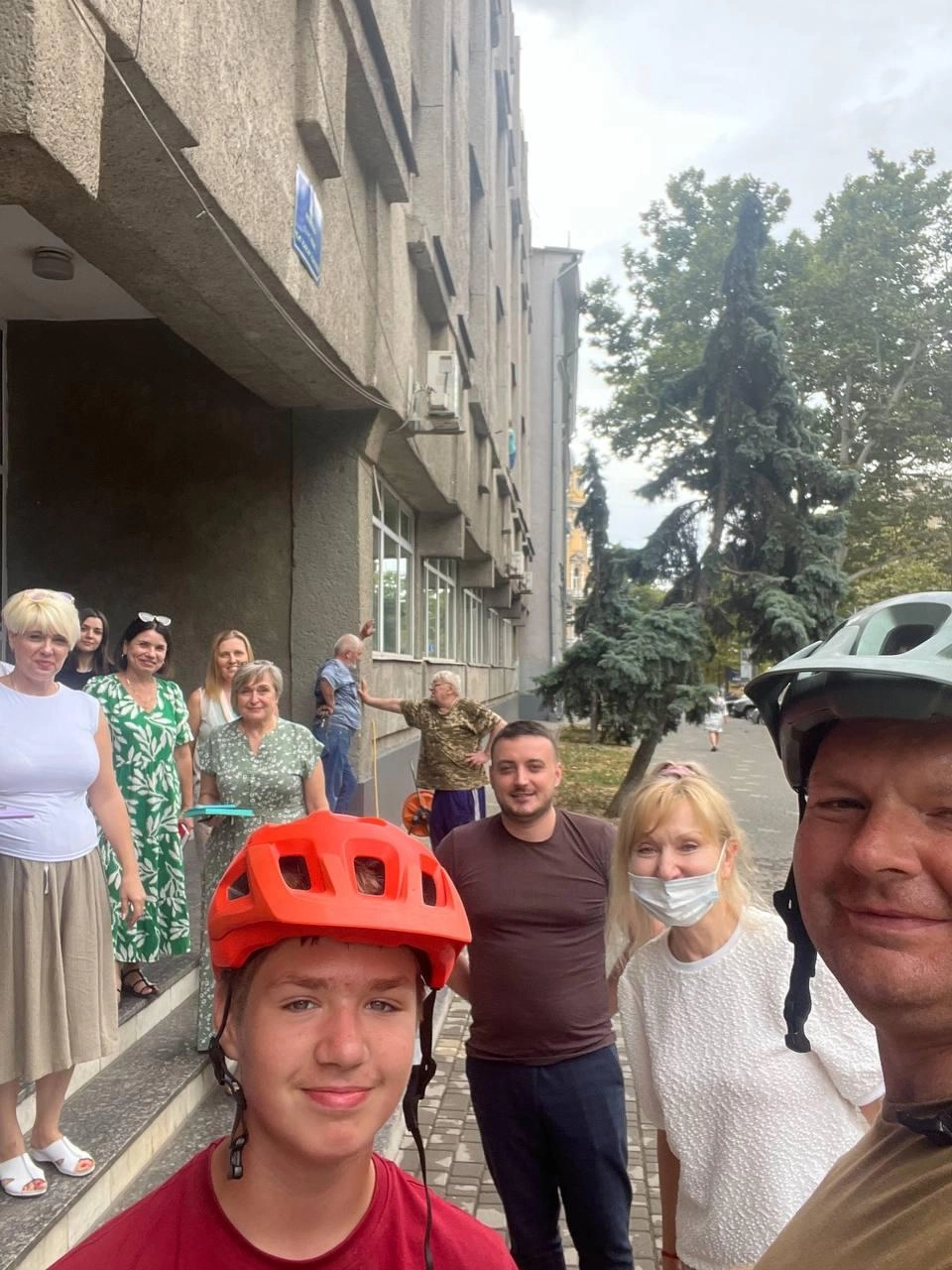
In Odesa, they met with the school’s principal, for whom they had been raising funds. During their stay, they also noticed the price difference compared to Latvia, with haircuts costing €5 ($5.8).
A significant encounter occurred when they took a taxi – the driver, a former soldier wounded on the front, learned of their mission.
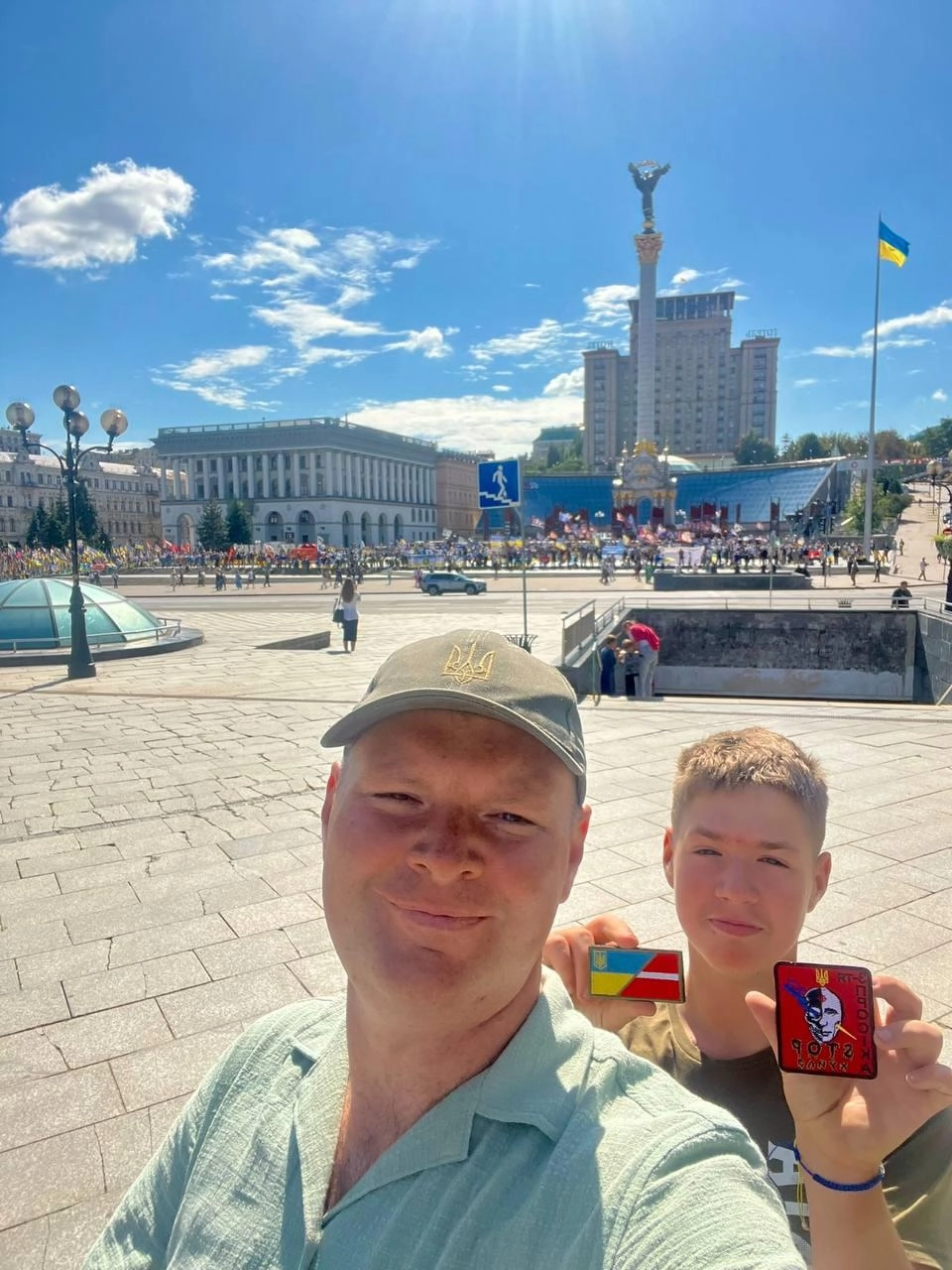
“He took out a small, worn chevron with the Ukrainian flag that he had with him in the trenches. He insisted we take it, saying, ‘This is for you, Latvians, for what you do for us.’ It is now a keepsake in our home,” Jānis said.
Observations in Kyiv: diplomacy and daily life
Following the bike trip, the family returned to Ukraine by car as part of the “Twitter Convoy” initiative to deliver vehicles to the Ukrainian army. They stayed in Brovary – a city east of Kyiv – with Dmytro, the contact they had made in Zolochiv.
The reality of the war remained present.
“We were warned that drones often fly over the area because they follow the river. We heard air defense systems working nearby during the night,” Jānis said.
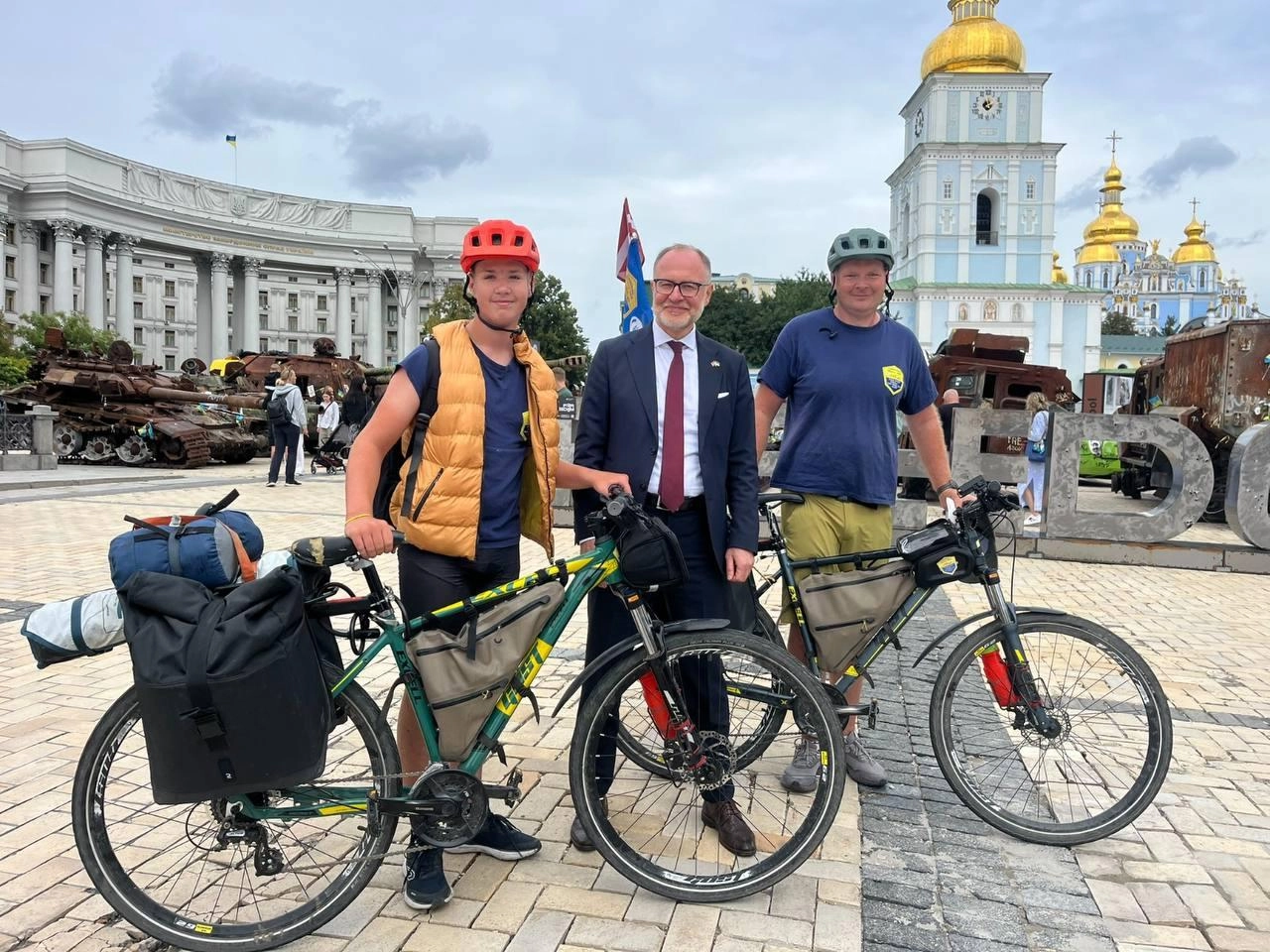
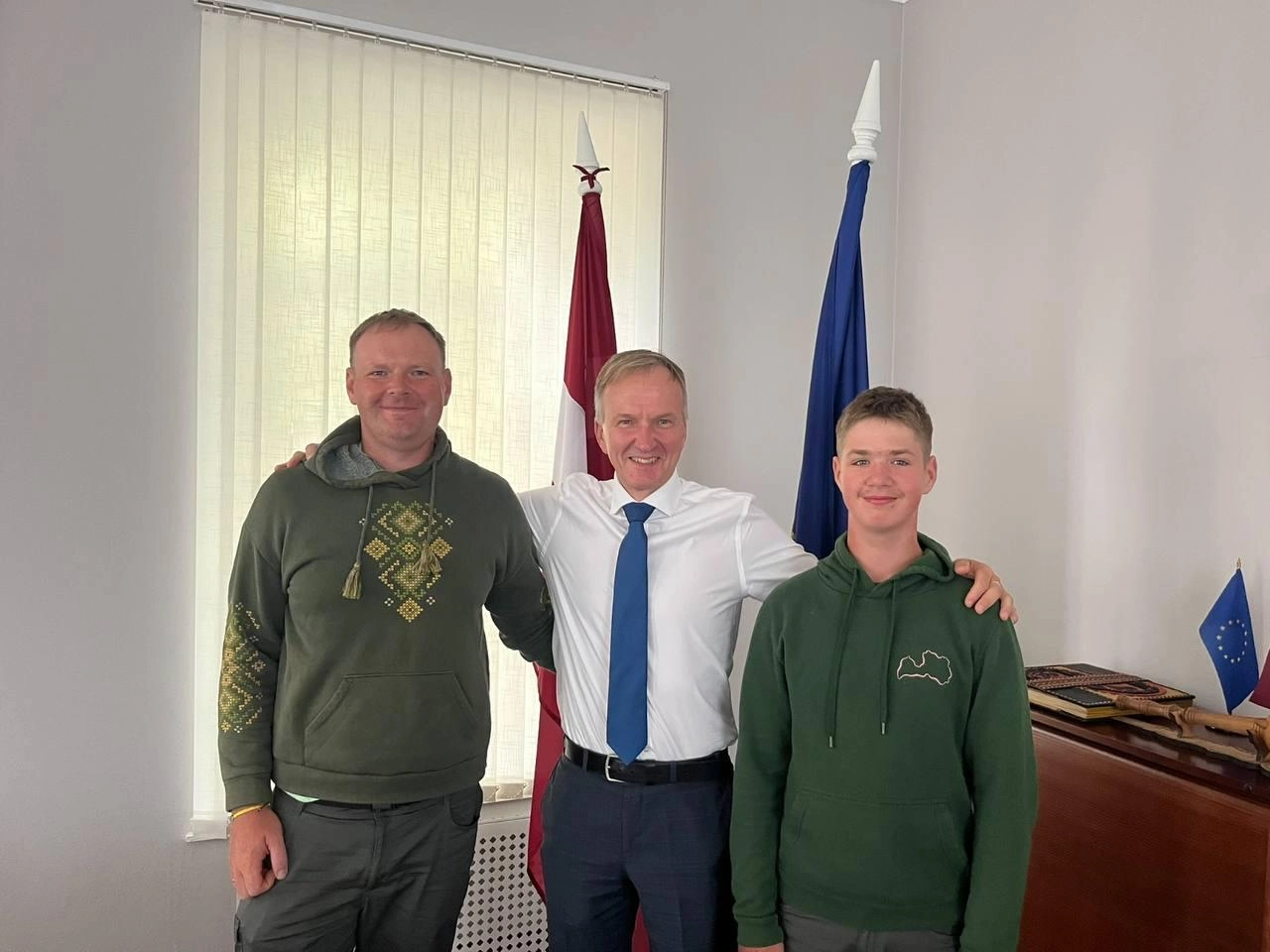
The next day, Jānis visited Kyiv on Independence Day. During their walk through the city center, they paid a courtesy visit to the Embassy of Latvia. There, they met with the new ambassador, Andris Pildagovičs, who turned out to be an avid cyclist himself, creating an immediate connection with the travelers.
Jānis was also particularly struck by the local business creativity, citing “Orange Cappuccino” (coffee mixed with orange juice) as an example.
“You can find it everywhere in Kyiv. We suggested it to cafes in Riga, but they are more conservative. It shows a willingness here to try new things,” Jānis said.
Future plans
Back in Latvia, Jānis and Kārlis speak at tourism conferences to promote travel to Ukraine, saying that despite the war, cities are clean and services are functioning.
“We tell people that one region, like Khmelnytskyi, is the size of Latvia. We highlight the quality of the food and the condition of the roads,” Jānis said.
Jānis is also considering expanding his business operations. “We are thinking of moving our glamping hotel concept to Ukraine, potentially opening in Kyiv next spring,” he added.
When asked about Ukraine’s future, Jānis is optimistic.
“I believe Ukraine will become a new center of influence in Europe. The mindset here is independent and brave. To those tired of the war, I would say: Don’t give up. Latvia stands with you.”
You can also highlight the text and press Ctrl + Enter
Russia Hit by 660-Drone Overnight Barrage Targeting Moscow, Crimea and Key Military Sites