The Nixon Doctrine
President Trump is often credited with being the first to pressure European members of NATO to spend more on their defense by accusing them of “freeloading” and ripping (the US) off.” However, the issue of European responsibility for their own defense was first addressed by President Richard Nixon in 1969 in an interview in Guam, where he laid out the principles of a new US policy to be applied to all nations, including NATO.
These principles, formalized in National Security Memoranda, Strategic Concept documents, and Reports to Congress, have been implemented for over 50 years and are known collectively as the “Nixon Doctrine.” It consists of three points: (1) the US will honor all its treaty commitments; (2) it will provide a nuclear shield if a major nuclear power threatens a nation vital to US security; and (3) it will provide military and economic assistance, but the threatened nation must assume primary responsibility for its own defense in a conventional military war.
JOIN US ON TELEGRAM
Follow our coverage of the war on the @Kyivpost_official.
The Nixon Doctrine has remained the operative rule to this day. The assurance of a US nuclear shield has been one of the major inducements for friendly nations to renounce the development of their own nuclear forces.
NATO’s compliance
In 2014, US President Barack Obama first raised the issue of NATO member compliance with the Nixon Doctrine at the Wales Summit. Russia had just invaded Ukraine and occupied Crimea. Obama requested that NATO members increase their national defense spending and succeeded – without ill will or disparaging rhetoric – in securing their pledge to raise spending to 2% of their GDP. It wasn’t until 2022, under the pressure of war, that Europe reached that goal.
Satellite Imagery Reveals Iran Rebuilding Nuclear Infrastructure Amid US Ultimatum
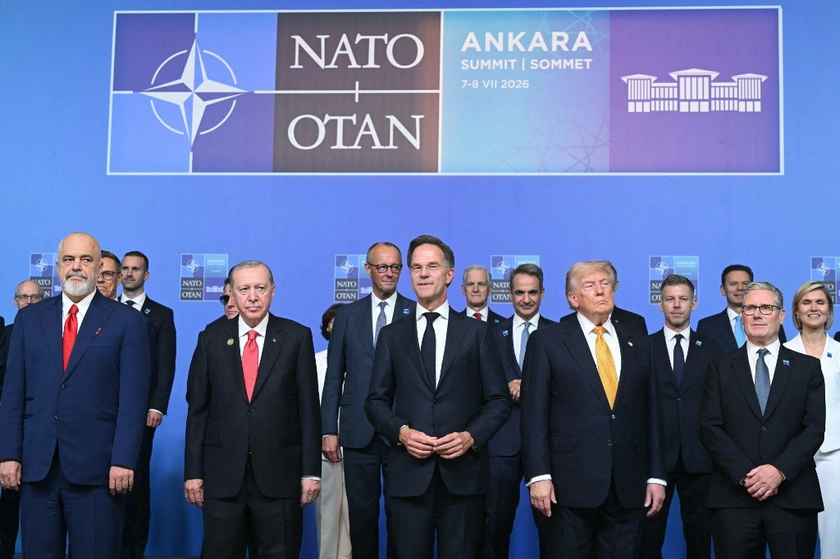
When US President Donald Trump accused NATO allies of “freeloading,” his words were met with shock and disbelief. They did not believe that the US was “defending Europe for free.” They believed (correctly) that the US military presence in Europe was primarily to defend its forward strategic position against the Soviet threat to its own security and, as a collateral benefit, to enhance Europe’s security.
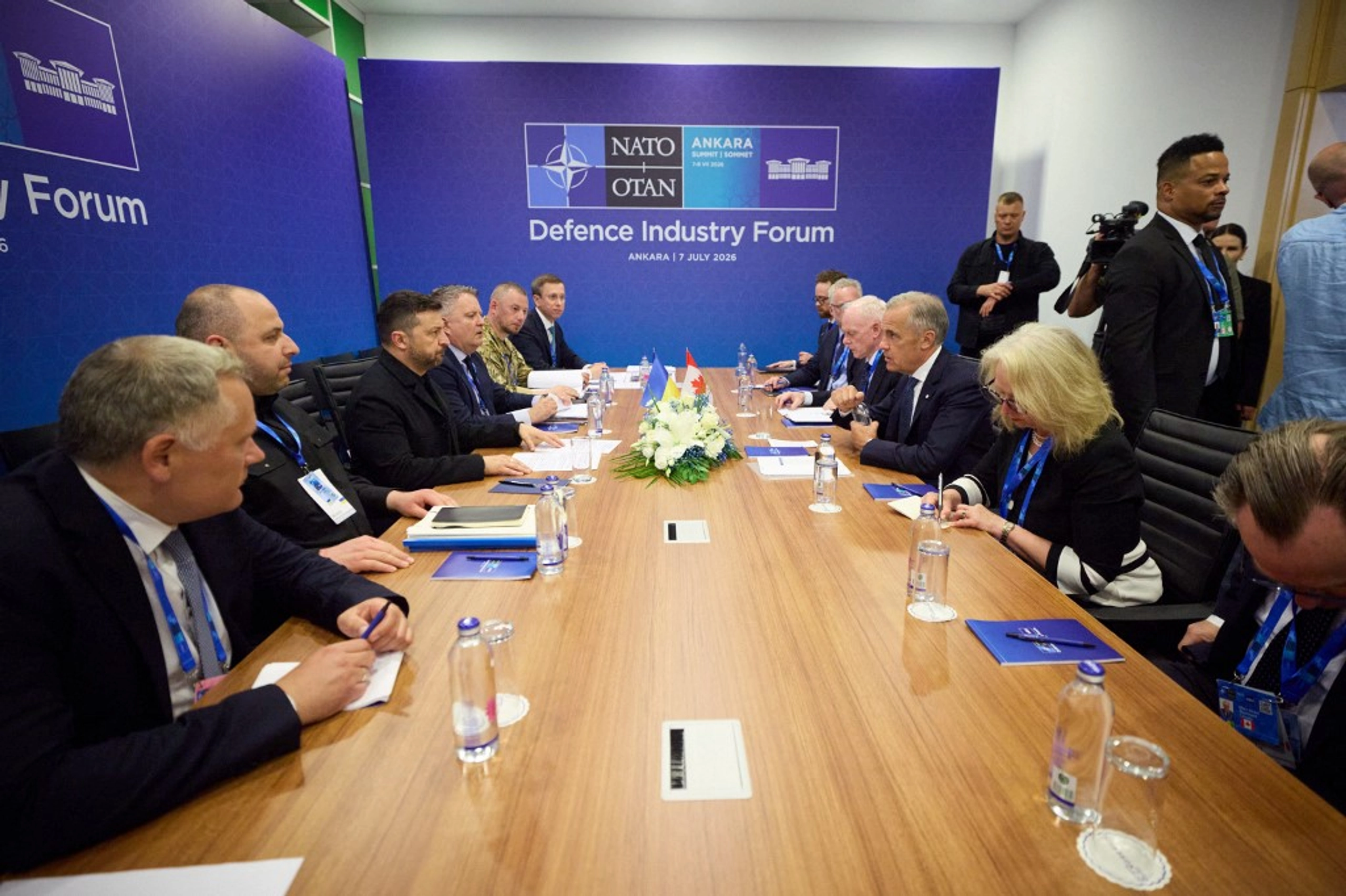
It wasn’t until Russia’s full-scale invasion of Ukraine in 2022 that European members of NATO rapidly increased their defense budgets and aid to Ukraine. By early 2026, NATO officials stated that European support “nearly balanced the full withdrawal of the United States” and that a broad-based military buildup was underway to backfill the gaps in fulfillment of their part of the Nixon Doctrine with conventional land forces.
The good news for the US is that it can finally begin to withdraw many of its forces and resources from Europe and redirect them elsewhere. The bad news is that Europe will need some time to replace US forces with its own and build them up to an all-European conventional power with the participation of its North American counterparts. It will still need US nuclear deterrence if catastrophic nuclear war is to be avoided. That remains the assurance the US offered in the Nixon Doctrine and NATO charter.
The war in Ukraine has provided Europe with several years to prepare. It still needs to not only match Russia’s conventional forces but also beat Russia decisively on the battlefield. Despite Russian President Vladimir Putin’s bluster and threats emanating from Russia of an invasion, the Kremlin leader is fully aware that his military has lost more than half of its manpower and land force materiel, while NATO’s and Ukraine’s combined land forces will outmatch his own. He is also aware that Europe’s air and sea forces are greatly superior to his in both quality and quantity.
NATO post US withdrawal
These next two years are crucial for Europe’s peace and independence. Its biggest problem is not a lack of resources, talent, or vision. It is the establishment of a workable command structure should the US choose to cede its position as “first among equals.” Once the US redeploys most of its forces, bases, and equipment from Europe, it will be up to Europe to choose a new leader and command structure. However, it must first take care of one bit of business that will hold it back: changing its self-defeating charter, which requires unanimity in decision-making.
The requirement for unanimity is a rule that would handicap any organization, even those that are much smaller and simpler than NATO. It has “worked” only because its biggest and most important donor (the US) also made all the decisions or had the leverage to do so.
Unless NATO’s members – by majority vote – agree to change this so that the important (strategic) decisions (such as membership) are made by a 75% vote and the less important (operational) by majority vote (possibly adjusted by contribution); and unless the new NATO is willing to integrate one of Europe’s strongest and most experienced military forces containing much of the strategic natural resources Europe needs (i.e., Ukraine) as a full member, it will never be a serious organization capable of managing the serious business of European security. Those members who choose not to accept the new rules (and the implicit discipline and submission to the common good that accompany them) always have the option to leave.
Transitional insecurity and the nuclear umbrella
The second order of business is equally important, as it is one of the two pillars on which European security rests. The first is security in a conventional war, and that will be the business of the new NATO with its new leadership and rules of governance. The second one is security against a major nuclear power. The simple fact is that Russia would crush Europe within days with its 10-1 advantage in nuclear warheads. Unless Europe can greatly increase its nuclear force or develop a defensive “dome” over Europe, it must retain and deepen its coverage under the US nuclear umbrella during the period of vulnerability.
Among modern democracies, no other system gives its head of state as much unilateral authority in foreign relations as the US Constitution gives the American president. That may work well most of the time. But what if that person has dubious loyalties or priorities, makes erratic decisions, and decides he wants to punish Europe for some slight? Or even if he were simply to renounce or threaten renunciation of nuclear forces and a deranged Russian leader sees this as a chink in Europe’s armor?
Section 1250A
Fortunately, US Congress has not yet fully entrusted the nation’s foreign policy to its president. It still believes that the security of Europe and its continued existence as a democratic bloc with shared values are vital to US security. As part of the FY 2024 National Defense Authorization Act [Pub. L. 118‑31, §1250A (2023)] it passed Section 1250A – one of the strongest and most direct constraints ever placed on presidential foreign‑policy discretion. It states:
“The President shall not suspend, terminate, denounce, or withdraw the United States from the North Atlantic Treaty, done at Washington, D.C., on April 4, 1949, except by and with the advice and consent of the Senate, provided that two‑thirds of the Senators present concur, or pursuant to an Act of Congress.”
“No funds appropriated or otherwise made available may be used to support, directly or indirectly, any decision to suspend, terminate, denounce, or withdraw the United States from the North Atlantic Treaty unless the requirement of subsection (a) is satisfied.”
Although 1250A’s intent is to ensure that the president cannot withdraw from NATO without approval by two thirds of Senators, it closes the “stay in NATO” apprehension but still leaves a critical loophole that NATO needs to close to fully deter Russian aggression.
Section 1250A does not preclude any of its members, under Article 5 of the NATO Charter, from “responding as it deems necessary” to Russian aggression. Thus, a president can downgrade or eliminate the US nuclear guarantee without violating the NATO treaty or 1250A.
To fix this issue, Congress may have to define the term “suspension” to prohibit any degradation of US nuclear commitments to NATO or simply include a mandate that “no significant alteration to US NATO commitments may occur without congressional approval.”
In any case, we should not forget that NATO and all the other countries faced with threats from nuclear states have relied on the Nixon Doctrine for more than 50 years for their safety. It would be unconscionable and unwise to simply pull the rug out from under them and leave them vulnerable without giving them the time and opportunity to adjust to their new reality.
The views expressed in this opinion article are the author’s and not necessarily those of Kyiv Post.
You can also highlight the text and press Ctrl + Enter