Amid trade wars and strained US-EU relations, the voices calling for a ramp-up of Russian gas imports have grown louder, echoing earlier demands to “make gas cheap again.”
Those pushing for a return to Russian gas have added a new talking point to their pitch – energy security. According to them, increasing purchases from Russia will help to diversify sources and routes of supply, and in so doing, reduce exposure to unpredictable American trade policies.
JOIN US ON TELEGRAM
Follow our coverage of the war on the @Kyivpost_official.
This is an example of risk management at its worst and is analogous to treating a headache with an axe.
The vulnerabilities tied to US gas supplies pale in comparison to the dangers of importing from Russia, which, in 2021-2022, triggered record gas price spikes, forcing governments to step in with record-level subsidies.
In some EU countries, the total fiscal cost of supporting customers during the energy crisis – subsidies and compensations to protect consumers from price surges – exceeded 5% of their GDP (for example, France and Germany).
The illusion of “cheap Russian gas” has already proven very costly for the whole continent.
Do short-term gains merit another 5% GDP loss in future crises?
But even if the countries agree, returning to business as usual with Russia will pose a number of challenges.
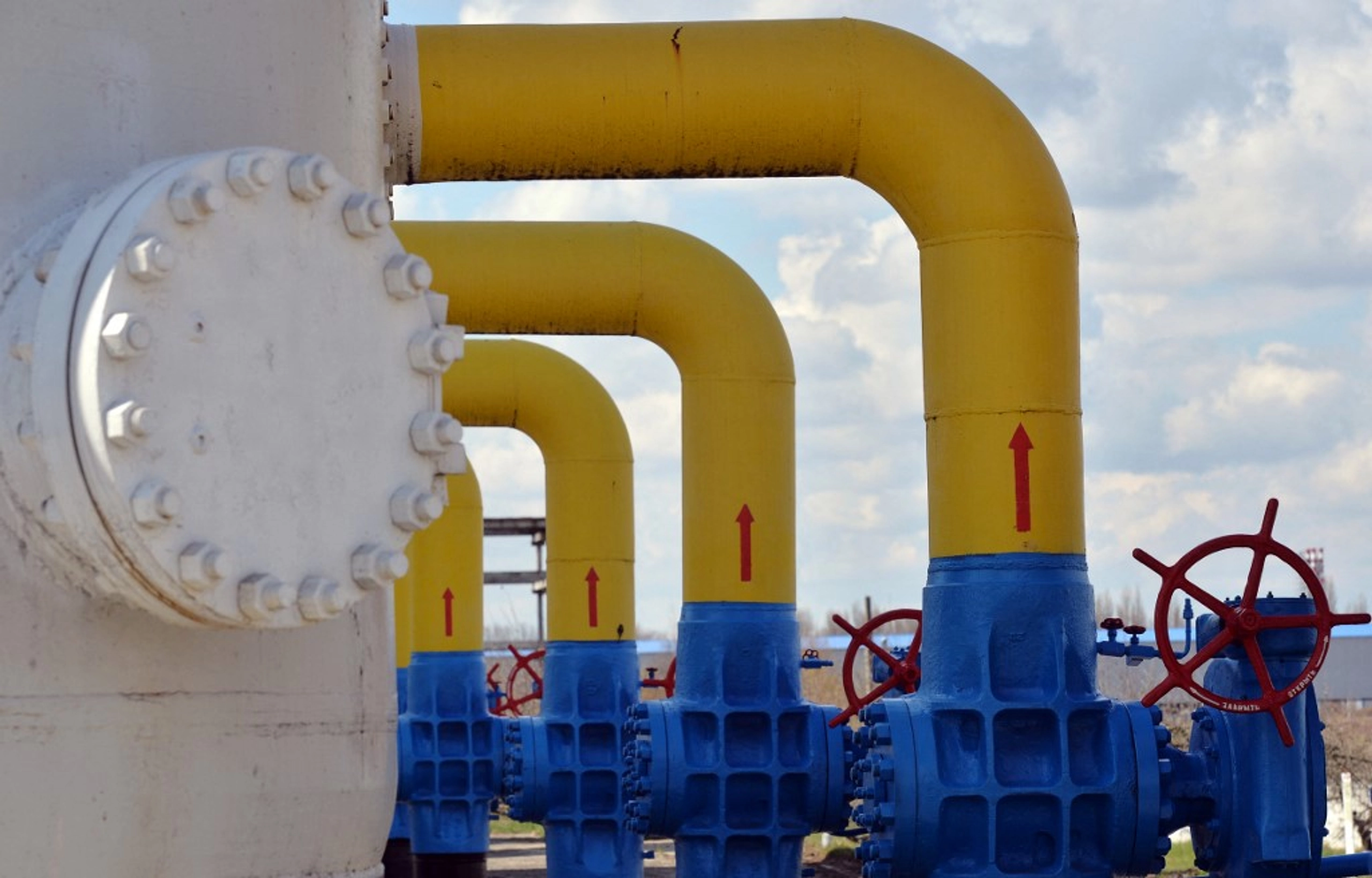
Let’s consider the main supply routes which can be used for gas imports to Europe: Nord Stream 2, Turkish Stream, Ukrainian pipelines, Yamal-Europe pipeline.
Germany’s Waning Influence Mirrors Broader EU Fragmentation
The single line of Nord Stream 2, which wasn’t destroyed in the attacks of September 2022, should be certified first to be put into operation.
German officials persistently emphasized that certification is a no-go step for them following Russia’s full-scale invasion of Ukraine. Even if the certification procedure were to be resumed – which would manifestly contradict the German policy of the last three years – one of its stages will include assessing the security of supply risks stemming from the project (an obligation under Article 72 of the Gas Directive).
Given the experience of attacks on Nord Stream pipelines, as well as Gazprom’s sabotaging the EU gas market in 2021-2023, it is highly unlikely that the certification decision will be positive (if security of supply assessment is made in good faith).
The European connectors of Turkstream may be another route, but it doesn’t provide room for a considerable increase in supply volumes, as it is already utilized for more than 80% of its technical capacity.
Resumption of transit via the Ukrainian transmission system is also unlikely as Ukraine’s authorities clearly stated they will not consider transportation of Russian gas after Jan. 1, 2025.
In turn, the supplies through the Yamal-Europe pipeline via Belarus will require rescinding Polish sanctions against Gazprom as well as lifting Russian sanctions on EuRoPol Gaz (operator of the Polish section of the pipeline).
It should also be noted that Russia continues to supply liquefied natural gas (LNG) to the EU. In fact, as of late 2024, it is the second-largest LNG exporter to the EU after the United States. Further increase in Russian LNG exports is possible, yet it is closely tied to the lifting of US sanctions against the Arctic LNG 2 project. This is also doubtful – the project will be another competitor for American LNG in Europe.
Thus, despite technical possibilities to increase gas imports from Russia, the EU will need to take considerable political and policy efforts to this end, which will signify the reversal of its gradual and consistent policy to phase out Russian fossil fuels imports.
Such a reversal will also render useless tremendous investments already made to substitute Russian gas (including Floating Storage and Regasification Units built in Germany).
Another issue that will inevitably emerge in the course of ramping up Russian supplies is several arbitration awards, obliging Gazprom to financially compensate for losses of the European companies related to undersupply in recent years.
It’s unlikely that any of these companies will conclude contracts with Gazprom without any guarantees of getting such compensation.
For example, the German utility Uniper, in its arbitration cases against Gazprom, was awarded €13 billion in damages as well as the right to terminate its long-term contracts with the Russian company. Austria’s OMV was awarded €230 million in compensation, and the Czech-based Net4Gaz - €113 million.
An ill-judged return to increased Russian supply would deal double damage to the EU.
A sharp reversal of the Russian gas ban would lead to reputational damage and trigger value-based conflicts among EU member states. Previous investments will turn out to be useless, assets will turn out to be stranded.
Meanwhile, the EU will just return to ‘point zero’ in gas relations with Russia – the risk of tying gas supplies to political bargaining will still be in place, waiting to be triggered.
As of now, there are no prerequisites for any such major steps: EU gas market remains stable, though replenishment of gas reserves in EU storage may turn out more challenging than last year.
Any risks for the security of supply (for example, related to the US policy unpredictability), if materialized, would not mean that the EU should automatically seek a solution in Russia.
The latter has already proven its unreliability and readiness to weaponize energy supplies for political reasons.
The EU has a developed legislative framework, which gives Member States a wide range of policy instruments (both market and non-market based) to mitigate potential crises. It includes Regulation 2017/1938, which provides for contingency planning in case of crises and the introduction of different emergency measures (such as fuel switch, supply curtailment).
As a response to the last energy crisis, the EU supplemented this framework with legislation on obligatory targets for filling gas storage as well as a mechanism for declaring a price crisis, enabling Member States to protect their consumers from unexpected price spikes.
The issue of high energy costs, often cited as justification for returning to business as usual with Russia, is a strategic problem, which requires a strategic solution, and the Commission aims to address it with the Action Plan for Affordable Energy.
Returning to dependence on Russian supplies is certainly not on the European agenda.
The views expressed in this opinion article are the author’s and not necessarily those of Kyiv Post.
You can also highlight the text and press Ctrl + Enter

Macron, Merz Clash With EU Over Putin Outreach
Not So Fast! EU Membership, with Strings Attached