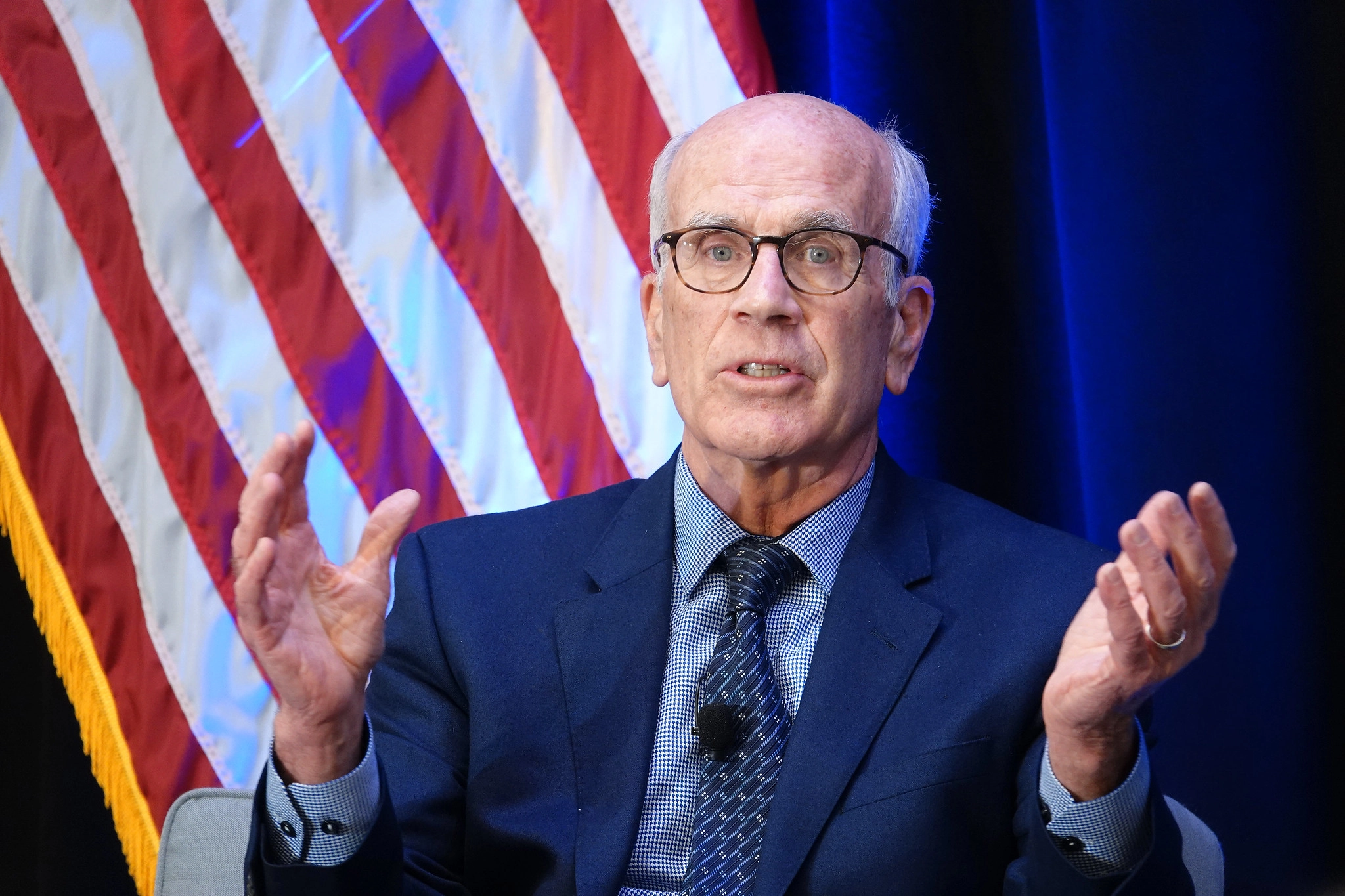
WASHINGTON DC – US Senator Peter Welch on Tuesday warned of an escalating risk of nuclear war, calling for urgent international action to revitalize arms control efforts amid Russia’s ongoing invasion of Ukraine.
The Vermont Democrat directly linked current global instability to the proliferation of nuclear arsenals and the erosion of existing treaties.
JOIN US ON TELEGRAM
Follow our coverage of the war on the @Kyivpost_official.
“Vladimir Putin is recklessly threatening to use tactical nuclear weapons against Ukraine. That’s the equivalent of a Hiroshima bomb,” Welch said on Senate floor Tuesday night, emphasizing the immediate danger.
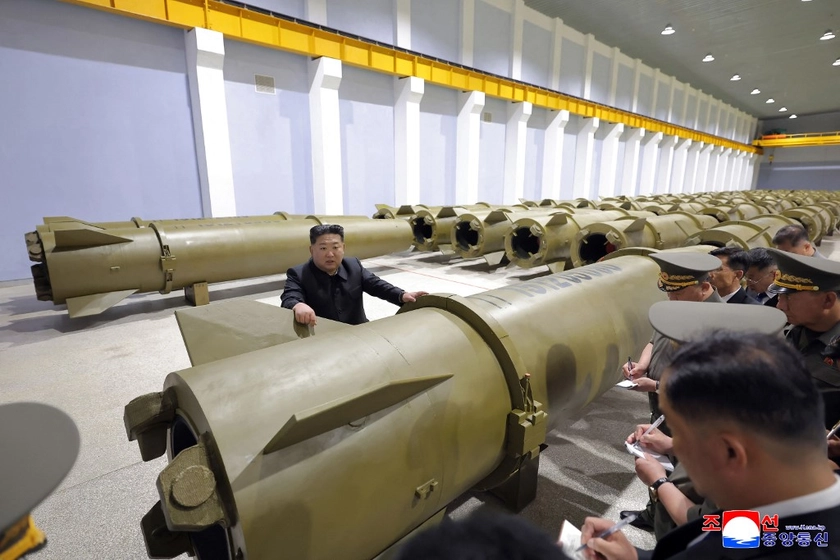
He noted that China’s nuclear arsenal is rapidly expanding, with estimates now exceeding 600 weapons, and North Korea is similarly increasing its stock of warheads and ballistic missiles.
Welch also raised concerns about extremist groups potentially obtaining enriched uranium to construct a crude nuclear device. Welch’s concerns echo those of various arms control advocates and scientific organizations that have long monitored the threat of nuclear conflict.
The Bulletin of the Atomic Scientists, known for its “Doomsday Clock,” which signifies how close humanity is to self-destruction, has consistently warned about the dangers of nuclear weapons and climate change. Similarly, the Arms Control Association, a nonpartisan organization, frequently champions the need for diplomatic solutions to nuclear challenges.

‘Negotiations’ Are Traps – How Russia Tweaks Language to Deceive the West
Welch stressed that many of today’s thousands of nuclear weapons are “many more times powerful” than those that devastated Hiroshima and Nagasaki in 1945.
He voiced alarm over the unilateral authority a single individual, such as a president, holds to initiate nuclear war without mandatory prior consultation.
A single “tactical” nuclear weapon, whether by accident or design, could trigger “a flurry of escalating responses with far more powerful strategic weapons that would cause incalculable loss of life, widespread radiation poisoning and destruction on a scale like anything seen in human history,” he warned.
Immediate casualties from such a conflict could range from “tens to hundreds of millions,” with countless more succumbing to famine due to widespread environmental devastation, Welch said.
The senator criticized what he described as widespread complacency within Congress and the administration regarding this threat.
He argued that while “Mutually Assured Destruction,” a Cold War-era doctrine where both sides’ capacity for retaliation deters a first strike, historically deterred nuclear use, it is now insufficient given “mercurial leaders like Vladimir Putin and Kim Jong Un.”
Welch underscored how the war in Ukraine has directly impacted nuclear stability.
He pointed out that Russia’s ongoing conflict contributed to Moscow’s February 2023 decision to suspend its participation in the New START Treaty. This treaty, signed in 2010, limits the number of deployed strategic nuclear warheads and bombs that the US and Russia can possess, and provides for extensive verification measures.
While Russia has publicly stated its intent to abide by the treaty’s numerical limits on deployed strategic nuclear warheads, the suspension has halted crucial inspections and information exchanges, complicating verification efforts.
If a new agreement is not reached before the treaty’s expiration in February 2026, “there will be absolutely no limits on the number of strategic nuclear weapons that the United States and Russia can deploy,” Welch cautioned, potentially leading to a dangerous surge in arsenals not witnessed since the 1980s.
Welch emphasized the obligation of nuclear-weapon states under the 1968 Nuclear Non-Proliferation Treaty (NPT) to “pursue negotiations in good faith on effective measures relating to cessation of the nuclear arms race at an early date and to nuclear disarmament.” The NPT is a foundational international treaty aimed at preventing the spread of nuclear weapons and promoting nuclear disarmament.
He concluded by asserting that all nuclear powers share an interest in preventing a “non-winnable nuclear war,” stressing that despite “sharp differences with the governments of Russia and China,” exacerbated by events such as the war in Ukraine, “they have as much interest in preventing a non-winnable nuclear war as we do.”
You can also highlight the text and press Ctrl + Enter
Attack on Moscow Oil Refinery: Putin Under Pressure?