Over 50 Ukrainian defense-tech startups pulled in more than $105 million in total venture and angel funding in 2025, preliminary year-end data shows.
Brave1, Ukraine’s official platform for consolidating new defense-tech developments, said early-stage rounds dominated the market this year, with most startups raising between $200,000 and $400,000.
JOIN US ON TELEGRAM
Follow our coverage of the war on the @Kyivpost_official.
Other rounds ranged from $1 million to $1.5 million, while the largest reached $2.5 million to $5 million.
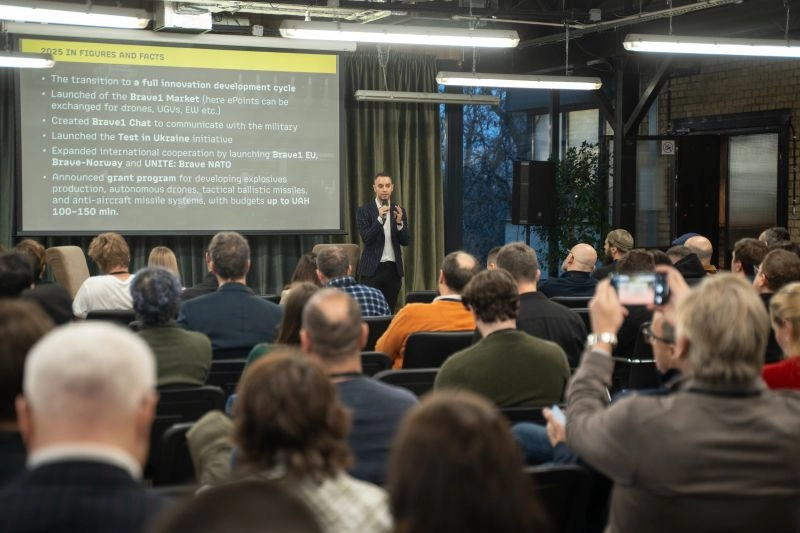
Brave1 released the data at its investment demo day on Dec. 4, according to a LinkedIn post by Artem Moroz, head of investment attraction at Brave1.
Among the publicly disclosed deals, the largest rounds in 2025 included:
- Swarmer – $15 million
- Tencore – $3.74 million
- Dropla – $2.75 million
- Teletactica – $1.5 million
- M-Fly – $1.3 million
- Norda Dynamics – $1 million
A large portion of transactions, however, has not been made public. Moroz said several undisclosed rounds exceeded Swarmer’s $15 million raise, according to Ukrainian outlet Defender.
Moroz wrote that active investors in 2025 included Freedom Fund VC, Green Flag Ventures, MITS Capital, Resist.UA, D3 Venture Capital Firm, Varangians, Defender, Angel One, United Angels Network, UA1 VC, Oppenheimer Acceleration, Double Tap Investments Ltd and Nezlamni Fund.
Moroz also wrote about a “growing interest” from Denmark, Sweden, Norway, the US, Germany, Czechia, the Netherlands, the UK and Poland.
Key accelerators from Defence Builder, MITS, and Darkstar have continued to shape the ecosystem, Moroz added.
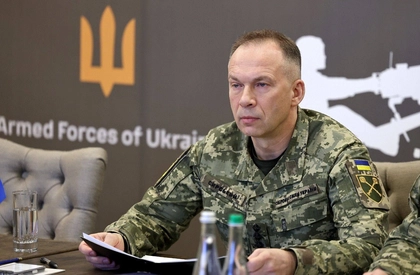
Syrsky Bets on Drones as Ukraine Fortifies Northern Border
Investment in the sector grew from $5 million in 2023 to over $40 million in 2024, the media outlet added, citing Brave1.
Europe’s defense tech landscape
Across Europe, 2025 was also a record year, with total defense tech investments reaching $1.5 billion.
Nearly three-quarters of that came from mega-rounds raised by major European defense startups, including Helsing’s $600 million deal. Other major raises came from Quantum Systems, Tekever and Stark.
Early-stage investment (pre-seed, seed, and series A) totaled roughly $200 million, with Moroz adding that “Ukrainian startups alone account for around half of that” in his LinkedIn post.
What to expect in 2026
Brave1 identified the following key trends for 2026:
- Faster integration of mature defense companies with startups through mergers and acquisitions (M&A)
- More pre-seed and seed deals under Ukrainian jurisdiction thanks to Diia City, a favorable tax regime for tech firms in Ukraine
- A potential Series B round above $50 million
- International sales and partnerships scaling across the ecosystem
- Larger budgets from funds already operating in Ukraine
- A growing number of follow-on rounds as investors double down
At present, Ukraine’s local defense manufacturers lack the capital to fund frontline research and development (R&D) and scale production, while new investors are unlikely to see returns without access to export markets.
The problem is compounded by the absence of a developed capital market, an active stock exchange, or major private buyers.
MITS Capital co-founder Perry Boyle previously told Kyiv Post that “free exports and free repatriation of capital” are key to resolving the dilemma.
“Ukraine needs two sorts of funding: investment capital and customer capital. It needs revenues derived from non-Ukrainian buyers because that’s what will improve the macro environment. But nothing will happen without free exports and free repatriation of capital,” Boyle said.
You can also highlight the text and press Ctrl + Enter