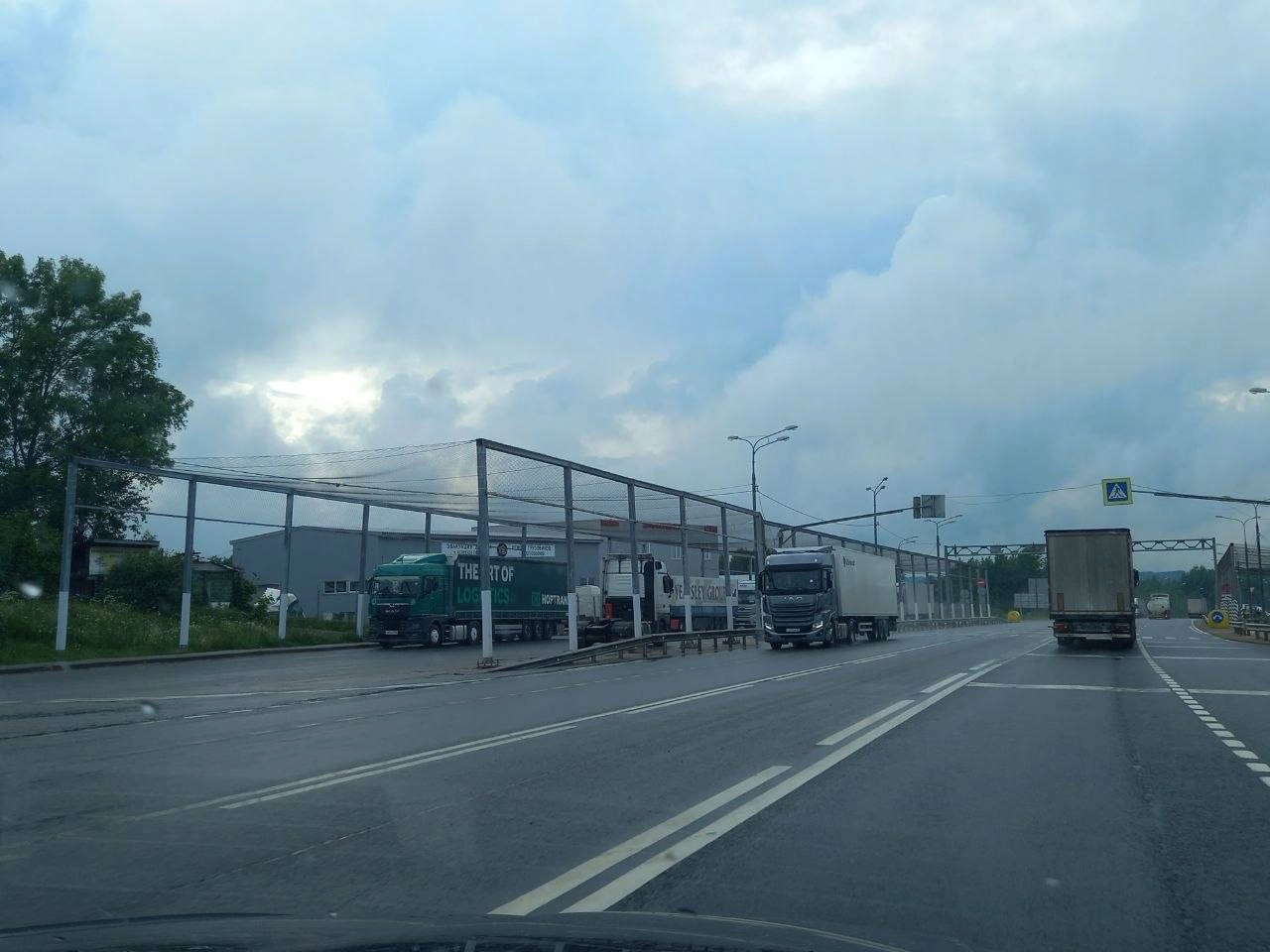
Anti-drone netting systems, widely used on the battlefield in Ukraine, have been installed near Russian President Vladimir Putin’s residence in the Valdai district of the Novgorod region.
On Tuesday, images of netted structures covering truck parking areas were published on Telegram by journalist Oleg Kashin, who said he received them from readers, according to Meduza.
JOIN US ON TELEGRAM
Follow our coverage of the war on the @Kyivpost_official.
The outlet Agentstvo analyzed the images and concluded that they were taken along a highway in the Valdai district, approximately 9 kilometers (about 5.6 miles) from Putin’s residence.
The Valdai residence is reportedly a key private retreat associated with Putin and his inner circle. The site is also said to include a replica of his Kremlin office.
Anti-drone nets are widely used in frontline areas to protect equipment and vehicles from attacks by small drones or munitions dropped from unmanned aerial vehicles (UAVs).
Ruslan Leviev, founder of the Conflict Intelligence Team (CIT), suggested the structures may serve not only as physical protection for vehicles but also as a means of controlling their movement.
He linked the increased security measures to Ukraine’s “Spiderweb” (Pavutyna) operation.
The operation was carried out by Ukraine’s Security Service (SBU) on June 1, 2025, marking one of the most complex long-range strikes in the history of Ukrainian intelligence.
Drone operators from the Alpha Special Operations Center carried out the strike, hitting at least five Russian airfields across multiple regions and damaging or destroying 41 aircraft, including strategic bombers used in missile strikes against Ukraine.
Russians’ Gloom Over Economy and Living Standards Reaches 20-year High
Over time, Ukrainian operatives had delivered around 150 first-person-view (FPV) drones and supporting equipment, including “hunting” cabins for the launch operations, as well as hard-to-obtain components such as batteries and solar panels needed for autonomous systems.
Security measures expand around Valdai
In early April, per a Radio Liberty report, Russia had constructed seven new towers equipped with Pantsir air defense systems around Putin’s Valdai residence by March 2026.
Satellite images from Planet.com show that construction on the towers began simultaneously on March 17. Some of the structures have already been fitted with surface-to-air missile systems.
The defenses now form two concentric rings around the residence, bringing the total number of air defense systems in the immediate area to 27, the report said.
Broader pattern of fortification
The build-up of defenses around Valdai reflects a broader pattern across key strategic sites in Russia.
More than 20 towers equipped with large-caliber machine guns and several Pantsir systems were identified at the Alabuga Special Economic Zone in Tatarstan, where Russia produces “Geran” drones, modified versions of Iranian-designed Shahed UAVs.
In May, the popular Russian navigation service Yandex Maps reportedly “hid” Putin’s residence in Valdai – a step typically reserved for sensitive military or industrial sites.
The area has also been blurred on satellite imagery.
Concerns over surveillance
The Financial Times (FT) reported that Russian authorities restricted parts of a special surveillance network used to protect senior officials, including the president, amid fears of exploitation by advanced AI-enabled tools.
Citing sources familiar with the matter, the report said measures were driven by concerns that intelligence techniques similar to those used against Iranian officials could be replicated in Russia, allowing foreign services to map the movements and meetings of top leadership.
Therefore, the system – separate from Moscow’s wider network of nearly 300,000 city surveillance cameras – was temporarily shut down and later reactivated only after engineers isolated it from the internet to reduce potential vulnerabilities.
The publication also noted concerns in Moscow about Ukraine’s ability to penetrate traffic cameras and use mobile phone location data to track senior Russian military figures.
An independent Ukrainian hacker told the FT that surveillance cameras in Moscow, including those near the Kremlin, are regularly accessed, though it remains unclear how such data could be used at scale.
You can also highlight the text and press Ctrl + Enter